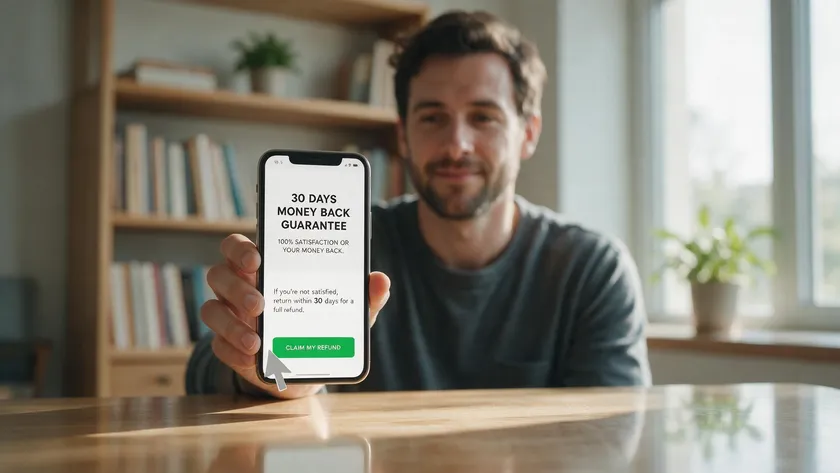
Offering a 30-day money-back guarantee can turn hesitant browsers into paying customers—but only if it’s built the right way. This guide covers how a 30-day guarantee typically works, how it differs from the minimum refund rights required by law, and how to structure, display, and manage one without exposing your business to abuse or false claims.
Table of Contents
- What A 30-Day Money Back Guarantee Actually Means
- Legal Background: Guarantee vs. Consumer Rights
- Benefits And Risks Of Offering A 30 Day Money Back Guarantee
- Real-World 30-Day Money-Back Guarantee Examples
- How To Design A Clear 30 Day Money Back Guarantee Policy
- Sample 30-Day Money-Back Guarantee Template
- Step-By-Step: How Customers Request Their Money Back
- 30-Day vs. 60-Day vs. 90-Day: Which Should You Offer?
- Where And How To Display Your 30 Day Money Back Guarantee
- Key Takeaways
- FAQs About 30 Day Money Back Guarantees
What A 30-Day Money Back Guarantee Actually Means
A 30 day money back guarantee is a voluntary promise from a seller to issue a full refund of the purchase price if a buyer is not satisfied within 30 calendar days. It acts as a form of insurance for customers, assuring them they can get their money back if the product or service falls short of expectations.
Here’s what that promise typically covers—and what it doesn’t:
- The refund usually applies to the base product or subscription price only.
- Shipping costs, activation fees, domain registrations, and premium add-ons are commonly excluded. For example, a web host may refund hosting fees but keep the domain registration cost.
- The clock usually starts on the purchase date or delivery date—a clear guarantee policy will state the exact trigger, such as “30 days from delivery as confirmed by the carrier.”
- A money back guarantee, a satisfaction guarantee, and a refund policy are related but not identical. Most businesses unify them into one document to avoid confusion.
Together, these details define the boundaries of the promise—the next step is understanding how it interacts with the legal minimums each region already guarantees.
Legal Background: Guarantee vs. Consumer Rights
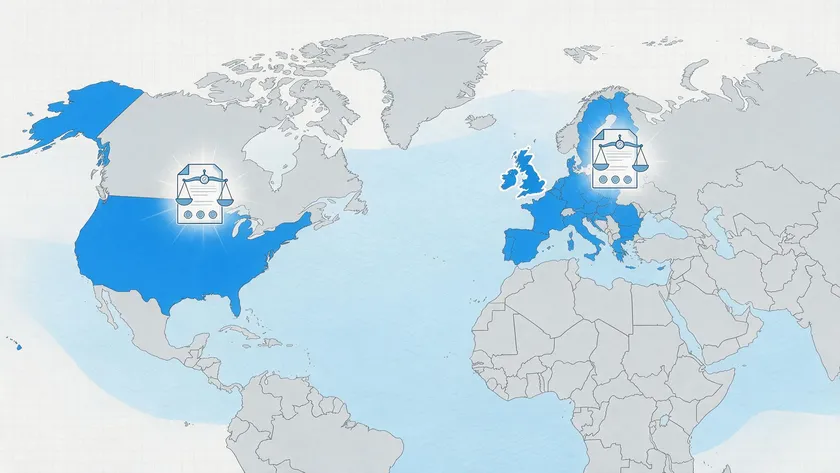
Laws in most regions set a minimum refund baseline. A 30 day money back guarantee goes beyond that baseline—but the marketing promise must never contradict the legal floor.
European Union
In the European Union, consumers can return items purchased online within 14 days for a refund under the Consumer Rights Directive, no questions asked. Many businesses extend this to 30 days to enhance trust and reduce purchase hesitation for their customers across member states.
United Kingdom
Post-Brexit, the UK maintains similar 14-day cooling-off rights. Traders must still clearly disclose any extra guarantee policy they offer, and the voluntary guarantee cannot reduce statutory protections consumers already hold.
United States
There is no federal obligation requiring a 30 day money back guarantee. However, the FTC requires businesses to honor their stated refund policies, and any advertised guarantee must be backed by a willingness to issue refunds under the disclosed terms.
In the US, refund laws vary by state and are not federally mandated, so businesses should consult local legal advice before publishing a guarantee.
Note that marketplace platforms like eBay, the Apple App Store, and the Google Play Store each enforce their own refund rules on top of local laws.
Benefits And Risks Of Offering A 30 Day Money Back Guarantee
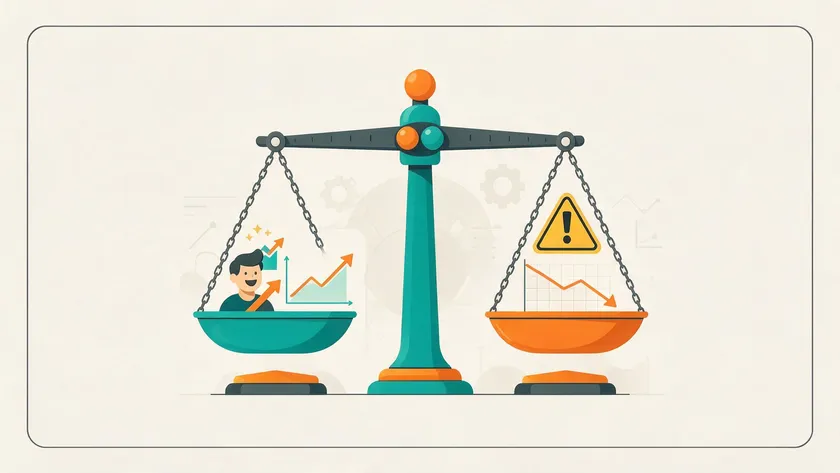
A money back guarantee is one of the simplest ways to lower the perceived risk of a purchase. But it comes with trade-offs that most businesses need to plan for.
Benefits
Offering a money-back guarantee can enhance customer confidence in a product—especially for higher-priced plans, subscriptions purchased for the first time, or unfamiliar brands. It encourages customers to try new brands or products they might otherwise avoid entirely.
A clear refund policy can help companies build customer trust, which typically translates to higher conversion rates on product pages and checkout flows, more positive reviews, lower chargeback rates, and stronger customer satisfaction scores.
Risks
The main concerns are refund abuse, serial refunders filing false claims, and cash-flow pressure from a high volume of returns in the first 30 days. Global refund volumes rose 18.1% in 2025, according to ACI Worldwide.
Mitigation strategies include:
- Limiting the guarantee to first-time purchases per account or household.
- Excluding heavily discounted or promotional items.
- Requiring photo evidence or proof of use for physical goods.
- Tracking refund patterns to flag abuse immediately.
With these guardrails in place, most businesses can offer a 30-day guarantee without meaningfully increasing their exposure to fraud.
Real-World 30-Day Money-Back Guarantee Examples
Seeing how established companies handle their guarantee helps calibrate your own approach. Here are three models worth studying. For more return policy examples across other industries, see our full breakdown.
For ready-to-copy wording across every window—14, 60, 90 days, and lifetime—see our Money Back Guarantee Examples gallery.
Bluehost
Bluehost offers a 30-day money-back guarantee on shared, VPS, and dedicated hosting plans. The refund covers hosting fees only—domain registrations, SSL certificates, and design services are explicitly non-refundable. Refunds are processed within 5–7 business days to the original payment method.
Peloton
Peloton runs a 30-day home trial for its Bikes, Treads, and Row+ equipment. If the buyer is not satisfied, Peloton picks up the item and issues a refund, minus a return fee ($150–$250 depending on the product). The item must be in like-new condition—a good example of a guarantee that applies to high-ticket physical goods.
NordVPN
NordVPN applies its 30 day money back guarantee only to the first billing cycle. Once the subscription renews, the customer is no longer eligible for a refund under this policy. This is standard across many SaaS and VPN providers committed to limiting exposure on renewals.
How To Design A Clear 30 Day Money Back Guarantee Policy
A vague promise creates disputes. A good guarantee policy is specific, easy to read, and visible before the customer clicks “Buy.”
| Element | What to Define |
|---|---|
| Eligibility | Who qualifies (e.g., new customers only) |
| Timeframe | The exact 30-day window |
| Coverage | Which products or plans are included |
| Proof of Purchase | Order ID, invoice, or email confirmation |
Define what “not satisfied” means in practice: technical issues, items not as described, or features not working as advertised. Avoid overbroad language like “any reason whatsoever”—it increases abuse.
List clear exclusions: activation fees, domain registrations, customized items, or digital products after access has begun. State who pays for return shipping and whether a restocking fee applies.
Use plain-English wording. Avoid legal jargon that hides restrictions. For cross-border sales, add a line such as: “This refund policy applies in addition to your statutory rights in the European Union.”
Sample 30-Day Money-Back Guarantee Template

The following is a ready-to-copy starting point. Adjust it to match your own products and legal requirements.
“At [Your Business Name], we stand behind what we sell. If you’re not satisfied with your purchase, you can request a full refund within 30 days of your purchase date. To be eligible, [items/subscriptions] must be [in original packaging / unused / with fewer than X logins].
Refunds are issued to your original payment method within [X] business days of approval. The following are excluded from this guarantee: [list exclusions]. We do not offer store credit in place of refunds unless requested. To start a refund request, contact our customer support team at [support email/link].”
Always consult a legal professional before publishing your complete policy online.
Step-By-Step: How Customers Request Their Money Back
A transparent, simple refund process reassures customers that the guarantee is real—not a marketing gimmick. Here is the typical process:
- Log in to your account or find the order confirmation email.
- Click a “Request refund” or “Cancel & refund” button on the website.
- Choose a reason from a dropdown describing the issue accurately.
Some businesses also require customers to complete an RMA form and note the resulting RMA number for tracking purposes.
If no automated button exists, contact the customer support team via live chat or email. Refund processing may take up to 4 hours after the request is submitted, with review typically complete within 24–48 hours on business days.
For physical goods, items typically need to be returned in their original condition. Some companies provide free return shipping, while others require customers to pay for return costs—tracking is usually required before the money is released back to the original payment method.
Card refunds typically take 3–10 business days to appear; PayPal tends to be faster. The guarantee covers the date of the refund request, not the date funds reappear.
30-Day vs. 60-Day vs. 90-Day: Which Should You Offer?
The guarantee length is a strategic choice, not just a formality. Longer windows can create confidence but also increase return volume and cash-flow exposure.
| Duration | Best For | Trade-off |
|---|---|---|
| 30 Days | Most e-commerce and SaaS products | Standard, lowest return-window risk |
| 60 Days | Higher-priced or considered purchases | More time to build trust, more exposure to abuse |
| 90 Days | Subscription services, big-ticket items | Strongest trust signal, requires strict fraud tracking |
Start with a 30-day window. Extend only once you have return-abuse tracking in place and your data shows it won’t hurt cash flow. Of course, the right duration depends on your product category and margins.
See real examples of each window in our Money Back Guarantee Examples guide.
Where And How To Display Your 30 Day Money Back Guarantee
A 30 day money back guarantee only builds confidence if customers see it before they pay—not buried in small print after checkout.
| Location | What to Show |
|---|---|
| Product Pages | Short snippet (“30-day money back guarantee”) |
| Checkout Page | Near the main call-to-action button |
| Dedicated Policy Page | Full policy, linked from the footer |
| Marketing Channels | Consistent message across email, ads, landing pages, in-app |
Create a dedicated “Refund Policy” page that explains the full guarantee policy, and link it from your footer and help center articles. A/B test alternative wordings like “Risk-free for 30 days” or “Try it for 30 days or your money back” to see which version increases conversions without attracting more abuse.
Keep the message consistent across channels—email campaigns, social media ads, and in-app messaging. Any wording that overpromises or contradicts the actual policy on your page could be seen as wrong or misleading under advertising laws.
Key Takeaways
- A 30 day money back guarantee is a voluntary promise to issue refunds within 30 days—it goes beyond statutory minimums like the EU’s 14-day withdrawal right.
- A clear, honest refund policy reduces risk for consumers, boosts customer satisfaction, and can lift conversions on product pages and landing pages.
- Businesses should define eligibility, exclusions, and the refund process in plain English to protect against abuse and false claims.
- Display the guarantee before checkout, not after, and keep the message consistent across every channel where users interact with your brand.
Skip the legal guesswork—build a refund policy that holds up in every jurisdiction you sell to. Try the Return and Refund Policy Generator
FAQs About 30 Day Money Back Guarantees
These FAQs cover common edge cases that the main sections above don’t fully address. If you’re unable to find the answer to your specific situation here, contact the seller directly.
Can I Use a 30 Day Money Back Guarantee More Than Once?
Many businesses design their money back guarantee for first-time purchases only. This encourages initial trials while limiting abuse by serial refund seekers. Policies often specify “one refund per customer” and use account data, payment cards, or addresses to prevent multiple claims.
If you want to know whether repeat claims are allowed, check the specific refund policy wording on the seller’s website—some are more lenient than others, but most businesses restrict it to a single use per customer.
Does the 30 Day Money Back Guarantee Apply to Subscription Renewals?
Many online services apply the 30 day money back guarantee only to the first billing period, not to automatic renewals after the initial term.
Refunds are not available after subscription renewal in most cases. Some providers offer a shorter refund window for renewals—such as 7 or 14 days—especially when required by local law or app store rules.
Review renewal emails and account settings so you can cancel on time if you do not wish to continue, because once the subscription renews you may no longer be eligible for a refund.
How Does a 30 Day Money Back Guarantee Work for Customers in the European Union?
EU customers already benefit from a legal 14-day right of withdrawal on most distance purchases, regardless of whether the seller offers a voluntary guarantee. EU laws require refunds within 14 days for online purchases once the withdrawal is exercised.
A 30 day money back guarantee typically extends that protection, giving EU buyers extra time to test products or services before they are fully committed. Sellers must clearly indicate whether the 30-day period includes or extends beyond the statutory 14 days and what conditions apply.
Are Shipping and Fees Included When I Get My Money Back?
Common industry practice is that the refund covers the product price but excludes original shipping, express handling, activation fees, and third-party transaction charges. Exceptions to money-back guarantees may include custom products, used items, or shipping fees—and for digital products, access after download often makes them non-refundable.
Some premium “no questions asked” guarantees go further and refund both the item and standard shipping, particularly for high-trust brands. Always check the refund policy wording to see exactly which amounts are refundable and who is expected to pay for return shipping.