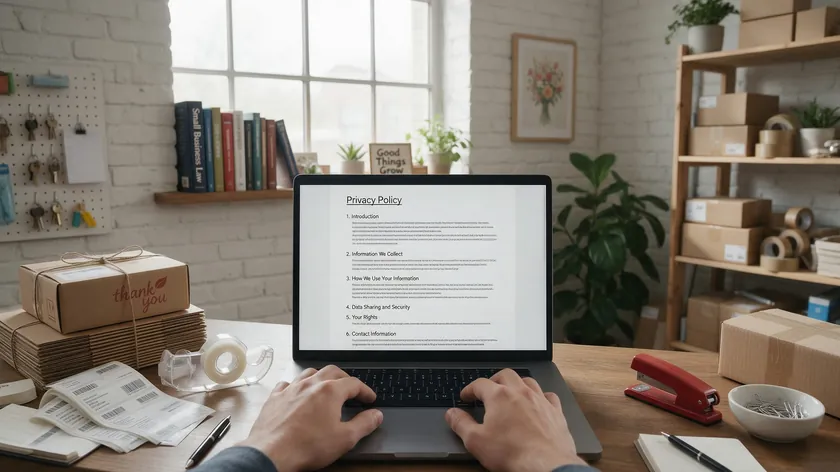
A dropshipping store handles customer data differently from a traditional retailer. You never touch the product, but you collect names, addresses, emails, and phone numbers—then route that personal information to suppliers who ship on your behalf.
A privacy policy is legally required for dropshipping businesses in many countries, and it outlines the boundaries of data collection to protect your store legally.
This guide walks you through every section your store’s privacy policy needs, from supplier disclosures to international transfers, so the document reflects your actual practices instead of a generic template.
Table of Contents
- How Dropshipping Works and Why It Changes Your Privacy Policy
- Which Privacy Laws Can Affect Dropshipping Stores
- Defining Roles: Controller, Processor, and Third‑Party Partners
- What Personal Data a Dropshipping Store Typically Collects
- How and When a Dropshipping Store Collects Personal Data
- How You Use Personal Data in a Dropshipping Business
- Sharing Customer Data With Suppliers and Other Third Parties
- International Data Transfers in Global Dropshipping
- Data Retention, Security Measures, and Breach Response
- Customers’ Privacy Rights and How to Exercise Them
- Contact Details, Policy Updates, and Display Locations
- Turning Compliance Into a Competitive Advantage for Your Dropshipping Store
- Key Takeaways
- FAQ
- Do I really need a privacy policy if my dropshipping store is just starting out?
- How often should I update my dropshipping privacy policy?
- What specific data must I share with my dropshipping suppliers?
- Does using Facebook Pixel or TikTok Pixel change my privacy obligations?
- Can I just copy another dropshipping store’s privacy policy?
How Dropshipping Works and Why It Changes Your Privacy Policy
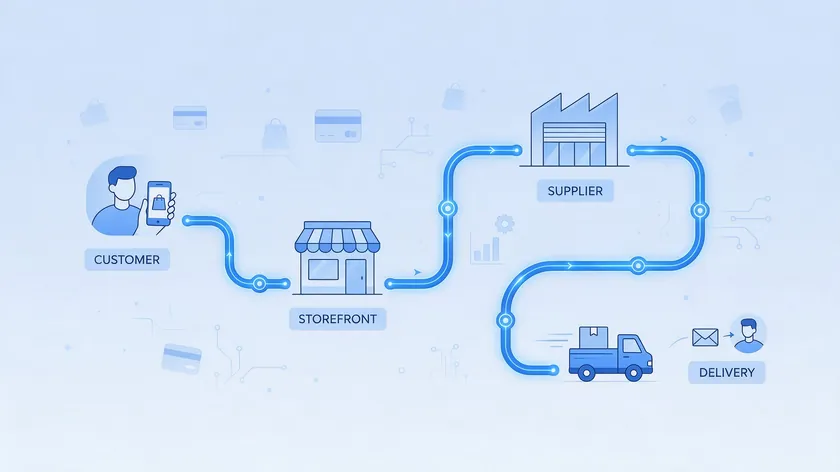
In a standard dropshipping business model, a customer visits your website, places an order, and enters their name, shipping address, phone number, and email.
Your dropshipping store then forwards that order data—often via a CSV export or API integration—to a third-party supplier or warehouse. The supplier packs and ships the product directly to the buyer. You never see the inventory.
Here is a concrete example. A Shopify dropshipping website launched in 2024 receives an order on 1 August 2025. The next morning, the store owner exports a batch file containing the buyer’s full name, billing address, shipping address, and phone number, then sends it to a warehouse partner in Shenzhen.
Meanwhile, Google Analytics and Facebook Pixel record the buyer’s browsing behavior and conversion event on the store’s product page.
The data flow looks like this: Customer → Your Dropshipping Store → Supplier/Warehouse → Customer (for delivery), plus a parallel stream: Customer → Store → Ad Network (for tracking and targeted advertising).
You never handle a physical product, but you handle and route customer data at every step. That is exactly why data protection rules fully apply and why your privacy policy must describe both internal data collection and how third-party suppliers process data on your behalf.
Which Privacy Laws Can Affect Dropshipping Stores
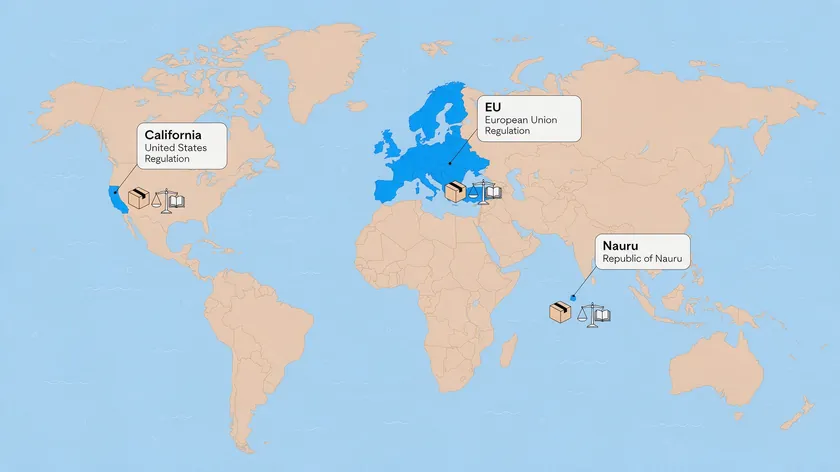
The privacy laws that affect dropshipping depend on three factors: where your customers live, where your store operates, and where your suppliers process data.
Because dropshipping stores typically sell internationally and rely on tracking tools for ad-driven acquisition, multiple legal regimes can apply at once. Most global privacy laws require a clear privacy policy whenever you collect data from visitors or buyers.
The main Data Privacy Policy article on this site covers universal concepts and a full comparison of GDPR, CCPA, LGPD, and other major regimes. The sections below focus on how each law applies to dropshipping specifically.
GDPR and Dropshipping Stores
The General Data Protection Regulation applies whenever you target customers in the EU—even if your store is registered in the United States. If you ship to EU addresses, run Facebook Ads that reach EU users, or use pixels that monitor EU-resident behavior, GDPR governs how you collect and process personal data.
The GDPR requires consent to process personal data and mandates that you disclose international transfers, define a lawful basis for each processing purpose, and respect rights like data portability and the right to erasure.
CCPA/CPRA and Dropshipping Stores
The California Consumer Privacy Act and the California Privacy Rights Act can apply if your store sells to California residents and meets certain thresholds.
The CCPA/CPRA applies if your business meets at least one of three thresholds: annual gross revenue above US$26.625 million (the threshold in effect as of January 1, 2025), handling the personal data of more than 100,000 California consumers or households, or deriving over 50% of annual revenue from selling or sharing personal information. Even if you are below those numbers today, planning for CCPA from day one saves rushed fixes later.
Other Privacy Laws That May Apply
Several other data privacy laws can affect dropshipping stores that advertise globally or use international suppliers. Brazil’s LGPD requires consent for processing personal data in Brazil. Canada’s Personal Information Protection and Electronic Documents Act—commonly called PIPEDA—applies if you are in Canada and handle personal data.
The SHIELD Act applies to data about New York residents. COPPA requires parental consent for data from children under 13. Many U.S. states are passing personal data protection acts with requirements similar to CCPA.
Beyond applicable laws themselves, platforms like Facebook Ads, Google, and payment processors often require a published privacy policy that meets GDPR- or CCPA-level disclosures before they approve your account or let you run campaigns.
E-commerce platforms require a visible privacy policy to approve stores or process payments, so having one is a practical necessity as well as a legal obligation.
Defining Roles: Controller, Processor, and Third‑Party Partners
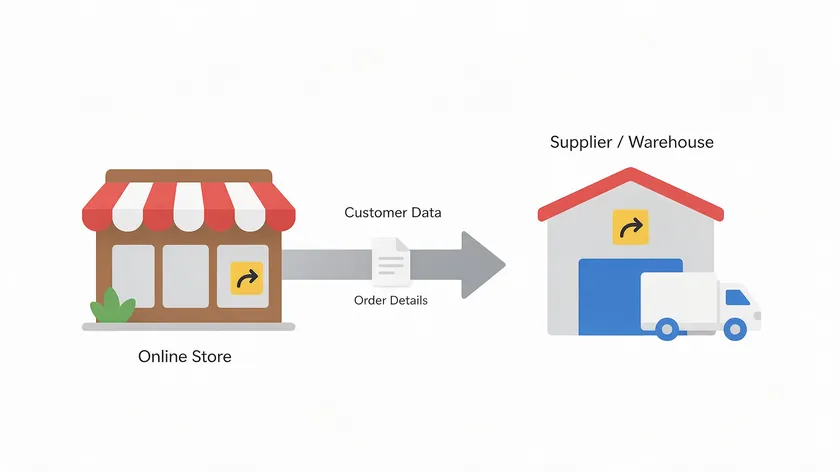
In most dropshipping setups, your store is the data controller—the entity that decides what personal data to collect and why.
Suppliers and fulfillment partners are typically data processors, handling customers’ information under your instructions solely to ship orders. This controller-processor distinction matters because the controller bears the primary legal obligations under laws like GDPR.
For example, your dropshipping store collects a buyer’s name, address, and phone number on 01 August 2025, then sends that data to a Shenzhen-based supplier purely to fulfill that order.
In that scenario, you are the controller, and the supplier is the processor. However, if a supplier or marketplace—say an independent print-on-demand provider—uses customer data for its own marketing or analytics, it becomes an independent controller with its own privacy policy that you should reference.
Your privacy policy should name the types of recipients: product suppliers, third-party logistics (3PL) warehouses, print-on-demand partners, payment processors, and marketing platforms.
Clarify whether each processes data only for order fulfillment or for their own independent purposes. This transparency protects you and helps customers understand exactly who touches their data.
What Personal Data a Dropshipping Store Typically Collects
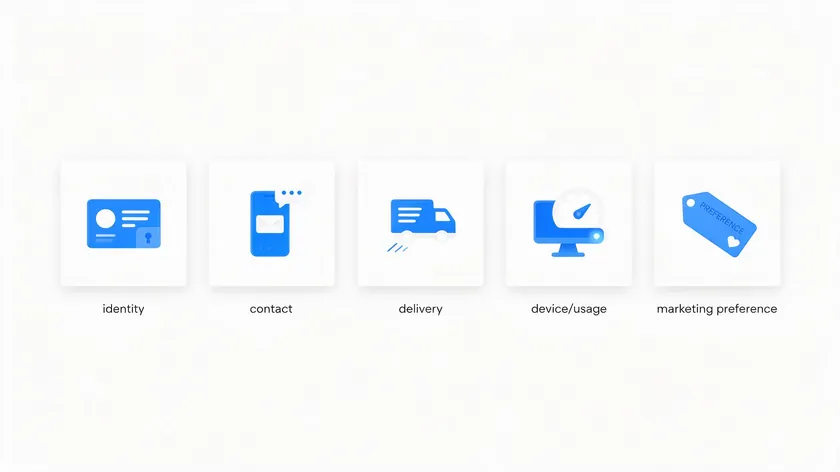
Privacy policies must disclose personal data collection methods clearly, so this section of your policy should list every category of data you gather. Personal data typically includes names, addresses, emails, and phone numbers. For a dropshipping store, here are the main categories:
- Identity data: full name provided at checkout or account creation
- Contact details: email address, phone number
- Delivery data: shipping address, billing address, postal address
- Communication data: customer support messages, reviews, user-generated content
- Device and usage data: IP addresses, browser type, referring URLs, session duration, log files, and web beacons captured by tracking tools like Facebook Pixel, TikTok Pixel, or Google Analytics
- Marketing preferences: newsletter opt-in status, SMS consent, click behavior from marketing communications
Customers should be informed about cookies and tracking technologies used by the business. Use concrete language in your policy—something like, “We collect your full name, shipping address, phone number, and email when you place an order on our dropshipping website.
We also automatically collect your IP address, browser type, and device information through Google Analytics and advertising pixels. “Avoid vague references to “information” without specifying what that means.
How and When a Dropshipping Store Collects Personal Data
Data collection in a dropshipping business happens at specific touchpoints, and your policy should map each one. Data collection can occur through checkouts, forms, or automatic tracking technologies—and your policy language should distinguish between them.
Data collected directly from customers includes information entered in checkout forms, discount popup signups (such as an email captured via a “Get 10% Off” form), phone numbers for shipping updates, and account creation details.
Automatically collected data includes cookies, pixels, server log files, and browser fingerprinting. Some data may arrive from third parties—affiliate networks, marketplace platforms, or ad tools like Facebook Lead Ads.
Your policy should also state that some data is mandatory for order processing—like a shipping address and payment information confirmed by a payment gateway—while other data is optional, such as newsletter signups or SMS opt-ins used for marketing messages.
Including an “I Agree” checkbox for consent at key collection points strengthens your legal compliance and makes the boundary between required and optional data clear.
How You Use Personal Data in a Dropshipping Business
Your privacy policy should explain how customer data is used in clear, grouped terms. Here are the main purposes for most dropshipping stores:
- Processing and delivering orders, including forwarding shipping details to overseas suppliers
- Communicating order updates and delivery confirmations
- Handling returns, refunds, and customer support inquiries
- Fraud prevention and abuse detection (e.g., flagging repeated discount-code misuse)
- Sending post-delivery review requests via email
- Running retargeting and targeted advertising campaigns on platforms like Meta, TikTok, and Google
- Improving site performance and user experience based on browsing data
Detailed lawful bases under GDPR—such as consent, legitimate interests, or contract performance—are covered in the main Data Privacy Policy article.
For your dropshipping privacy policy, group purposes by category (“to fulfill your order,” “to improve our dropshipping website,” “to send you marketing with your consent”) rather than listing dozens of micro-uses. This keeps the legal document readable while satisfying legal requirements across applicable privacy laws.
Sharing Customer Data With Suppliers and Other Third Parties
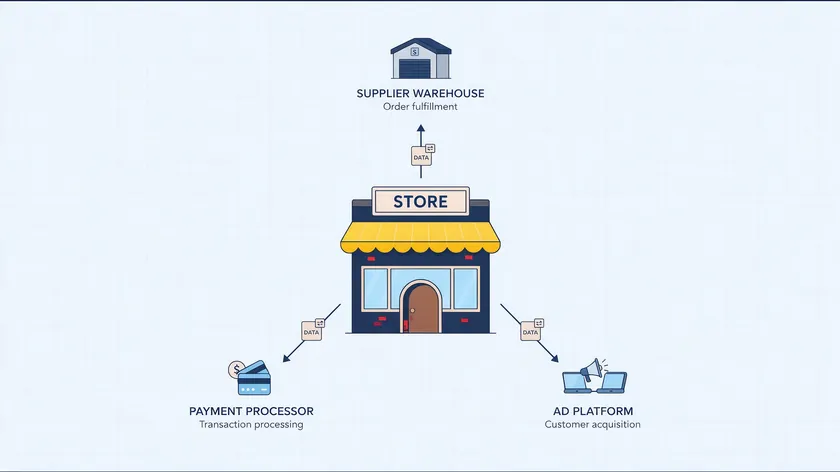
The most distinctive part of a policy for dropshipping is disclosing how you share personal data with third-party suppliers, fulfillment partners, and service providers.
Customer information must be shared with third-party suppliers for order fulfillment in dropshipping—there is no way around it. Data sharing may include payment processors, fulfillment services, and analytics providers, so your policy must name each category.
Specify which pieces of data go where and why. A simple table works well:
| Data Shared | Recipient | Purpose |
|---|---|---|
| Full name, shipping address, phone number | Product supplier (e.g., CN-based warehouse) | Deliver your order |
| Email address | Email service provider (e.g., Klaviyo) | Order confirmations and marketing communications |
| Payment confirmation (no full card details) | Payment processors (e.g., Stripe, PayPal) | Process payment securely |
| Browsing behavior, conversion events | Ad platforms (Facebook, TikTok, Google) | Targeted advertising and analytics |
| Name, address, order details | 3PL warehouse or print-on-demand partner | Fulfill and ship specialty orders |
State that suppliers are contractually required to follow data protection standards and cannot use customer data for their marketing unless they have a separate lawful basis.
Businesses must ensure privacy policies reflect actual data practices to comply with regulations—so only list sharing arrangements you actually have in place.
International Data Transfers in Global Dropshipping
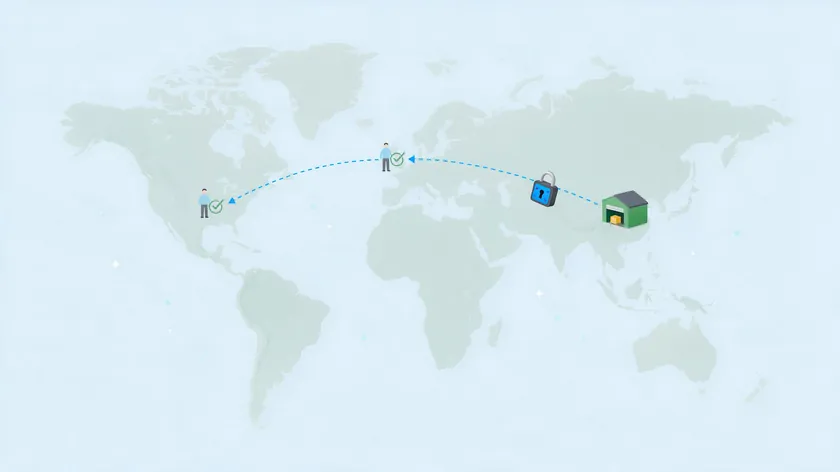
Most dropshipping stores inherently involve international transfers. You might store order data on US-based servers, serve EU customers, and email order details from a UK-registered store to a supplier in Guangzhou.
Privacy policies must include disclosures regarding international data transfers when applicable—and in dropshipping, they are almost always applicable.
Under GDPR, moving personal data outside the European Economic Area requires safeguards such as adequacy decisions or standard contractual clauses. Major e-commerce platforms typically rely on these types of safeguards to legitimize their cross-border transfers—reviewing your platform’s data processing agreement is a good way to confirm which ones apply to your store.
Your policy should name the regions where data might be processed—for example, “United States, European Union, and China”—and clarify that equivalent levels of personal data protection are sought through contracts or platform agreements.
Use reassuring language: “International transfers are limited to what is necessary to provide our dropshipping services and are subject to reasonable security measures.” This gives non-lawyers a clear picture without copying dense legal clauses.
Data Retention, Security Measures, and Breach Response
A good dropshipping privacy policy should cover data retention practices and security measures alongside your data-use disclosures. Explaining how long you keep data and how you protect it builds credibility with cautious first-time buyers.
Data Retention Periods
Typical retention periods for a dropshipping store: keep order records, invoices, and tax records for five to seven years to satisfy accounting and legal obligations. Delete inactive marketing contacts after 18–24 months of no engagement.
Trim browsing behavior and log files on shorter cycles. State these periods plainly in your policy so customers know their data is not held indefinitely.
Security Measures
Data security measures include safeguards against unauthorized access. Common practices include SSL/TLS encryption on every page (especially checkout), two-factor authentication on admin dashboards, strong passwords, limited employee access to customer data, and regular audits of supplier security standards. List the key elements you actually use—do not claim measures you have not implemented.
Breach Response
Your policy should describe what happens if there is a data breach: the store will investigate, contain the issue, and, where required by law, notify customers and regulators promptly. Under GDPR, controllers must report qualifying data breaches to the supervisory authority within 72 hours.
Plain language like “If we discover a security breach involving your personal data, we will take immediate steps to stop it and notify you as required by law” builds trust and meets legal obligations.
Customers’ Privacy Rights and How to Exercise Them
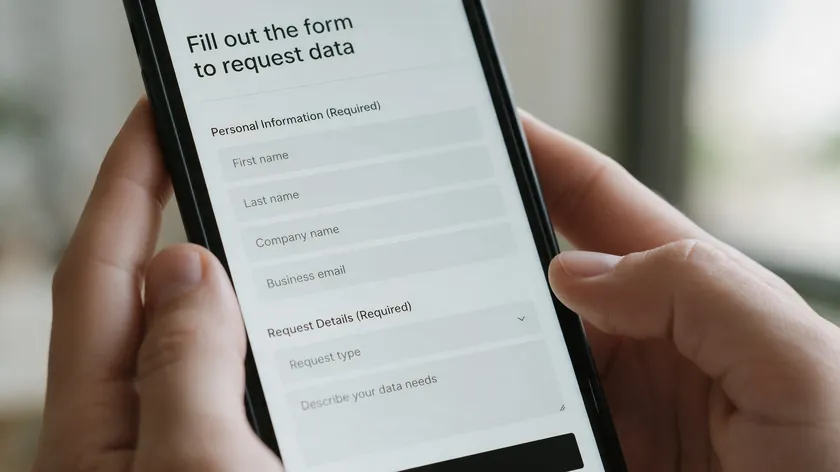
Many privacy laws give customers specific rights over their personal data, and your dropshipping privacy policy must explain these clearly. Include customer rights regarding their data in your policy—here are the key ones relevant to online businesses:
- Right to access copies of personal data collected
- Right to correct inaccuracies
- Right to request deletion of data where legally possible
- Right to object to certain processing, especially direct marketing
- Right to data portability (GDPR)
- Right to opt out of “selling” or sharing personal data (CCPA/CPRA for California residents)
Include location-specific notes. EU/EEA and UK residents have rights under GDPR, while California residents may have additional rights under the California Consumer Privacy Act.
Provide simple instructions: a dedicated data protection contact email like [email protected], possibly a web form, and a clear expected response time. Under GDPR, you generally have one month to respond, extendable to three months for complex requests.
Under CCPA/CPRA, the standard window is 45 days, extendable to 90 days when needed. State that the store may need to verify identity before fulfilling a request to prevent unauthorized access to order data.
Contact Details, Policy Updates, and Display Locations
Your privacy policy must include contact information so customers can reach you with questions or requests. Provide your legal business name, a dedicated email for privacy inquiries, and a postal address if available. This is not just a best practice—it is a requirement under most data protection laws.
Include a “Last Updated” date (e.g., “Last updated: 18 September 2026”) and a short clause explaining that the policy will be updated when data practices or applicable laws change—especially after adding new suppliers, apps, or marketing platforms. Use clear language and break the policy into sections so readers can find what they need quickly.
Display your privacy policy in the website footer on every page. Link to your privacy policy during the checkout process, before customers submit personal data. Ensure your privacy policy is easy to find on all pages—during account creation, within your Terms of Service, and from your Returns Policy page.
Related resources like the planned E-Commerce Privacy Policy article and Cookies and Privacy Policy guide will offer deeper dives into adjacent topics once published; mention and link to them from your policy page when they go live.
Turning Compliance Into a Competitive Advantage for Your Dropshipping Store
A clear, honest dropshipping privacy policy is not just a compliance checkbox—it is a way to build customer trust and stand out against competitors who use vague or copied policies.
Shoppers are increasingly cautious about who handles their personal data, and a policy that clearly explains supplier relationships and data protection measures can directly support conversion rates on product and checkout pages.
Privacy policies protect dropshippers from potential legal liability while simultaneously serving as a trust signal at the point of purchase.
Consistently honoring privacy requests and communicating clearly about data practices reduces disputes, chargebacks, and negative reviews—especially in impulse-buy niches where buyer skepticism runs high.
Once the broader Privacy Policy for Small Business and E-Commerce Privacy Policy resources are available, align your dropshipping-specific policy with their best practices to cover all your own business operations.
Privacy expectations and data protection laws will keep tightening globally. India, China, and Brazil are all updating or enforcing stricter rules.
Treating your privacy policy as a strategic asset now—rather than a grudging afterthought—gives your dropshipping store a competitive advantage that compounds over time.
Key Takeaways
- A dropshipping store must collect personal data (name, shipping address, email, and phone) and share parts of it with third-party suppliers to fulfill orders. Your privacy policy must spell this out clearly.
- Major laws like GDPR and the California Consumer Privacy Act (CCPA/CPRA) can affect dropshipping stores even if they are small or based outside the EU/US, because they sell internationally and track visitors.
- Cover dropshipping-specific data flows: what you collect on your dropshipping website, what order data you send to each supplier or fulfillment partner, and which countries that data is transferred to.
- Use your privacy policy to build customer trust and a competitive advantage by explaining security measures, customer rights, and easy ways to contact you with privacy questions.
If you want to skip writing from scratch, Termify’s Privacy Policy Generator creates a custom dropshipping privacy policy covering GDPR, CCPA, and CalOPPA—including disclosures for third-party fulfillment partners, payment processors, and international data transfers, ready to export and upload to Shopify or WooCommerce in minutes.
FAQ
Do I really need a privacy policy if my dropshipping store is just starting out?
Yes. A privacy policy is legally required for dropshipping businesses as soon as you collect any personal data—even a single email address or shipping address. Laws like GDPR, CCPA, and CalOPPA focus on data collection activity, not on how big your business is or how much revenue you earn.
Platforms like Shopify, payment gateways like PayPal, and ad networks like Facebook Ads usually require a published privacy policy before they let you use all features. Having a compliant policy from day one avoids rushed fixes later when your traffic scales and more data protection laws become relevant to your store.
How often should I update my dropshipping privacy policy?
Review your policy at least every six to twelve months, and immediately after major changes—such as adding a new supplier in a different country, switching fulfillment partners, or installing new tracking tools like a TikTok Pixel.
Keep a simple change log with dates. For example, note that on 01 March 2026 you added a new EU warehouse partner and updated the international transfer section.
Outdated privacy policies that do not match actual practices can be as risky as having no policy at all, because regulators and customers both expect your legal document to reflect reality.
What specific data must I share with my dropshipping suppliers?
In most cases, suppliers only need data necessary to fulfill orders: the customer’s name, shipping address, and sometimes a phone number or email for delivery updates. Avoid sending unnecessary data—like marketing preferences, browsing history, or full payment card details—to any supplier.
Check each supplier’s own privacy and security standards before onboarding them. Your policy should state that you work only with partners who agree to protect customer data and that you limit data shared to what is strictly required for fulfillment.
Does using Facebook Pixel or TikTok Pixel change my privacy obligations?
Adding tracking pixels means you automatically collect personal information about visitor behavior—page views, clicks, time on site, and conversion events—and may share data with those marketing platforms for analytics and targeted advertising.
Most privacy laws require you to disclose this collection and, in jurisdictions governed by GDPR, to obtain consent before setting non-essential cookies or tracking tools.
The planned Cookies and Privacy Policy resource on this site will cover cookie categories and consent banners in full. In the meantime, mention pixel-based tracking explicitly in your dropshipping privacy policy and notify customers about what data these tools collect.
Can I just copy another dropshipping store’s privacy policy?
Copying another store’s policy is risky because it almost never matches your exact data collection, suppliers, tracking tools, or geographic reach.
A copied policy might claim you follow security measures or data practices you do not actually use, creating real liability if a data breach or customer complaint occurs.
Instead, use a generator like Termify or work with a professional to create a tailored policy that reflects your own business model, order flows, and the markets you serve.
A free template can be a useful starting point, but it must be customized to describe the personal data collected, the third parties you share data with, and the countries involved in your fulfillment chain.