
Every online store needs a shipping policy, whether you sell handmade candles or run a high-volume dropshipping operation. A shipping policy outlines delivery details for customers, sets realistic expectations about how long shipping takes, and protects both you and your buyers when things go wrong.
In this guide, you’ll learn how to write a shipping policy step by step, understand the legal frameworks behind it, and get a sample shipping policy template you can customize today.
Table of Contents
- What Is a Shipping Policy? (Definition & Core Purpose)
- Legal Frameworks That Shape Your Shipping Policy
- Why Your Online Store Needs a Clear Shipping Policy in 2026
- Plan Before You Write: Map Your Real‑World Shipping Operation
- Essential Sections Every Shipping Policy Should Include
- Explaining Processing Times vs. Shipping Times
- Describing Domestic Shipping Methods, Rates, and Free Shipping Thresholds
- Writing a Clear International Shipping Policy
- Handling Shipping Restrictions, Lost or Damaged Packages, and Service Interruptions
- Order Tracking, Customer Support Inquiries, and Communication Tone
- Sample Shipping Policy Template (Ready to Customize)
- Using Termify.io to Generate and Maintain Your Refund & Return Policy
- Key Takeaways
- FAQs: Shipping Policies for Online Stores
What Is a Shipping Policy? (Definition & Core Purpose)
A shipping policy is a customer-facing page on your website that explains how orders are processed, shipped, delivered, and handled if something goes wrong. It covers both domestic and international shipping and serves as the single source of truth for everything related to getting products from your warehouse to a customer’s door.
A shipping policy differs from your return and refund policy (which covers accepted returns and money back) and your privacy policy (which covers personal data). However, many e-commerce sites link all these documents together from a single “Legal” or “Help” hub on the same page or in the website footer.
The core elements a shipping policy usually covers include processing times, shipping methods, domestic and international shipping options, international shipping costs and import duties, tracking information, shipping restrictions, and contact routes for customer support inquiries.
A shipping policy helps manage customer expectations at every stage of the fulfillment journey.
Even dropshipping stores that never touch inventory need their own policy. If your supplier ships from overseas via slow freight, your shipping policy must reflect those real arrival times rather than marketing-friendly promises that will frustrate potential customers.
Legal Frameworks That Shape Your Shipping Policy
While a “shipping policy” itself is rarely mandated by name, consumer protection and e-commerce laws in the US, UK, EU, Canada, and other regions indirectly require you to disclose key shipping details before a customer completes a purchase. Shipping policies are not legally required but are best practice for meeting these transparency obligations.
In the EU, the Consumer Rights Directive requires clear pre-contract information on delivery times, delivery costs, and any additional charges. In the UK, the Consumer Contracts Regulations require delivery within 30 days unless otherwise agreed.
In the US, the FTC’s Mail Order Rule obliges sellers to ship within the time promised or within 30 days if no promise was made.
Recent changes matter too. As of August 2025, the US ended its de minimis duty-free exemption for international mail shipments under $800. The EU customs reform that began 1 July 2026 removes the €150 customs duty exemption and introduces a temporary €3 per-item duty.
What laws typically expect you to disclose:
- Who pays customs duties and taxes
- Realistic delivery estimates and total price, including shipping fees
- Geographic limitations and shipping restrictions
- How delays, lost shipments, and disputes are handled
If you have a complex supply chain or offer international shipping, seek professional legal advice. Adding a short “This policy is not legal advice” disclaimer is also smart. Tools like Termify.io help incorporate up-to-date legal considerations, but they don’t replace a qualified lawyer.
Why Your Online Store Needs a Clear Shipping Policy in 2026
A comprehensive shipping policy sets customer expectations and reduces inquiries. Without one, your e-commerce store risks losing sales and overwhelming your support team with preventable questions. Here’s how a clear shipping policy impacts your business.
Fewer abandoned carts
According to Statista, roughly 39% of US consumers abandon carts due to surprise costs like shipping fees and taxes. Displaying shipping costs upfront can prevent cart abandonment before it starts. Additionally, 69% of items are abandoned in shopping carts due to unclear shipping policies.
Customers are far more likely to complete a purchase when they understand delivery costs before reaching checkout. Clear shipping terms remove uncertainty and reduce one of the biggest sources of last-minute purchase hesitation.
Lower support volume
Clear shipping policies can reduce customer inquiries by 50%. Questions like “Where is my order?” and “How much shipping costs to Canada?” get answered before they’re ever asked. This saves valuable time for your customer support team and allows them to focus on more complex issues that require personal assistance.
It also creates a smoother experience for customers who can quickly find answers on their own.
Greater trust
Online shoppers, especially first-time buyers and international customers, compare you against competitors. A visible shipping policy page signals professionalism and builds customer trust and transparency.
When customers know exactly what to expect, they’re more confident completing a purchase and are less likely to feel misled if delays or shipping restrictions occur. Clear communication helps establish credibility before the order is even placed.
Risk protection
Policies help resolve disputes around lost packages, customs fees, and shipments marked “delivered” but reported as missing packages by customers. They also provide a documented reference point when questions arise about shipping responsibilities, timelines, or delivery exceptions.
Having these expectations clearly outlined helps reduce misunderstandings and creates a fair process for resolving shipping-related issues. A shipping policy helps set customer expectations for delivery times and costs, which is why it’s one of the most visited pages on any online store.
Plan Before You Write: Map Your Real‑World Shipping Operation

Before you write a shipping policy, you need to audit your actual operations. A policy based on guesswork will generate more problems than it solves.
Start by answering these questions:
- Where do you ship from? Single warehouse, multiple locations, third-party logistics provider, or dropshipper?
- Which countries and regions do you serve? Continental United States only, or do you also ship internationally?
- Which shipping carriers do you use? USPS, UPS, FedEx, DHL, Royal Mail, local couriers?
- What are your real processing times? Map them by product type. Ready-to-ship items differ from made-to-order or personalized products. Define cut-off times (e.g., “Orders placed before 2 p.m. EST ship the same business day”).
- Do you offer special services? Local delivery, curbside pickup, pre-orders, subscriptions, or freight for bulky items?
- What are your peak season risks? Black Friday, Christmas, and Chinese New Year (for overseas suppliers) all create delays.
Your shipping policy must reflect these real practices accurately. Don’t copy another brand’s shipping policy template without adjusting it to your actual carriers, locations, and timeframes. That shortcut leads to broken promises and frustrated local customers who expected delivery timelines you can’t meet.
Essential Sections Every Shipping Policy Should Include
Think of this as the master checklist. Every shipping policy outlines these core components, and missing even one creates gaps that generate support tickets.
Your policy should include:
- Order processing times—specify order processing times before shipping in your policy
- Domestic shipping methods and delivery estimates—standard shipping, expedited shipping, next-day delivery
- International shipping options and international shipping costs—zones, rates, delivery windows
- Shipping restrictions—list shipping restrictions to inform customers about delivery limitations
- Free shipping thresholds and shipping rates—conditions for qualifying
- Lost, damaged, or delayed packages—outline procedures for missing or lost packages in your policy
- Order tracking information—a policy should outline tracking procedures and how customers can monitor shipments
- Customs, duties, and taxes—who pays what
- Returns and cancellations (summary link)—linking to a return policy can enhance a shipping policy’s effectiveness
Shipping rates should be clearly displayed in a readable format. Where helpful, use small tables comparing shipping options like standard vs. express. Write each section in plain English with short, 3–4 line paragraphs. Essential components of a shipping policy include processing times and costs but also the human-friendly explanations around them.
If your store has unique aspects, like perishable goods, hazardous items, or digital-plus-physical bundles, add an “Additional Information” sub-section.
Explaining Processing Times vs. Shipping Times
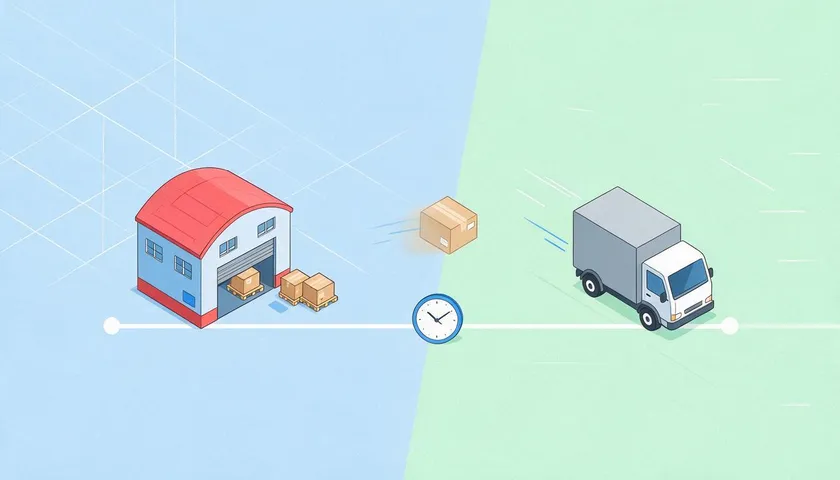
Processing times define how long it takes to prepare an order for shipment. Shipping time (or transit time) is how long the carrier takes to deliver it. Mixing these up is one of the most common causes of customer complaints.
Be concrete. For example: “Orders placed Monday–Friday before 1 p.m. PST are processed the same business day. Orders after 1 p.m. or on weekends and US public holidays are processed the next business day.”
Communicate variations clearly. Personalized items may need 3–5 extra business days to produce. Pre-orders ship on or after a specific launch date (e.g., “Ships on or after 10 October 2026”). Dropshipped items that ship directly from overseas warehouses may have longer processing windows.
Here’s a sample table to make this scannable:
| Product Type | Processing Time | Notes |
|---|---|---|
| Ready-to-ship items | 1–2 business days | Excludes weekends and holidays |
| Handmade jewelry | 3–5 business days | Custom finishing required |
| Printed posters | 1–2 business days | Printed on demand |
| Pre-order items | Ships on launch date | Date noted on product page |
Add a short note about peak-season delays and unforeseen service interruptions like weather events, carrier strikes, or pandemics. Let customers know how you’ll communicate updates: a site banner, email notification, or updated policy date.
Describing Domestic Shipping Methods, Rates, and Free Shipping Thresholds
Domestic shipping is where you’ll typically offer multiple shipping options and where clarity has the biggest effect on conversions. Most e-commerce businesses offer multiple shipping options to match different urgency levels and budgets.
Shipping costs can include standard, expedited, or rush options. Shipping options can include standard, expedited, and overnight delivery. Present them with concrete details so online shoppers know exactly what they’re choosing.
Here’s a sample comparison table:
| Method | Carrier(s) | Delivery Estimate | Cost or Rule |
|---|---|---|---|
| Standard | USPS Ground Advantage | 5–7 business days | $5.99 flat rate |
| Expedited | UPS 2-Day / USPS Priority | 2–3 business days | $14.99 |
| Overnight | FedEx Overnight | Next business day | Weight-based (from $24.99) |
Shipping costs can be calculated using flat-rate or real-time carrier rates, and shipping costs vary based on package destination and size. State explicitly whether your pricing is flat-rate or calculated at checkout.
Free shipping is often offered for orders over a certain amount. Many brands set free shipping thresholds at or slightly above their average order value to protect margins. For example: “Free standard shipping on US orders over $75 before tax.” If you offer free shipping, make the qualifying conditions unmistakable.
Note any surcharges for remote areas, oversized packaging materials, or P.O. box restrictions for certain shipping methods.
Writing a Clear International Shipping Policy
International shipping deserves its own clearly labeled section, even if your store only ships to a handful of countries. The variables multiply: longer delivery timelines, customs paperwork, and shifting regulations.
International Shipping Options and Costs
List exactly which countries or regions your store ships to as of the policy’s “Last updated” date. Mention that this list may change with carrier or regulatory updates.
Provide international shipping information covering both standard and express options with estimated delivery ranges. International shipping may take an extra 3 to 5 days to process compared to domestic orders. Include specific notes about remote destinations where estimated delivery times may be longer.
International shipping costs should be stated clearly: flat rates per zone, weight-based calculations, or real-time carrier quotes.
Customs Duties and Responsibility
Customers are typically responsible for customs duties and import taxes on international orders, unless you ship DDP (Delivered Duty Paid). State this plainly. For example: “We ship DDU (Delivered Duty Unpaid). Customers are responsible for all duties, VAT, and brokerage fees upon arrival.”
International shipping may incur additional customs and import duties, and international shipping may incur additional taxes and duties depending on the destination country.
| Destination | Estimated Delivery | Customs / Duties | Notes |
|---|---|---|---|
| Canada | 7–10 business days | Paid by buyer at delivery | Remote areas may add 3–5 days |
| EU countries | 10–14 business days | Paid by buyer (EU de minimis exemption removed July 2026) | Tracking is limited after the border. |
| Rest of World | 14–30 business days | The buyer is responsible for all fees | Times vary by country |
Include a short explanation about possible customs delays and tracking limitations once parcels cross borders. If an international order appears stuck, tell customers how to contact your support team or their local customs office.
Handling Shipping Restrictions, Lost or Damaged Packages, and Service Interruptions

This is the “problem-solving” section of your policy. It protects both you and the customer when things don’t go as planned.
Shipping Restrictions
Shipping restrictions may apply to certain states or countries. Clearly list any geographic exclusions, carrier limitations, and product-specific rules.
- Shipping restrictions may prevent delivery to certain states due to local regulations.
- Some shipping methods cannot deliver to P.O. boxes (most courier services like FedEx and UPS).
- Certain products may be restricted from shipping to specific locations (e.g., aerosols can’t ship by air, lithium batteries have carrier limitations, and age-restricted goods require verification).
- Shipping restrictions can vary based on local laws and regulations, so keep this section current.
Being upfront about shipping limitations helps customers avoid placing orders that cannot be fulfilled and reduces frustration later in the buying process. Review this section regularly to ensure it reflects your current carriers, destinations, and applicable regulations.
Lost, Stolen, or Damaged Packages
Clear guidelines for lost or damaged packages should be included in the policy. Many packages get lost due to factors outside control, from carrier misrouting to porch theft. Outline your protocol for lost or missing packages with specific steps:
- Customers should know how long to report missing items (e.g., “Report within 7 days of the tracking status showing ‘delivered'”).
- Direct customers on how to report missing packages: require photos of damage, proof of address, and the tracking number.
- Provide contact information for reporting lost packages (support email, contact form).
- After a carrier marks a parcel as delivered, ask customers to check with neighbors and their local post office before escalating.
A clearly documented process helps customers understand what to expect and allows your team to handle claims consistently. Even when an issue falls outside your control, transparent procedures demonstrate professionalism and help preserve customer trust.
Service Interruptions and Delays
Explain how your store will communicate widespread carrier issues or crises. Options include a banner notice on your shipping page, email updates to affected orders, and updated delivery estimates in the policy itself. Weather events, natural disasters, carrier strikes, and seasonal volume surges can all affect shipping timelines.
Order Tracking, Customer Support Inquiries, and Communication Tone

Modern online shoppers expect real-time tracking and fast, clear answers to shipping questions. Your policy should make both easy to find.
Order Tracking Details
State when a tracking number is generated (typically when the carrier scans the package); how it’s delivered (email, SMS, or account dashboard); and that tracking links may take 24–48 hours to show initial scans. For international customers, note that tracking updates may become less frequent once parcels leave the origin country.
Include tracking details in your shipment confirmation email and shipping confirmation email, and link back to the full shipping policy for additional shipping information.
Customer Support Contact Options
Provide specific channels: a support email address, contact form URL, or live chat, along with availability hours and time zone. For example: “For shipping issues, contact us at [Support Email] or via our contact form. Live chat is available weekdays, 9 a.m.–5 p.m. EST.”
Include a short bullet list inside the policy summarizing “When to contact us”:
- Tracking not updated for 7+ days after shipment
- Parcel marked delivered but not received (missing or lost packages)
- International order held in customs for more than 14 days
- The package arrived damaged
Use simple, friendly language consistent with your brand voice. Avoid heavy legal jargon while still being precise about responsibilities and timeframes. The goal is to answer customer questions before they need to contact you.
Sample Shipping Policy Template (Ready to Customize)
Below is a free shipping policy template you can copy, customize, and publish. Replace the bracketed placeholders with your own shipping details.
Want to see a full worked example first?
[Your Store Name] Shipping Policy Last updated: 15 July 2026
Thank you for shopping with [Your Store Name]. Please review our shipping information below before placing your order.
Order Processing Times Orders placed Monday–Friday before 2 p.m. EST are processed the same business day. Orders placed after 2 p.m. or on weekends and US public holidays ship the next business day. Custom or personalized items require an additional 3–5 business days.
Domestic Shipping: We ship within the continental United States using USPS, UPS, and FedEx. Standard shipping takes 5–7 business days. Expedited shipping takes 2–3 business days. Next day delivery is available for select items.
Shipping Costs and Free Shipping We offer free shipping on all US orders over $79 before tax. Standard shipping is a $5.99 flat rate. Expedited shipping starts at $14.99. Overnight rates are calculated at checkout based on weight.
International Shipping: We currently ship to Canada, the UK, and EU countries. International orders typically arrive within 7–21 business days depending on destination. All international orders ship DDU. Customers are responsible for customs duties, VAT, and brokerage fees.
Order Tracking: You’ll receive a shipping confirmation email with your tracking number once your order ships. Tracking may take 24–48 hours to update after shipment.
Lost, Damaged, or Delayed Packages If your package is lost or arrives damaged, contact us at [Support Email] within 7 days. Please include your order number, tracking number, and photos of any damage. Check with neighbors and your local post office before reporting a missing package.
Shipping Restrictions: We do not ship to P.O. boxes via UPS or FedEx. Certain items cannot ship internationally due to customs regulations. We do not currently ship to embargoed countries.
Returns and Cancellations: For return shipping costs and our full return and refund policy, please visit our [Returns Page].
Contact Us: For shipping questions, email [Support Email] or use our contact form. Live chat is available weekdays, 9 a.m.–5 p.m. EST.
Use this sample shipping policy template as a starting point. Adjust the shipping policy examples, carriers, rates, and countries to match your actual operations. You can also use a free template generator like Termify.io to build a version tailored to your business.
Using Termify.io to Generate and Maintain Your Refund & Return Policy
A clear Refund & Return Policy is just as important as a shipping policy. While your shipping policy explains how orders are delivered, your refund and return policy tells customers what happens if they need to send an item back, request an exchange, or receive a refund.
Using both policies together helps create a transparent buying experience and reduces confusion after a purchase.
Why You Need Both Policies
A shipping policy explains how and when customers receive their orders, but it doesn’t explain what happens if they want to return an item or request a refund. Every business that publishes a shipping policy should also have a clear Refund & Return Policy.
Together, these documents set customer expectations, reduce disputes, and help your business comply with consumer protection laws.
Step-by-Step Workflow
Writing a refund and return policy from scratch takes time. A refund policy generator like Termify.io walks you through the required questions, incorporates current legal considerations, and generates a professionally formatted Refund & Return Policy that’s ready to publish.
This saves time while helping ensure your policy reflects your actual business practices.
Here’s the typical workflow:
- Create an account on Termify.io.
- Select “Refund & Return Policy” from the list of available legal documents.
- Answer guided questions about your return window, eligible and non-returnable products, refund methods, exchanges, store credit, return shipping costs, damaged or defective items, and any exceptions to your policy.
- Review and customize the generated policy to match your brand’s tone and operational practices.
Once published, review your policy regularly and update it whenever your return procedures, products, or applicable laws change. Keeping it accurate helps set clear expectations for customers and reduces the risk of disputes.
Maintaining and Updating Your Policy Over Time
Termify.io generates policies in formats suitable for websites and apps (HTML and plain text), making them easy to publish and customize.
Whenever your business changes—such as introducing new product categories, modifying your return window, changing exchange procedures, or expanding into new markets—simply log back into Termify.io, update your responses, and regenerate the policy. Be sure to update the “Last updated” date whenever you make changes.
As with any legal document, your Refund & Return Policy should accurately reflect how your business actually handles returns and refunds rather than copying language from another company’s policy.
Key Takeaways
- A good shipping policy is both a customer-experience tool and a risk-management document, not just filler text for a legal page.
- Always separate processing times from shipping times, and present delivery timelines in easy-to-scan tables with carrier names and realistic estimates.
- Be explicit about customs responsibilities for international orders, especially given the 2025–2026 changes to de minimis duty exemptions in the US and EU.
- Give customers clear, step-by-step instructions for reporting missing or lost packages, including time limits and required evidence.
- A clear shipping policy can reduce customer inquiries about shipping while simultaneously building trust with both new and returning buyers.
Skip the legal guesswork — build a policy that holds up in every jurisdiction you sell to. Try our Return and Refund Policy Generator now!
FAQs: Shipping Policies for Online Stores
Below are common questions about shipping policies that weren’t fully covered above. Use this shipping policy FAQ to fill in any remaining gaps.
Is a shipping policy legally required?
A shipping policy is not legally mandated by name in most jurisdictions. However, consumer-protection laws in the US, EU, UK, and Canada require you to disclose shipping costs, delivery estimates, and other key shipping details before purchase. A published shipping policy is the simplest way to meet those obligations and is considered best practice for any e-commerce store.
How often should I update my shipping policy?
Update your policy whenever you add new countries, change shipping carriers, adjust free shipping thresholds, modify international shipping options, or after significant legal changes (like the 2026 EU customs reform). At minimum, review it quarterly and refresh the “Last updated” date.
Can I copy another store’s shipping policy?
That’s risky. Another store’s policy reflects their carriers, processing times, and legal obligations, not yours. Copying it can lead to broken promises, legal exposure, and even plagiarism issues. Instead, use a customizable shipping policy template or a generator like Termify.io to create your own policy based on your real operations.
How detailed should my international shipping policy be?
At minimum, list every country you ship to, typical delivery windows, international shipping costs or how they’re calculated, and who pays customs duties and taxes. Include international shipping information about tracking limitations and customs delays. The more detail you provide, the fewer support tickets you’ll receive from international customers.
A shipping policy is more than a legal formality—it’s often the last thing a customer reads before checkout and the first thing they check when something goes wrong. Get the details right, and it works quietly in the background, protecting both your business and your customers with every order.