A SaaS privacy policy explains what personal data your service collects, how it uses and shares that data, and how users can control it.
Unlike a simple website policy, a SaaS policy must address in-app content, product telemetry, integrations, sub-processors, and the dual controller/processor role that most SaaS businesses occupy.
This guide walks through every section, provides tables and a checklist, and shows how to align the policy with your data processing agreement, sub-processor list, and security documentation so the whole package holds up under enterprise review.
Table of Contents
- Quick Answer: What a SaaS Privacy Policy Must Cover
- Who This SaaS Privacy Policy Template Is For
- How Controllers and Processors Work in SaaS
- Map Your SaaS Data Flows Before Writing
- Data Types, Purposes, and Lawful Basis
- Customer Account Data vs. Customer Content in the Product
- Legal Bases and Regional Differences
- Data Protection Principles Applied to SaaS
- Cookies, SDKs, and Product Analytics
- Billing, Payments, and Financial Data
- User-Generated Content and Uploaded Files
- API, Integrations, and Third-Party Apps
- Data Processors, Sub-Processors, and Vendor Management
- Customer Data Processing Agreement (DPA)
- Security Measures, Data Breaches, and Data Loss
- Logs, Telemetry, and Product Usage Analytics
- Data Retention, Backups, and Data Deletion
- International Transfers and Storage Locations
- Data Subject and User Rights
- Enterprise Customers, Security Questionnaires, and Compliance
- How and When You Update Your SaaS Privacy Policy
- Practical SaaS Privacy Checklist
- Key Takeaways
- FAQ about SaaS Privacy Policies
- Do I need a separate privacy policy for each SaaS product I run?
- Can an early-stage SaaS launch with a simple privacy policy and evolve it later?
- How detailed should my sub-processor list be for enterprise customers?
- Do I need user consent for all data I process in my SaaS app?
- How does a DPA relate to my SaaS privacy policy?
Quick Answer: What a SaaS Privacy Policy Must Cover
A SaaS privacy policy must cover every category of personal data the service touches, the purposes behind each collection, who the data is shared with, how long it is retained, and what rights users have over it.
A comprehensive privacy policy covers data collection, purposes, and user rights in a structure that maps directly to how SaaS platforms continuously ingest, process, and store user data.
What makes a SaaS policy different from a generic website policy:
- The SaaS company is usually a data controller for account data, billing details, product analytics, and marketing activities. It decides why and how that data is processed.
- The same company is usually a data processor for customer content stored inside the product (CRM records, uploaded files, messages). It processes that data only on the customer’s instructions.
- The policy must clearly separate “customer account data” (controller role) from “customer content data” inside the product (processor role). Mixing the two confuses users, regulators, and enterprise buyers.
SaaS companies must inform users about what data is gathered and how it is used. A good privacy policy structure includes sections on data collection, usage, sharing, retention, security, user rights, and sub-processors.
Enterprise customers will expect the privacy policy, data processing agreement, and security documentation to tell a consistent story before they sign an order form.
For a walkthrough of universal privacy policy clauses that apply to any website or app, see the Data Privacy Policy Guide on this blog. This article focuses on what changes when the product is a SaaS platform.
Who This SaaS Privacy Policy Template Is For
This guide is written for SaaS founders, product managers, and legal or ops teams preparing a privacy policy before launch, before an enterprise deal, or during a compliance audit.
A product marketing manager reviewing messaging around data practices will also find the tables and checklist useful.
The examples assume a B2B subscription SaaS with web and mobile apps, using common tools like Stripe for billing and AWS or similar cloud providers for hosting.
The template works for GDPR SaaS compliance, but it also flags issues relevant to US state laws, UK data protection rules, and other jurisdictions without becoming a multi-law treatise.
This is not legal advice. Have counsel review the final text, especially if your SaaS handles sensitive data categories or operates in regulated sectors like healthcare (HIPAA) or payments (PCI DSS). What this guide does is give you the structure and substance so your lawyer isn’t starting from a blank page.
How Controllers and Processors Work in SaaS
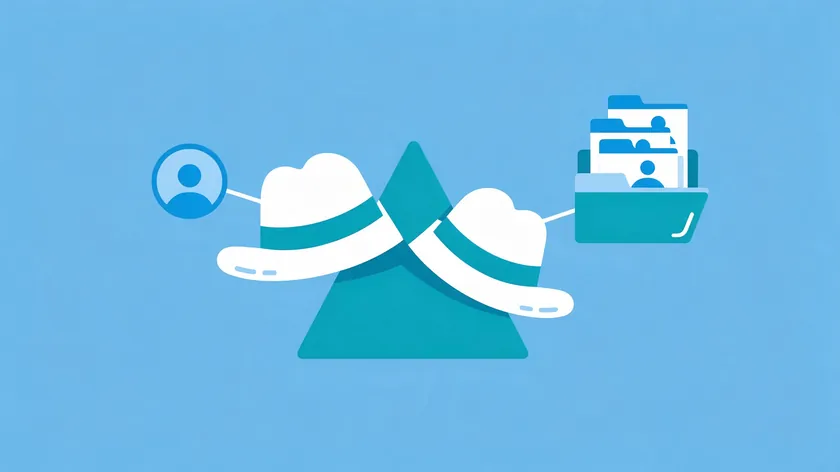
GDPR distinguishes between a data controller, which determines why and how personal data is processed, and a data processor, which acts only on the controller’s instructions.
The European Commission defines these roles and requires that processors operate under a written contract with the controller. Most SaaS businesses wear both hats, sometimes in the same user session.
Data controllers must provide transparency notices under GDPR, and a privacy policy must comply with GDPR Article 13 and 14. When your SaaS collects a user’s name and email at signup, runs product analytics on feature usage, or sends marketing emails, you are the controller. You decide the purpose, you pick the tools, you own the lawful basis.
When a customer uploads a spreadsheet of their clients into your app, stores support tickets, or syncs CRM records, you are the data processor.
The customer decides what data goes in and why. Your job is to process it according to their instructions, protect it with appropriate security, and delete it when they ask.
The privacy policy should cross-reference the separate data processing agreement where the SaaS acts as the processor for customer data. This tells enterprise buyers exactly which document governs which data.
If a SaaS provider uses customer content for its own analytics, model training, or product marketing beyond agreed instructions, it becomes a controller or joint controller for those activities.
That shift brings full controller obligations: separate notice, separate lawful basis, and separate rights handling.
Table: Controller vs Processor Responsibilities in a SaaS
| Activity | Role | Key Obligations | Documentation |
|---|---|---|---|
| User signup and account management | Controller | Provide privacy notice, establish a lawful basis, and handle rights requests | Privacy policy, Records of Processing (RoPA) |
| Billing and payment processing | Controller | Disclose payment processors, retain invoices per tax law, manage billing details | Privacy policy, vendor contracts |
| Product analytics and usage data | Controller | State purpose and lawful basis, set retention, and allow opt-out where required | Privacy policy, cookie/analytics policy |
| Marketing emails and newsletters | Controller | Obtain consent where required, provide unsubscribe, and log consent records | Privacy policy, consent management platform |
| Customer content stored in app | Processor | Process only on customer instructions, implement security, and assist with rights | Data processing agreement, sub-processor list |
| Customer support (accessing content) | Processor (with controller elements for support metadata) | Limit access to what is necessary, log access, and retain tickets per policy | Privacy policy, DPA, access control logs |
A closing note: the boundary between controller and processor is not always obvious. When in doubt, document the reasoning. Regulators look for evidence that you analyzed the question, not that you got a perfect answer on the first try.
Map Your SaaS Data Flows Before Writing
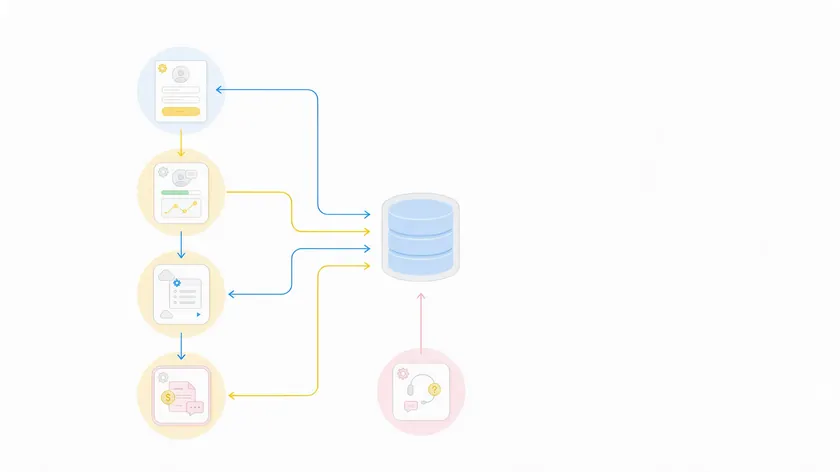
The first practical step is building an inventory of every personal data flow in your SaaS. SaaS platforms continuously ingest, process, and store user data across dozens of touchpoints.
If you skip this mapping step, the policy will contain gaps that surface during an enterprise security review or, worse, during a regulatory audit.
Data sources to cover:
- Sign-up and onboarding forms (name, email, company, role)
- In-app events and user behavior tracking (clicks, feature usage, session duration)
- API calls (data pulled from or pushed to external systems)
- Uploaded files and user-generated content
- Support channels (chat, email, phone transcripts)
- Billing systems and payment gateways
- Third-party applications and marketplace integrations
- Internal tools: error logging, application monitoring, backup systems
For each flow, document the data category, purpose, lawful basis (if GDPR applies), whether you are controller or processor, and the retention period. A spreadsheet with columns for “data type, purpose, legal basis, role, retention” is enough at the start.
Specialized data-mapping software can replace the spreadsheet as the organization grows, but the spreadsheet forces the right questions early.
This inventory becomes the source of truth for the privacy policy, the DPA, and the sub-processor list. If a data flow is not in the inventory, it should not be in the product, and vice versa.
Data Types, Purposes, and Lawful Basis
A SaaS privacy policy should list the main categories of personal data it collects, explain why each category is collected, and state the lawful basis relied upon.
SaaS companies should clearly disclose categories of data collected and shared, and privacy policies must outline legal bases for processing data.
Table: Data Types, Purposes, and Lawful Basis
| Data Category | Examples | Purpose | Controller vs. Processor | Lawful Basis (GDPR) |
|---|---|---|---|---|
| Account details | Name, email, company name, seat assignments | User signup, login, communication | Controller | Contract |
| Billing and payment data | Billing address, invoice history, last 4 digits of card | Subscription management, taxes, refunds | Controller | Contract / Legal obligation |
| Product telemetry and usage data | Feature usage, IP address, device IDs, error logs | Diagnostics, capacity planning, product improvement | Controller | Legitimate interest |
| Marketing leads / CRM data | Name, email, job title from forms or events | Outreach, conversion, newsletters | Controller | Consent / Legitimate interest |
| User-uploaded content | PDFs, images, chat messages, code, design files | Enable core product functionality | Processor | Contract (customer’s instructions) |
| Support interactions | Ticket text, screenshots, call recordings | Resolve issues, train support agents | Controller (metadata) / Processor (content) | Legitimate interest / Contract |
The same person can appear in multiple rows. A customer’s admin is an account holder (row 1), a billing contact (row 2), a tracked user generating usage data (row 3), and the owner of uploaded content (row 5). Each row carries a different kind of retention rule and rights-handling process. The policy must make this visible.
Transparency about data handling builds trust and enhances user onboarding. When users see a clear, specific list of what you collect and why, they are less likely to abandon signup or escalate concerns to their legal team.
Customer Account Data vs. Customer Content in the Product
This is the most important SaaS-specific distinction in any privacy policy. Account data identifies who the customer is. Content data is what they store and do inside the app. Mixing them in one vague paragraph creates confusion for users, regulators, and enterprise procurement teams.
Customer Account Data
Account data includes the information your SaaS needs to manage the relationship: name, business email, company name, seat assignments, subscription plan, password hashes, and billing contact details. You are the controller for this data. You decided to collect it, you chose the form fields, and you determined how long to keep it.
Customer Content Data
Content data is whatever the customer puts into the product: CRM records, support tickets, uploaded PDFs, in-app chat messages, code repositories, design files, or any other materials.
The customer decides what goes in and who within their organization can access it. You, as the SaaS provider, are the data processor for this content.
Data minimization is a principle requiring only necessary data to be collected. Apply it to both categories. If your signup form asks for a phone number you never use, remove it. If your product stores metadata from uploaded files that serves no purpose, strip it.
Retention, Export, and Deletion Rules for Each Type of Data
The policy should describe different rules for each category, especially at the end of a subscription:
- Account data may be retained for a defined period after cancellation to handle refunds, tax records, or reactivation requests.
- Customer content should be exportable before termination and deleted from live systems within a stated window (for example, 30 days after contract end).
- Billing records are typically kept for the period required by local tax and accounting law, often between 5 and 10 years.
Make these timelines concrete. “We retain data as long as necessary” tells the reader nothing.
Legal Bases and Regional Differences
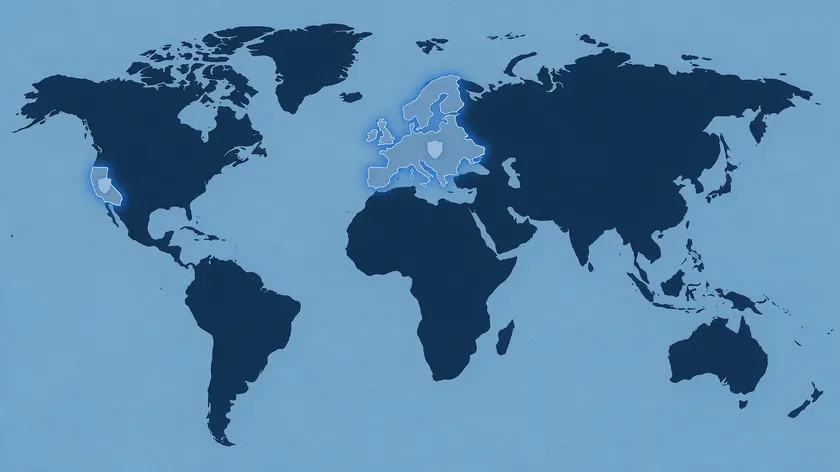
A SaaS privacy policy has to work for customers in several regions. This section covers only the legal bases and regional differences that actually change what the policy says.
For full primers, the GDPR Compliant Privacy Policy Guide and California Privacy Policy Template on this blog cover the generic requirements in depth.
GDPR Lawful Bases for SaaS
GDPR applies if personal data of individuals located in the EU is processed, regardless of where the SaaS company is headquartered. For controller activities, the most common lawful bases in SaaS are:
- Contract: processing necessary to deliver the service the user signed up for (account management, core features)
- Legitimate interest: processing that benefits the business without overriding user rights (product analytics, fraud prevention, capacity planning)
- Consent: required for optional processing like marketing emails, behavioral profiling, and non-essential cookies
If your SaaS uses customer content for model training or cross-customer benchmarking, contract necessity will not cover it. You need a separate lawful basis, typically consent or a carefully documented legitimate interest assessment.
US State Laws: CCPA and CPRA
CCPA applies to businesses that meet specific thresholds collecting data from California residents. A SaaS company must determine whether it is a “business” (controller equivalent) or a “service provider” (processor equivalent) under CPRA.
The distinction drives whether California consumer rights like deletion, access, and opt-out of sale or sharing apply directly to the SaaS or flow through the customer. The California Privacy Policy Template on this blog covers the generic wording.
One Policy That Works Globally
Write one global policy with universal sections, then append jurisdiction-specific subsections only where the law adds or changes rights. For example, add an “Additional Rights for EEA Residents” subsection and a “California-Specific Disclosures” subsection, rather than writing three separate policies.
Use consistent defined terms (“you,” “customer,” “end user,” “data subject”) and clarify which rights apply by region.
Staying focused on what changes in a SaaS context, rather than copying a generic compliance primer, keeps the policy accurate and maintainable.
Data Protection Principles Applied to SaaS

Core data protection ideas like minimization, purpose limitation, and integrity translate into concrete SaaS design choices. These are not abstract principles to list in a policy and ignore in code.
Practical examples:
- Collect only mandatory profile fields. If the feature does not need the user’s phone number, do not ask for it.
- Limit access to production databases to the engineering and security teams that need it. Unauthorized access often results from poor provisioning practices, not sophisticated attacks.
- Implement role-based access control so support agents see only the customer data relevant to the ticket, not the full database.
- Encrypt data in transit (TLS 1.2+) and at rest. Using encryption protects sensitive data in SaaS applications and is expected by every enterprise buyer.
- Run regular security audits. Technical safeguards include encryption, access controls, and regular security audits; all three should be documented and testable.
Misconfigurations cause a large portion of SaaS security incidents. A misconfigured S3 bucket, an overly permissive IAM role, or a forgotten staging environment with production data can expose confidential information to the public internet. Most are preventable with access control reviews and infrastructure-as-code practices.
Good data protection practices reduce both the risk of data loss and regulatory exposure. The sections on security measures and data retention below build on these principles with specifics.
Cookies, SDKs, and Product Analytics

A SaaS privacy policy must describe the tracking technologies used in both the marketing site and the web application. These are different contexts with different rules.
What to cover:
- Which analytics tools are deployed (for example, Google Analytics, Mixpanel, Amplitude, Segment)
- What data they collect: IP addresses, device IDs, usage events, session recordings, referral sources
- Purposes: product analytics and diagnostics versus marketing attribution and retargeting
- Whether consent is required before the tracker fires
Strictly necessary cookies for login sessions, CSRF protection, and security do not require opt-in consent under most frameworks. Analytics and advertising cookies often do, especially for users in the EEA or UK. The policy should state which category each tracker falls into.
User behavior data collected through product analytics can reveal patterns about how individuals interact with the software. If you use that data to build internal reports, train recommendation models, or segment users for product marketing, state it explicitly.
The privacy policy can summarize cookie categories in a few lines but should link to a dedicated cookie policy page with a full cookie table and configuration options. Keep the detail there, not in the core policy.
Billing, Payments, and Financial Data
Most SaaS products use third-party processors like Stripe, Adyen, or PayPal and never store full card numbers on their own systems. The policy should state this clearly.
What to disclose:
- Which payment providers handle card processing
- What billing data the SaaS itself stores (billing contact name, address, last 4 digits of card, expiration date, invoice history)
- Purposes: subscription management, fraud prevention, tax reporting, accounting
- That PCI DSS compliance is handled by the payment gateway, not the SaaS application layer
Privacy policies should specify data retention periods for personal data. For billing, retention periods for invoices and transaction records are driven by tax and accounting laws and typically range from 5 to 10 years depending on the country. The policy should state the period you apply rather than hiding behind “as long as legally required.”
Refunds and chargebacks generate additional records (dispute details, communication logs) that may be retained for the same period. From a data perspective, the policy should explain what records are created and how long they last.
User-Generated Content and Uploaded Files
SaaS applications often host large volumes of user-generated content: documents, images, code, messages, spreadsheets, and design files. That content frequently contains personal data about people who are not users of the SaaS at all (for example, a customer’s clients whose records sit in a CRM).
The customer is usually the controller for that content. The SaaS is the data processor, acting on instructions defined in the data processing agreement. The privacy policy should state this plainly.
Practical questions the policy must address:
- Who can see the content? Team members, workspace admins, and support engineers under strict access controls. Support staff should access content only when troubleshooting a reported issue, with access logged.
- How is content backed up? State the backup frequency and retention window.
- What happens on account suspension or termination? Content should be exportable before the account closes and deleted from live systems within a stated period.
- Acceptable use: content that violates the Terms of Service (illegal material, malware) may be removed with limited logging for legal compliance and abuse prevention.
The policy should be clear that the SaaS does not review, scan, or mine customer content for its own purposes unless explicitly stated and separately authorized.
API, Integrations, and Third-Party Apps
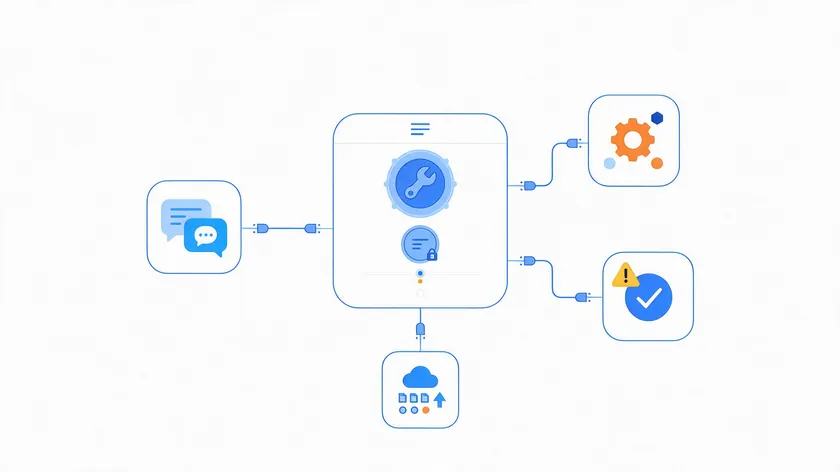
Modern SaaS products rely on APIs in both directions. Your SaaS calls external APIs (Slack, Google Workspace, Salesforce, and Microsoft Graph), and external apps call your SaaS API. Each direction creates data flows that the policy must address.
What to state:
- What data fields are pulled or pushed through major integration categories (for example, user profiles synced from an identity provider like Microsoft Entra, tickets pushed to a project management tool, and events sent to an analytics pipeline)
- Whether those third parties act as independent controllers (they set their own purposes) or as sub-processors (they act on your or your customer’s instructions)
- That customers are responsible for configuring and authorizing third-party applications on their side; the SaaS controls its own integrations but cannot govern what a customer connects through an open API
Unapproved integrations create compliance blind spots. When employees in a customer organization connect unauthorized tools to your API, neither you nor the customer’s security teams may have visibility into the data flows.
The policy should recommend that customers review the privacy policies of connected services, since those are outside the SaaS vendor’s control.
If your SaaS offers a marketplace or app directory, note that listed apps are subject to their own terms and that the SaaS is not responsible for their data practices.
Data Processors, Sub-Processors, and Vendor Management
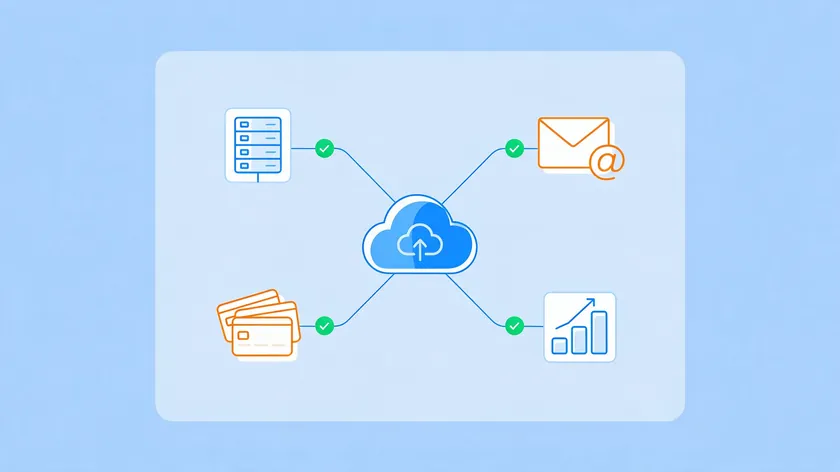
Every SaaS depends on infrastructure and service vendors: cloud hosting, email delivery, analytics, error tracking, and payment processing. When these vendors process personal data on behalf of your customers, they are sub-processors, and they must be disclosed.
Third-party subprocessors must be disclosed in privacy policies. Non-compliant vendors can introduce legal risks that extend to your SaaS and, by extension, to your customers.
The SaaS must vet each vendor for data protection practices, establish contractual safeguards (DPAs, Standard Contractual Clauses for non-EEA transfers), and monitor compliance on an ongoing basis.
The privacy policy should commit to:
- Maintaining a public sub-processor list, updated with timestamped revisions
- Giving customers advance notice (30 days is common) before adding or replacing a material sub-processor
- Ensuring every sub-processor is bound by data protection obligations at least as strict as those in your own DPA
Non-compliant vendors expose businesses to legal risks. If a sub-processor suffers a breach or processes data outside agreed instructions, the SaaS provider bears responsibility to its customers. Manage that risk with regular vendor reviews, not just a signed contract at onboarding.
Example: Sub-Processor List Layout
Below is a sample layout for a sub-processor list. The actual live list should be kept on a separate page linked from the privacy policy and updated whenever vendors change.
| Vendor Name | Country/Region | Service Provided | Data Categories Processed | Transfer Mechanism |
|---|---|---|---|---|
| [Cloud Hosting Provider] | EU / US | Infrastructure and database hosting | All customer data, account data | EU-US Data Privacy Framework |
| [Email Delivery Service] | US | Transactional and marketing emails | Name, email address | Standard Contractual Clauses |
| [Payment Gateway] | US | Payment processing | Billing contact, card last 4 digits | Standard Contractual Clauses |
| [Error Tracking Tool] | EU | Application error monitoring | IP address, device ID, error traces | N/A (EU-only processing) |
| [Analytics Platform] | US | Product usage analytics | Usage events, device ID, IP address | EU-US Data Privacy Framework |
Columns can be adjusted based on what your customers need. Some enterprise buyers request additional detail under NDA, such as specific certifications (SOC 2, ISO 27001) or DPA execution status. Provide that in a supplementary document rather than overloading the public list.
Enterprise customers review sub-processor lists carefully during security and privacy due diligence. An outdated or vague list (“we use industry-standard analytics tools”) will lose deals. Specificity builds trust.
Customer Data Processing Agreement (DPA)
A data processing agreement is required under GDPR Article 28 whenever the SaaS processes personal data on behalf of customers. Privacy policies must detail data processing agreements when applicable, and for most B2B SaaS, that means every paying customer relationship.
The privacy policy should reference, not restate, the DPA’s key topics:
- Scope and purpose of processing
- Security measures (aligned with what the policy and security page describe)
- Sub-processor rules: prior authorization or general authorization with notification of changes
- Data subject rights support: how the SaaS assists customers in responding to access, deletion, or portability requests from their own end users
- Data transfer mechanisms: SCCs, adequacy decisions, or the EU-US Data Privacy Framework, where applicable
The policy should explain how customers sign the DPA. Common options: click-accept during checkout, a downloadable PDF that counter-signs with the order form, or a negotiated version for enterprise plans. Clarify which path applies and where to find the standard DPA text.
Customers may request tailored DPAs. This is normal for large contracts, but founders should know that excessive one-off negotiation increases legal overhead and creates version-control problems.
Where possible, invest in a strong standard DPA that addresses most concerns upfront, and reserve custom negotiations for genuinely novel requirements.
Security Measures, Data Breaches, and Data Loss

This section of the policy summarizes the technical and organizational measures protecting data. Detailed control lists belong on a separate security or trust page; the privacy policy provides the overview.
Typical SaaS Security Measures
Measures to mention in the policy:
- TLS encryption in transit for all connections
- AES-256 (or equivalent) encryption at rest for stored data
- Role-based access control limiting who can reach production systems
- Audit logs recording access to critical data and configuration changes
- Regular backups with tested recovery procedures
- Hardened cloud infrastructure with certifications (SOC 2, ISO 27001)
- Strong authentication protocols, including multi-factor authentication, which reduce unauthorized access risks
- Continuous monitoring with alerts that notify the security team of suspicious activity
Regular security audits help identify vulnerabilities in SaaS applications. Schedule them at least annually, and run automated vulnerability scans more frequently.
Data breaches are among the top SaaS security risks, and regular compliance audits help identify security gaps before attackers do.
Data Breach Response
The policy must briefly describe how the company handles breaches: detection, assessment, containment, and notification.
Under GDPR, a controller must notify the supervisory authority within 72 hours of becoming aware of a breach where feasible, and a processor must notify its controller without undue delay.
As a SaaS processor, your customers need that notice fast, so commit to a specific window in your DPA. State how affected customers will be contacted (email, in-app alert, or phone for enterprise accounts) and what information the notification will include.
Data breaches are a common SaaS risk organizations face. Do not treat breach response as a theoretical exercise. Document the process internally and reference it in the policy without exposing the full incident response playbook.
Security Incidents vs. Data Loss
Distinguish between a security incident (unauthorized access, data exfiltration, credential compromise) and a data loss event (accidental deletion, corrupted database, failed migration). Backups and recovery processes limit permanent data loss.
The policy should explain that backups exist, how quickly recovery typically occurs, and that restoring from backup does not overwrite more recent customer deletions.
If threats are detected through monitoring systems, the response process applies regardless of whether the root cause is malicious or accidental.
Logs, Telemetry, and Product Usage Analytics
SaaS platforms generate extensive logs and telemetry. IP addresses, device identifiers, feature usage timestamps, error traces, and API call metadata can all qualify as personal data.
What to specify in the policy:
- Categories of logs collected: application logs, access logs, error logs, security and audit logs
- Purposes: debugging, fraud detection, service improvement, capacity planning, securing the platform against abuse
- Retention periods: error logs are commonly retained for 90 days; security and audit logs for 12 to 24 months; operational logs for 30 to 90 days
- Access restrictions: logs containing personal data are accessible only to authorized staff (engineering, security, support escalation)
Some logs also feed anomaly detection and real-time security monitoring. If your systems flag unusual user behavior (mass downloads, login from unexpected geographies, API abuse), the policy should note that this monitoring exists and its purpose.
Avoid logging sensitive content fields. If a customer submits a form with a password reset token or credit card number, the application should log the event identifier, not the field value. Log identifiers and references, not raw content. This is a data protection best practice that also limits liability if logs are compromised.
Data Retention, Backups, and Data Deletion
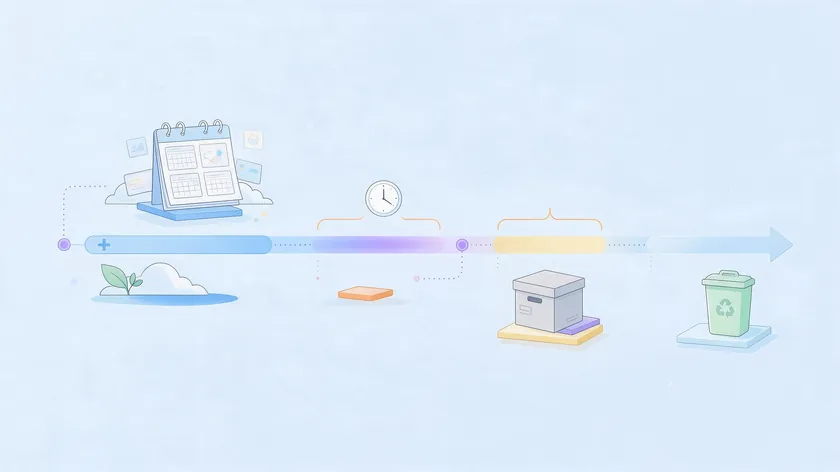
The privacy policy must describe how long data is kept and why. Vague statements like “we retain data as long as necessary” are not acceptable to regulators or enterprise buyers.
Retention Periods by Data Category
Provide concrete retention windows:
- Account profiles: retained while the subscription is active, plus a grace period (commonly 30 days) after cancellation for reactivation or dispute resolution
- Billing and invoice records: 7 years, to comply with tax and accounting laws
- Support tickets: 12 to 24 months after resolution, unless the customer requests earlier deletion
- Product telemetry and usage data: 13 months for analytics; 90 days for error logs
- Customer content: retained during the active subscription; deleted from live systems within 30 days of account termination
- Audit logs: 12 to 24 months, depending on regulatory requirements and SaaS risk profile
These windows are examples, not defaults for every product. Choose ranges your team can actually enforce, and make sure the policy, the DPA, and your internal retention schedule all say the same thing.
Backups and Deleted Data
Backups retain deleted data for a fixed window (commonly 30 to 90 days) until backup sets are rotated. The policy should disclose this window.
Restoring from a backup does not normally overwrite current deletions; if a restore is necessary (for example, after a data loss event), the SaaS should reapply any deletions processed after the backup date.
Account Deletion and Data Export
The policy should describe:
- How customers request account deletion (in-app setting, email, API call)
- How customers export their data before termination (bulk export tools, API endpoints, downloadable archives)
- Timeframe for erasing data from live systems after the request (for example, 30 days)
- Timeframe for data to age out of backups (for example, 90 days)
- Which data cannot be deleted due to legal obligations (tax records, fraud investigation records) and the specific obligation that requires retention
Describe these steps in plain language and keep them aligned with the DPA. Enterprise customers often test deletion and export during onboarding, so the policy should match what the product actually does.
International Transfers and Storage Locations
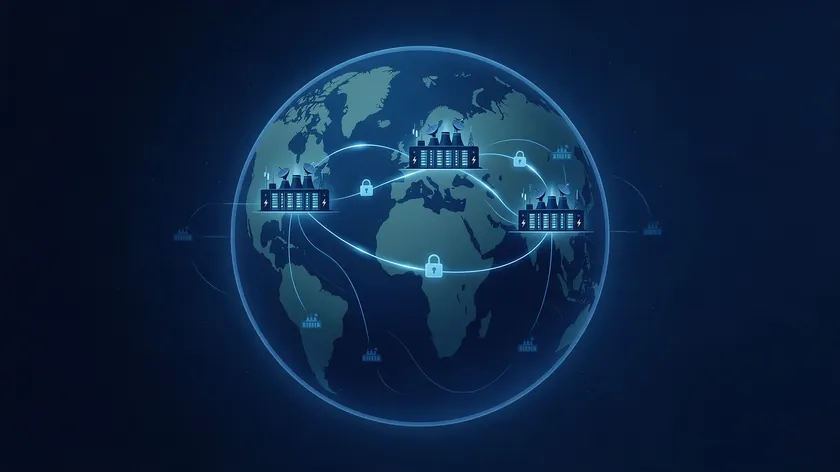
SaaS data is often stored in specific regions (EU, US, or multi-region cloud deployments). The policy should state where primary data storage and backup locations are. Customers increasingly want visibility into exactly where their data lives.
International data transfers require explanation of compliance mechanisms used. For GDPR SaaS, the common mechanisms are:
- Standard Contractual Clauses (SCCs) for transfers to countries without an adequacy decision
- EU-US Data Privacy Framework for transfers to certified US organizations
- Adequacy decisions (for example, transfers to the UK, Canada, and Japan under existing decisions)
Encryption and access controls are key safeguards when using non-EEA sub-processors. The policy should note that customers can request more information about specific transfer mechanisms for any vendor on the sub-processor list.
If the SaaS offers region pinning (for example, EU-only hosting tiers), the policy should explain how that choice affects data flows and sub-processor selections.
Some sub-processors may be unavailable or replaced with regional equivalents when a customer selects a restricted hosting region. State this so expectations are set before the customer signs.
Data Subject and User Rights
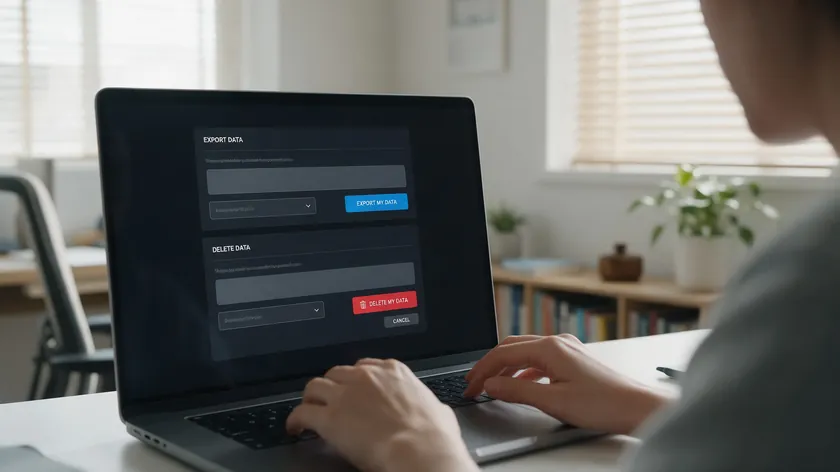
Individuals have rights over their personal data. User rights can include access, correction, deletion, and data portability. Under some US state laws, users also have the right to opt out of the sale or sharing of their data. The specifics vary by jurisdiction, but the policy should cover the full set and note regional variations.
How Users and Enterprise Customers Exercise Their Rights
For individual users (free trial signups, community members, and marketing contacts), provide a clear channel: an in-app settings page, a dedicated email address, or a web form.
State which rights can be exercised through self-service (for example, downloading account data and deleting an account) and which require a manual request.
For enterprise customers whose end users are data subjects, the SaaS typically does not interact with end users directly. The customer (as controller) handles the rights request; the SaaS (as processor) assists by providing tools for data export, deletion, or rectification inside the product.
Businesses must enable users to exercise their privacy rights effectively, and the policy should explain the process for both paths.
Limits to Rights and Response Times
Some rights have limits. Data kept for tax obligations, fraud prevention, or ongoing legal proceedings may not be deletable on request. The policy should list these exceptions.
State a concrete response time. Under GDPR, the deadline is one month from receipt of a verified request, extendable by two further months for complex cases.
Some US state laws allow 45 days. Pick a target that your team can meet, publish it, and track compliance internally through reports. Promising “as soon as possible” without a number is both unhelpful and risky.
Enterprise Customers, Security Questionnaires, and Compliance
Larger customers send security and privacy questionnaires (DDQs, VSAs) or request copies of SOC 2 Type II reports, ISO 27001 certificates, or penetration test summaries.
Privacy policies are crucial for passing enterprise security checks; the questionnaire answers must match what the published policy says.
Enterprise buyers often expect a SOC 2 report and GDPR-aligned practices before they sign. If the policy claims “we encrypt all data at rest” but the SOC 2 report shows exceptions for a legacy datastore, the discrepancy will surface. Keep the privacy policy aligned with actual controls and attestations.
The policy can reference existing attestations or an upcoming compliance roadmap, but it should not overpromise on timelines or scope. “We are pursuing a SOC 2 Type II report, with expected completion in Q3 2027” is fine. “We are SOC 2 compliant” is not, until the audit is complete.
Privacy policies must align with actual data practices to ensure compliance. A clear, credible privacy policy shortens enterprise procurement cycles by reducing back-and-forth with security and legal teams.
How and When You Update Your SaaS Privacy Policy
Regular updates to privacy policies are necessary to stay compliant with changing laws. The policy should state:
- How users will be informed of material changes (email notification, in-app banner, changelog entry)
- How often the document is reviewed (at least annually, or before any material change in data practices)
- That the effective date is visible at the top or bottom of the policy
- That previous versions are archived and available on request for compliance purposes
Update the policy before launching high-impact features. If you add an AI assistant that processes customer content, enable a new integration category, or onboard a sub-processor in a new jurisdiction, the policy must reflect those changes before the feature ships. Update the DPA and sub-processor list in parallel.
Some regions require explicit consent for certain new uses of data. In other cases, continued use after changes take effect constitutes acceptance. The policy should state which approach applies, region by region.
Practical SaaS Privacy Checklist
Use this checklist to audit your existing policy or draft a new one. Each item is action-oriented.
- [ ] Complete a data flow inventory covering all sources: signup, in-app, API, uploads, billing, support, analytics
- [ ] Classify each flow as controller or processor activity
- [ ] List all sub-processors with names, services, regions, and DPA status
- [ ] Draft or update the customer-facing data processing agreement
- [ ] Add a data types table to the policy with purpose and lawful basis per category
- [ ] Add a controller vs processor responsibilities table
- [ ] Confirm logs do not store passwords or sensitive content fields
- [ ] Set and publish concrete retention periods for each data category
- [ ] Describe backup retention windows and deletion-from-backup timelines
- [ ] Document international transfer mechanisms for each non-EEA sub-processor
- [ ] Align the policy with cookie/analytics disclosures and link to the cookie policy
- [ ] Align the policy with the security page or trust center
- [ ] Confirm that the policy, DPA, and sub-processor list are consistent on security measures, sub-processors, and transfer mechanisms
- [ ] Verify that questionnaire answers match published policy claims
- [ ] Set a review schedule: at least annually, before feature launches, and before enterprise deals
- [ ] Ensure compliance with current requirements by reviewing each section against the Data Privacy Policy Guide for universal clauses
Each item maps to a section in this guide. If you cannot check the box, the corresponding section tells you what to fix.
Key Takeaways
- A SaaS company is both a data controller and a data processor. The privacy policy must separate these roles and explain what each means for the user’s data.
- Map every data flow before writing. The data inventory drives the tables, retention schedules, and sub-processor list that enterprise buyers expect.
- Include lawful bases, retention periods, backup windows, a sub-processor list, a data processing agreement reference, security practices, and an enterprise-ready checklist. Missing any of these creates friction in procurement and compliance audits.
- Include concrete tables: data types mapped to purposes and lawful bases, controller versus processor responsibilities, and a sample sub-processor list layout. Tables give reviewers what they need without forcing them to parse paragraphs.
- Align the privacy policy with the DPA, sub-processor list, and security documentation. Discrepancies between these documents are the single most common reason enterprise legal teams push back on a vendor.
- Keep the policy updated. Review it at least annually, before feature launches, and before closing deals that involve new data flows.
- A privacy policy is a legally required document for SaaS companies, and failing to comply with privacy laws can lead to enforcement actions by regulators.
To turn your data map and this guide into a working SaaS privacy policy, use the Termify Privacy Policy Generator. You can preview the document before choosing a paid plan, then customize each section to match the data flows, sub-processors, and retention schedules you documented above.
FAQ about SaaS Privacy Policies
These questions address practical issues SaaS teams often raise that were not fully covered in the main sections above. Topics include handling multiple products, early-stage launches, sub-processor detail, consent, and how the DPA relates to the policy.
Do I need a separate privacy policy for each SaaS product I run?
One privacy policy can cover multiple products if all data practices are clearly described and differences between products are explained in product-specific subsections.
If your products share a login system and billing account, a shared policy is usually cleaner to manage and easier for customers to review.
Separate policies make more sense when products target very different audiences, collect different categories of data, or operate under completely separate brands.
For example, a B2B project management tool and a B2C fitness app sold by the same company should probably have separate policies, because combining them would force users to read through irrelevant sections. Align the policy structure with how billing accounts and logins work.
Can an early-stage SaaS launch with a simple privacy policy and evolve it later?
An MVP can launch with a focused, honest policy that covers current data flows only. It must still address the core areas: what data is collected, how it is used, who it is shared with, what security measures protect it, and what rights users have. Skipping any of these creates legal exposure from day one.
Adding features like AI processing, new third-party applications, or complex integrations later requires updating both the privacy policy and, if applicable, the data processing agreement.
Schedule reviews at least annually, before raising a funding round, and before closing an enterprise deal. Each of these events tends to surface new data flows that the original policy did not anticipate.
How detailed should my sub-processor list be for enterprise customers?
The list should be specific enough for customers to understand which vendors process their data, in what roles, and in which regions.
Include vendor names, the service each vendor provides, data categories processed, processing locations, and the transfer mechanism used for international transfers. Timestamped revisions on the list let customers track changes.
Some enterprise customers request additional details under NDA, such as specific security certifications, DPA execution dates, or data center addresses. Provide that information in a supplementary document rather than expanding the public list beyond what is practical to maintain.
Keep the public list accurate and update it whenever vendors change. An outdated list is worse than a short one.
Do I need user consent for all data I process in my SaaS app?
No. Under GDPR, SaaS operations often rely on contract or legitimate interests for core product functionality. Consent is reserved for optional activities: marketing emails, non-essential cookies, behavioral profiling, and processing that goes beyond what is necessary to deliver the service.
The privacy policy should make clear which processing relies on consent and how users can withdraw consent without losing access to essential features.
If withdrawing consent for analytics cookies also disables the login session cookie, something is misconfigured.
For edge cases involving profiling or sensitive data categories, consult the GDPR Compliant Privacy Policy Guide on this blog or get advice from qualified counsel.
How does a DPA relate to my SaaS privacy policy?
The privacy policy explains data practices to users and visitors in plain language. The data processing agreement is a contract governing how the SaaS processes customer-controlled data in its role as processor. They serve different audiences and different legal purposes, but they must be consistent.
For most B2B SaaS, the privacy policy should reference the standard DPA and explain when it applies: typically when a company becomes a paying customer or uploads data about its own end users.
The DPA then specifies sub-processors, security obligations, breach notification timelines, and data transfer mechanisms in contract-level detail.
If the two documents disagree on a point (for example, the policy lists 30 days for deletion but the DPA says 60 days), enterprise legal teams will flag the discrepancy and delay the deal. Write both from the same data inventory and review them together at every update cycle.