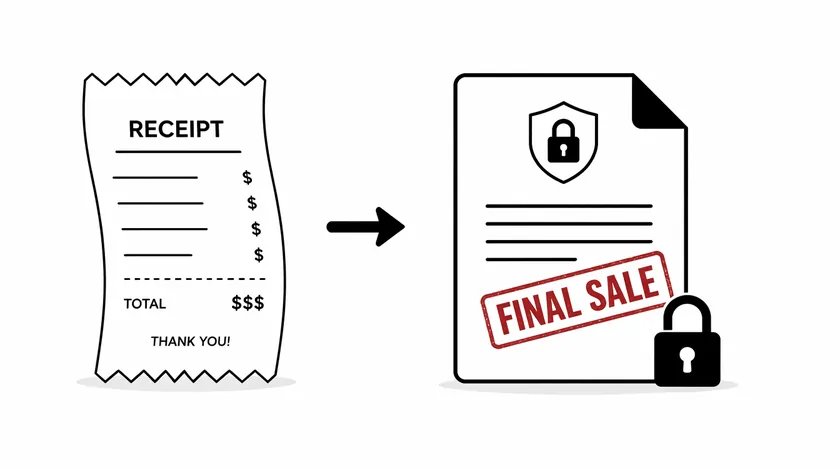
If you run an e-commerce store or physical stores selling products to customers, your refund policy can make or break both margins and trust. One of the most common – and most misunderstood – policy types is the all sales final policy.
This guide breaks down exactly what it means, when it’s legal, how it varies across different countries, and how to build one that actually holds up.
Table of Contents
- What Does “All Sales Final” Actually Mean?
- “All Sales Final” vs “No Refund” vs “Final Sale” – Key Differences
- Are “All Sales Are Final” Policies Legal?
- Country and Region Rules: U.S., Canada, U.K., EU, and Australia
- When and Why Businesses Use Final Sale Policies
- What Your “All Sales Final” Policy Should Cover
- How to Create a Compliant All Sales Final Policy (Step by Step)
- Creating Your Policy with Termify.io
- How and Where to Display Your Final Sale Policy
- Common Mistakes and How to Avoid Them
- Important Takeaways
- FAQ
What Does “All Sales Final” Actually Mean?
When a business says all sales are final, it means that once a customer completes a purchase, the transaction cannot be reversed. There are no returns, no exchanges, no store credit, and no cancellations permitted under the policy.
An all sales final policy is a type of refund policy – specifically, a final sale policy – that removes every post-purchase remedy except those legally required. All sales final policies prohibit returns or refunds after purchase as a default rule.
It’s important to understand how this phrase compares to similar ones. “All sales are final” is usually the strictest wording a business can use. “No refund” may still allow exchanges. “Final sale” is often applied to individual sale items rather than the entire store. And “sold as is” is a warranty disclaimer under the Uniform Commercial Code.
Common examples of final sale items include end-of-season clearance clothing, made-to-measure furniture, downloadable software licenses, and personalized items like engraved jewelry.
ASOS, for instance, states that items marked as “Final Sale” cannot be returned. Levi’s has a Final Sale FAQ explaining their policy to customers in more detail.
Buyer’s remorse does not grant the right to return an item under these policies. However, many businesses still offer limited goodwill solutions – such as partial refunds or store credit – even under a final clause, to protect their reputation.
“All Sales Final” vs “No Refund” vs “Final Sale” – Key Differences
These three phrases are related, but they carry different legal and practical implications depending on how the policy is written and displayed. Courts and regulators look at the whole return and refund policy and how it’s communicated, not just a single phrase.
“All Sales Are Final” Defined
This is typically the broadest restriction. It means no refunds, no exchanges, no store credit, and no cancellations after the purchase is complete. The only exceptions are those imposed by consumer laws—for example, defective products or misdescribed goods.
“No Refund” Policy Defined
A no refund policy specifically targets monetary refund requests. However, it may still permit exchanges or store credit depending on how the policy covers those remedies. Businesses that want to offer refunds under certain circumstances should avoid this phrase and use more detail in their wording.
“Final Sale” Label Defined
The final sale label is typically applied at the item level—for example, a tag reading “Final Sale – 70% off.” It means that the specific product is non-returnable, even if other items in the store follow a standard return policy.
| Phrase | Typical Meaning | Common Exceptions |
|---|---|---|
| All sales are final. | No refunds, exchanges, or credit | Defective or misdescribed goods; statutory rights |
| No Refund | No cash refund issued | May allow exchanges or store credit |
| Final Sale (item-level) | Specific product cannot be returned | Faulty items; wrong item shipped |
Are “All Sales Are Final” Policies Legal?
Yes, final policies are generally legal in most jurisdictions—but they cannot override mandatory consumer protection rules. A legally enforceable “all sales final” policy must be clearly communicated before purchase.
The legality of such a policy depends on four factors: where the business operates, where the customer lives, what’s being sold (physical goods vs digital content), and how clearly the policy is disclosed. In the US, all sales final policies are legal if disclosed properly to the buyer.
However, no policy can exclude statutory warranties or consumer guarantees for faulty goods. Consumer protection laws may allow returns for defective items even with final sale policies in place.
Many jurisdictions require businesses to issue refunds, provide a replacement, or arrange repair if items are faulty, dangerous, or not as described—regardless of any “sales are final” policy wording.
Misleading or aggressive enforcement of final sale policies can be treated as an unfair commercial practice. Rather than copying generic wording from competitors, businesses should research applicable consumer protection laws before creating their policy or use professionally designed templates from a legal writer or compliance tool.
Country and Region Rules: U.S., Canada, U.K., EU, and Australia
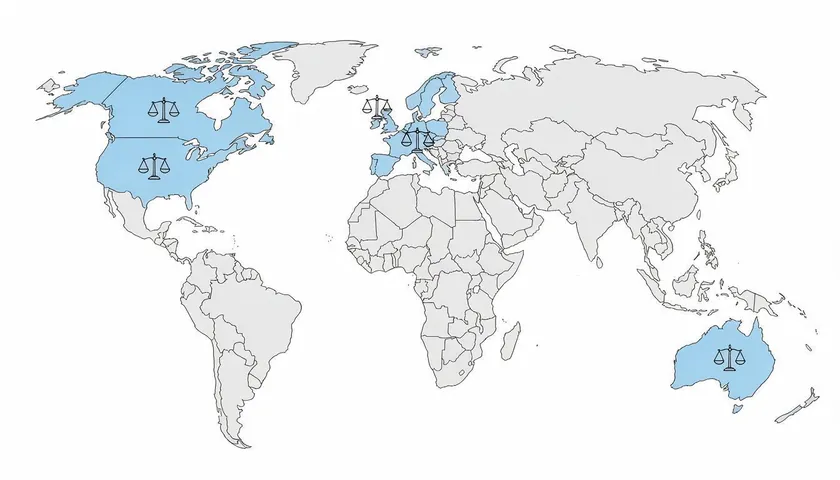
Cross-border e-commerce stores must adapt their final policies to different legal frameworks across other jurisdictions. A single global rule will not work.
United States
In the US, all sales final policies are legal when clearly disclosed. Under the UCC, implied warranties of merchantability and fitness apply unless disclaimed conspicuously using phrases like “as is.”
States like California require conspicuous display of return policies for legal enforcement—meaning a conspicuous sign near cash registers or a clear notice on product pages. The FTC also requires timely shipping or a refund for mail and internet orders.
Canada
Canada has no general federal automatic right to a refund for change of mind. However, provincial Sale of Goods Acts require goods to be fit for purpose and as described. Some provinces have cooling-off periods for direct and distance sales. Final sale terms must be visible at checkout, and deceptive marketing is prohibited under consumer laws.
United Kingdom
Under the Consumer Rights Act 2015, goods must be as described, fit for purpose, and of satisfactory quality. UK law mandates returns for defective or misdescribed items. Online purchases come with a 14-day cooling-off period that a final sale label cannot remove. Misleading signage like “no refunds ever” is illegal.
European Union
The EU Consumer Rights Directive grants consumers in the European Union a 14-day withdrawal period for online and distance contracts. EU law allows a 14-day cooling-off period for online purchases, and EU law allows a 14-day return period despite final sale policies. Exemptions exist for custom goods, perishable goods, sealed hygiene products once opened, and digital content after download begins.
Australia
Under the Australian Consumer Law (ACL), consumer guarantees are non-excludable. Australian law requires refunds for defective products. Even a bold “no refunds— all sales final” conspicuous sign cannot legally remove a customer’s legal rights for major or minor product failures.
When and Why Businesses Use Final Sale Policies
Common Scenarios for Using Final Sale Policies
A final sale policy is a business tool to control risk and stock, but it should be applied strategically rather than everywhere. Retailers often implement “all sales final” for clearance or deeply discounted items. Final sale items are often heavily discounted to clear inventory at a lower price.
Common scenarios include personalized items (engraved rings, monogrammed bags), custom or personalized goods that typically fall under all sales final policies, opened cosmetics with hygiene issues, perishable foods and perishable items, intimate apparel, digital downloads, and limited-release drops. Perishable or hygiene-sensitive items may also be designated as final sale.
Weighing Operational Benefits Against Customer Experience
The benefits are real: predictable revenue, less reverse logistics cost, and reduced fraud like wardrobing. A good example is a small online boutique in 2025 that shifted end-of-season winter coats to final sale after repeated returns, cutting return volume by 40%.
But the downsides matter too. Strict refund limitations can lower perceived safety, reduce trial willingness, and damage brand trust. Many smart brands reserve all sales final only for specific categories or campaigns rather than making it the default refund policy across the entire catalog.
What Your “All Sales Final” Policy Should Cover
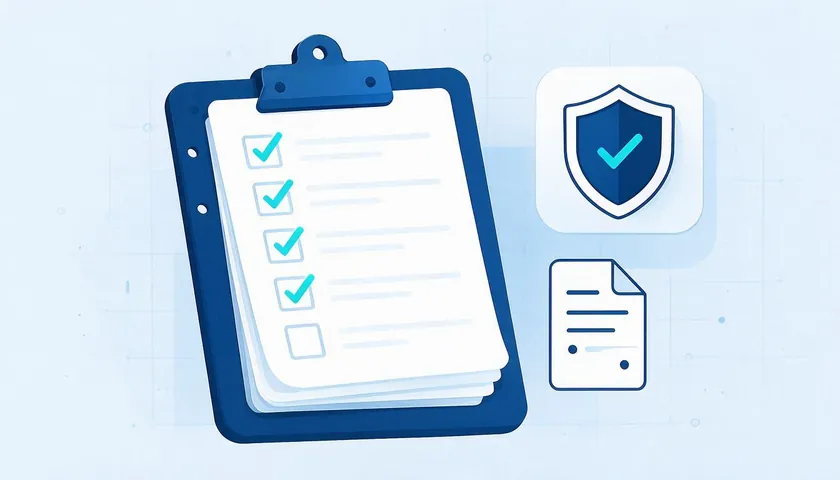
Think of this as a checklist. A clear policy should cover every real-world scenario your customer might encounter and give them all the important information upfront so they can make a more informed decision.
Your policy should include:
- A precise statement that all sales are final, using simple language that distinguishes between no refunds, no exchanges, and no store credit
- The scope: whether it applies to all products or only specific categories – clearance, custom orders, digital content, or particular sales channels (online vs in-store)
- Mandatory exceptions: defective items, shipping damage, wrong item sent, and any legal cooling-off periods
- Voluntary exceptions: goodwill gestures like holiday gift exchanges until a certain date
- A legal rights or final clause section stating that the policy does not affect statutory rights under applicable consumer law
- The practical process: who to contact, what evidence is needed (photos, order number), and time limits to report issues – include a timeframe for reporting defects in your policy (e.g., within 7 or 30 days)
Clearly state which items are exempt from the policy so customers can make an informed decision before purchase.
How to Create a Compliant All Sales Final Policy (Step by Step)
Here’s a practical workflow to write or generate a sales final policy that fits your business and legal environment.
Step 1 – Research applicable laws. Identify where you sell (U.S. only vs U.S. + EU) and map key rules like EU 14-day cooling-off or Australian consumer guarantees before drafting. Research applicable consumer protection laws before creating your policy.
Step 2 – Define scope. Specify which products, collections, and channels the final policy covers. Decide where a more flexible return policy will continue to apply.
Step 3 – Draft clear language. Use simple language to ensure customer understanding. Write short sentences, avoid heavy jargon, and include concrete examples of both restrictions and exceptions.
Step 4 – Align with your overall refund policy. Show how the all sales final section sits inside a broader return and refund policy. Cross-reference so customers see standard vs final rules at a glance alongside other legal agreements.
Step 5 – Review with a professional. A legal writer or compliance professional should check your draft, especially for cross-border ecommerce stores. Policies legal in one country may create legal issues in another.
Step 6 – Test and iterate. Monitor customer support tickets and chargebacks over 3 months. Adjust unclear areas or overly rigid conditions in agreement terms as needed.
Creating Your Policy with Termify.io
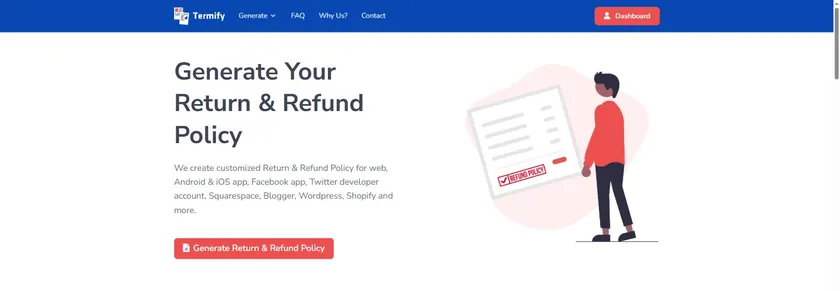
Step-by-Step: Using Termify.io
Termify.io is an online tool that helps businesses quickly generate customized legal agreements, including refund policies and all sales final clauses, without writing from scratch.
Here’s how it works:
- Select the document type (e.g., “Refund & Return Policy”)
- Answer guided questions about whether some or all sales are final
- Specify which categories are final sale (clearance, custom, digital)
- Indicate your selling jurisdictions (U.S., EU, UK, Australia)
What the Generator Includes and How to Use the Output
The generator helps incorporate regional requirements. If you sell to EU or UK customers, the output can note cooling-off rights and what the policy covers in those regions. You can add a final clause about statutory legal rights and optional sections for store credit, exchanges, or repair instead of refunds.
Termify.io outputs ready-to-use HTML or text snippets you can paste into your website footer, checkout pages, or legal pages – and easily update when your final sale policy changes.
For example, a small ecommerce store in 2026 used Termify.io to add a “Final Sale Items” section for personalized mugs and digital patterns, with explicit exceptions for printing defects reported within 10 days.
How and Where to Display Your Final Sale Policy
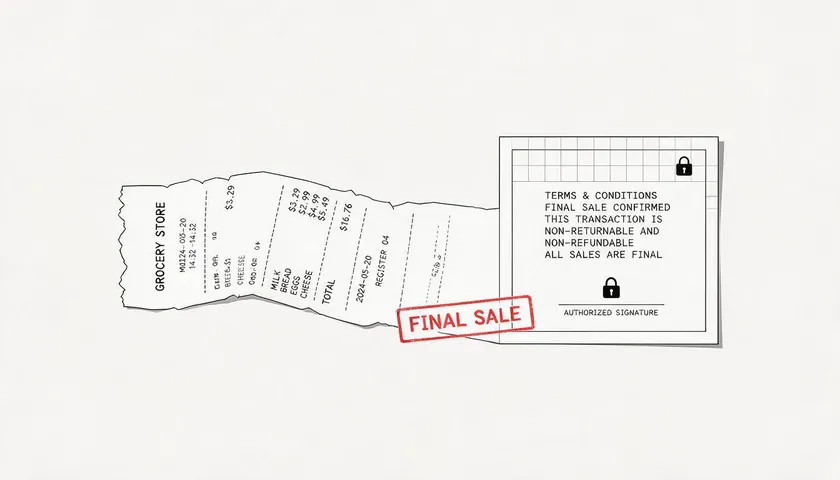
Visibility is everything. Even a perfectly written sales final policy can be unenforceable if customers never see it. Display your policy prominently at key purchase points.
Displaying Your Policy Online
For your ecommerce store, follow these practices:
- Link to your refund policy in the website footer alongside other legal agreements like Terms & Conditions
- Add clear notices on product pages for final sale items – JD Sports clearly labels final sale items on their product pages, which is a good example to follow
- Place highlighted text near the “Place Order” button to inform customers
- Use checkout-flow techniques: inline notices, pop-up confirmations for carts containing final sale products, or optional checkboxes confirming the customer understands
Michael Kors has a dedicated section for final sale items in their policy. Wayfair lists non-returnable items without exceptions in their policy. Both approaches help set expectations.
Displaying Your Policy In-Store
In physical stores, post signage at entrances and cash registers. Attach tags or stickers to final sale products. Print “All sale items marked FINAL SALE – no returns or exchanges” on receipts in a conspicuous place.
Align your final policies with your conditions agreement and other legal documents so customers can easily navigate between them. A clear one-sentence notice above the checkout button is far stronger than fine print hidden in a PDF that nobody reads.
Common Mistakes and How to Avoid Them
Most disputes around final policies stem from how they’re worded or applied, not from the concept itself.
Mistake 1: Vague language. Phrases like “no returns unless otherwise stated” without explaining what “otherwise” means create confusion. Fix: provide concrete examples and define every exception.
Mistake 2: Trying to exclude all legal rights. Attempting to block returns for defective products or faulty goods is illegal in many jurisdictions. Fix: add a legal rights statement acknowledging that consumer laws still apply in limited circumstances and certain circumstances.
Mistake 3: Blanket application. Applying a final sale policy to every item – including high-value electronics or apparel where fit is uncertain – leads to cart abandonment. Fix: limit final sale to specific categories where it makes business sense.
Mistake 4: Hidden disclosure. Burying the policy deep in a Terms & Conditions document without notice at point of sale makes enforcement difficult. Fix: add visible labels on product pages, checkout notices, and in-store signage. A business that doesn’t accept returns must say so before the purchase, not after.
Important Takeaways
A well-designed all sales final policy protects margins and reduces abuse while still respecting consumer protection laws and maintaining customer relationships. Here are the key takeaways:
- “All sales final” does not erase legal rights. Businesses must still honor statutory guarantees for defective, unsafe, or misdescribed goods – they are legally required to offer refunds or replacements in those cases.
- Clarity and visibility matter as much as wording. Customers should know before paying whether a purchase is final sale. If you don’t inform customers beforehand, enforcement weakens.
- Tailor your final sale policy to specific products and jurisdictions. Selling across different countries means adapting per region – what works in the U.S. may fail in the European Union.
- Use tools like Termify.io to create, maintain, and update a compliant refund policy that includes clear final clauses and reflects how the business truly operates.
- Review customer feedback and legal developments at least annually. Consumer laws evolve, and your policy should evolve with them.
Skip the legal guesswork — build a policy that holds up in every jurisdiction you sell to. Try the Return and Refund Policy Generator →
FAQ
This FAQ addresses practical questions about all sales final policies that go beyond the main sections above.
Does “all sales final” apply to defective or damaged items?
In most countries, no. Customers typically retain legal rights to a repair, replacement, or refund for faulty or misdescribed products – even if the policy says sales are final. Exceptions to final sale policies include defective or damaged items across virtually all major jurisdictions. A business cannot use such a policy to avoid responsibility for defective items.
Can I make only some items in my store final sale?
Yes. Many businesses do exactly this, marking specific products or categories – clearance, custom, digital goods, perishable goods – as final sale while keeping a standard return policy for everything else. This lets you offer refunds on most inventory while protecting margin on select items.
Is an email receipt note enough to enforce an all sales final policy?
No. The safest practice is to inform customers before they commit to buy – on product pages and at checkout. Post-purchase receipts alone are legally weak in most jurisdictions. Pre-purchase disclosure is what gives the policy its teeth.
How often should I review my final sale policy?
At least once per year, and whenever you expand into a new country, add new product types, or when consumer laws change. The EU, UK, and Australia update regulations regularly, so annual audits keep you compliant.
Can I still offer store credit with an all-sales-final policy?
Yes. Businesses can choose to be more generous than the strict policy by offering credit or exchanges as a goodwill gesture. This softens customer resentment while still maintaining that there is no automatic right to a monetary refund beyond what the policy and law require.