
By mid-2026, shoppers expect a clear return policy from every retailer they buy from, whether it is a global marketplace or a one-person online store. A well-written return and refund policy does more than prevent disputes. It builds trust, protects your cash flow, and turns hesitant browsers into confident buyers.
This guide walks you through every step: definitions, legal basics, what to include, templates, staff training, and where to display your policy so customers actually see it.
Table of Contents
- Introduction: Why Every Small Business Needs a Thoughtful Return Policy
- Definition: What Is a Small Business Return Policy (and How It Differs from Refund & Exchange Policies)?
- Customer Expectations and Why a Return Policy Matters for Small Businesses
- Legal Framework: Are Return and Refund Policies Legally Required?
- Core Elements: What to Include in a Small Business Return Policy
- Returnable vs Non-Returnable Items (and How to Communicate Them)
- Time Frames: Setting a Return Window That Works for Customers and Cash Flow
- Proof of Purchase and Documentation Requirements
- Designing a Detailed but Simple Return Process
- Refund Options: Cash, Card, Store Credit, and Exchanges
- Balancing Customer Satisfaction with Profitability and Cash Flow
- Return Policy Templates and Generators
- Special Scenarios: Holiday Seasons, Sales Events, and No-Refund Policies
- Operational Side: Training Staff and Handling Returned Inventory
- Where and How to Display Your Return Policy (Online and Offline)
- Sustainable and Cost-Effective Returns for Small Businesses
- Practical Example: A Simple Small Business Return Policy Outline
- Important Takeaways for Small Business Owners
- FAQ: Small Business Return Policies
Introduction: Why Every Small Business Needs a Thoughtful Return Policy
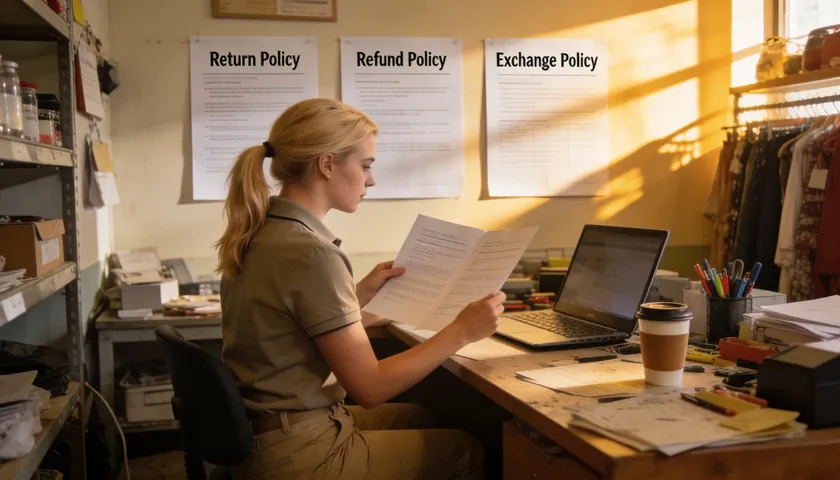
Returns are a fact of life, especially in fashion, beauty, and electronics where size, color, and condition can surprise a buyer. Research shows that 48% of online shoppers returned an item in the past year, and that number climbs higher in apparel-heavy categories.
A written policy protects both the customer and the business. Without one, staff improvises, customers complain, and chargebacks pile up. With one, you manage expectations before the sale and handle disputes after it.
This article focuses on practical, small-business-friendly steps: what to include, legal basics, real-world templates, and how to implement policies day to day. Examples reference concrete time frames—14, 30, and 60 days—and real scenarios like the holiday season and defective or damaged products arriving at a customer’s door.
Definition: What Is a Small Business Return Policy (and How It Differs from Refund & Exchange Policies)?

A small business return policy is the written rulebook explaining when, why, and how customers can send products back or request adjustments. It sets ground rules for both the customer and the business before a transaction happens.
Three related but distinct terms matter here:
- A return policy covers sending items back to the seller.
- A refund policy explains how and when customers get money back.
- An exchange policy describes swapping a product for another item of equal value or receiving store credit.
In practice, most small businesses combine all three into a single “Returns & Refunds” page. That is fine, but thinking of them as separate levers helps you design smarter rules.
For example, a boutique may allow 30-day returns for store credit, but only issue a cash refund if an item is faulty or misdescribed. That single distinction can save thousands of dollars a year in refund outflows.
Customer Expectations and Why a Return Policy Matters for Small Businesses

Modern shoppers assume easy returns, clear timelines, and fast refunds. Nearly half of all online buyers check the return policy before completing a purchase, according to Claimlane research. If they cannot find it, many leave.
Sectors like apparel routinely see return rates above 25%, with some fashion ecommerce stores hitting 30% or more. Not planning for returns in those categories is unrealistic.
A transparent policy increases customer satisfaction, reduces pre-purchase anxiety, and improves conversion rates. Clear return policies boost customer trust and repeat purchases, while free return policies can drive conversions and boost sales.
Contrast that with a vague or hidden policy. The result is more customer complaints, negative reviews, chargebacks, and lost lifetime value. For a brick-and-mortar store, an inconsistent policy means staff improvises at the counter, which damages brand credibility and frustrates potential customers.
Clear return policies can reduce customer complaints by 40%. That alone justifies the hour it takes to write a solid one.
Legal Framework: Are Return and Refund Policies Legally Required?

“Legally required” in this context means consumer law forces a business to repair, replace, or offer refunds under certain conditions—regardless of what the business’s return policy says.
Here is a high-level summary for 2026:
| Jurisdiction | Key Rule |
|---|---|
| EU / UK | Mandatory 14-day cooling-off period for most online purchases. Refund within 14 days of cancellation. Faulty goods must be remedied. EU Consumer Rights Directive |
| US (Federal) | No blanket federal law requiring returns for change-of-mind purchases. Defective goods and written warranties fall under the Magnuson-Moss Warranty Act. |
| US (State) | Some US states require clear display of return policies. In California, retailers must post their policy conspicuously if it does not offer a full refund within 7 days—California Civil Code §1723. Some US states require a conspicuous policy for no refunds. |
| Australia | Australia mandates refunds for faulty items regardless of the store’s return policy. |
Return policies are legally binding in some regions, meaning once posted, you are held to them. Return policies should comply with consumer protection laws applicable to the region where you sell.
Service-based and digital businesses often have more flexibility, but must still honor local consumer protection rules and any guarantees they advertise. For international returns, obligations can multiply.
Always seek legal advice in your own jurisdiction. Do not copy a large retailer’s terms and assume they fit your own policy.
Core Elements: What to Include in a Small Business Return Policy
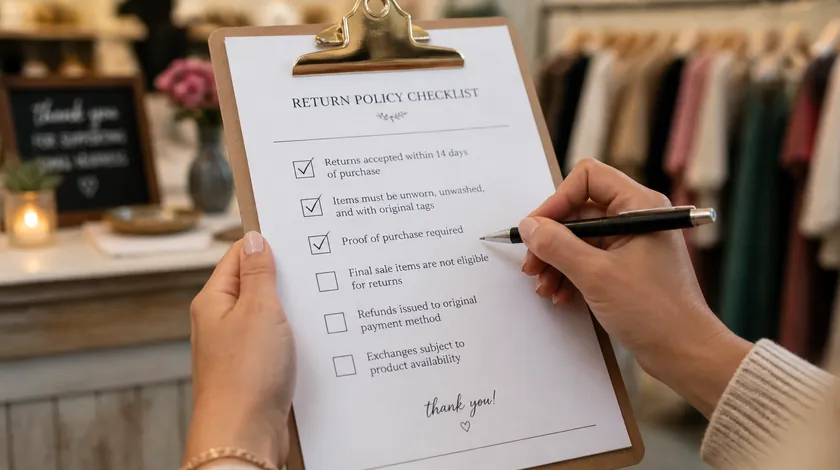
Think of this section as your checklist. Every small business return policy should clearly address each element below so customers understand their options in one quick scan.
Returnable vs final sale items. Specify which products can be returned and which are marked final sale. A return policy should specify eligible return items.
Acceptable reasons. Separate defective or damaged products from change-of-mind returns. The rules and refund types may differ.
Condition requirements. Return policies should outline acceptable item conditions for returns. Specify the required condition of returned items, like unworn and with original tags, in new and unused condition.
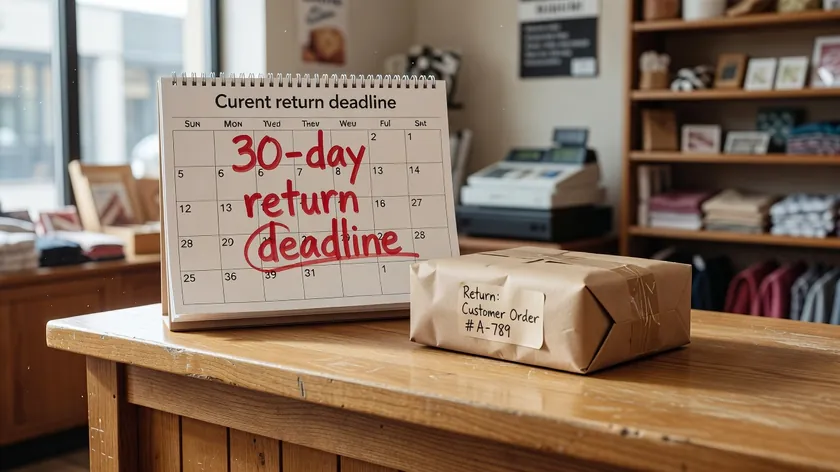
Time frame. State the deadline clearly—14, 30, or 60 days. Clear language in return policies reduces customer confusion.
Proof of purchase. Receipt, order number, or confirmation email.
Refund type. Refund policies should specify if cash or store credit is offered, or if exchanges are available.
Detailed return process. Who pays for shipping, how to initiate the return, and expected processing times. Return shipping costs should be clarified in the policy.
Special rules. Sales events, pre-orders, holiday season extensions.
Use short sub-paragraphs and clear headings so a customer scanning on a phone can find the answer in seconds.
Returnable vs Non-Returnable Items (and How to Communicate Them)
Categorizing Returnable vs Non-Returnable Items
Small businesses should explicitly list categories that fall into three buckets:
- Freely returnable—standard merchandise in sellable condition.
- Returnable only if defective—opened items, used goods, or items past the return window but with a documented fault.
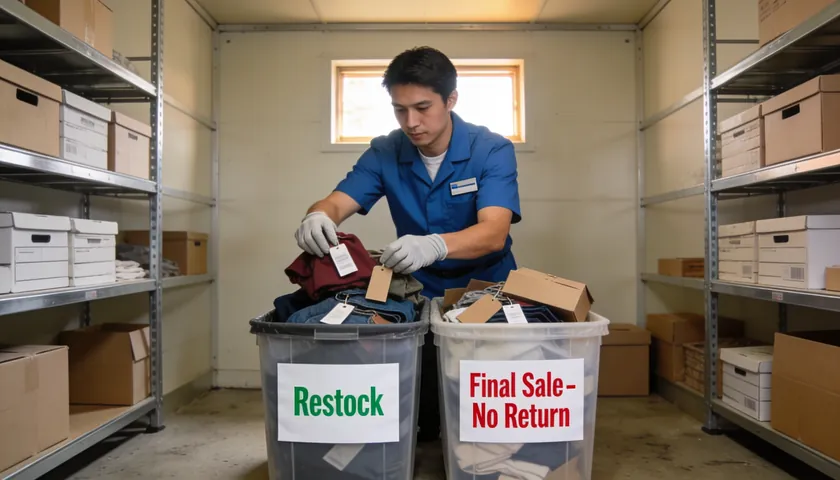
- Never returnable—custom items, perishables, earrings, opened cosmetics. List non-returnable items such as personalized goods or perishables clearly.
Handmade jewelry with a personalized engraving, for instance, cannot be resold. Unless defective, no change-of-mind return applies. Skincare products can only be returned sealed and unused, unless there is a documented allergic reaction or mislabelling.
The policy generally requires items to be unused and in original packaging to qualify for a return.
Communicating Final Sale and Restriction Rules
State “final sale” clearly at checkout, on product pages, receipts, and in-store signage before the customer pays. A tiny disclaimer buried in fine print is not enough—and in states like California, it may violate the law.
Hygiene and safety laws may further restrict returns of food, intimate apparel, or medical-related products. Mention these restrictions explicitly.
Keep this section concise in the final policy but link to a more detailed FAQ for edge cases.
Time Frames: Setting a Return Window That Works for Customers and Cash Flow
Choosing a Return Window by Product Type
Common return windows are 14, 30, or 60 days, depending on product type:
| Product Type | Suggested Window |
|---|---|
| Event tickets, limited drops | 14 days |
| General retail, clothing, home goods | 30 days |
| Gifts, high-end items | 60–90 days |
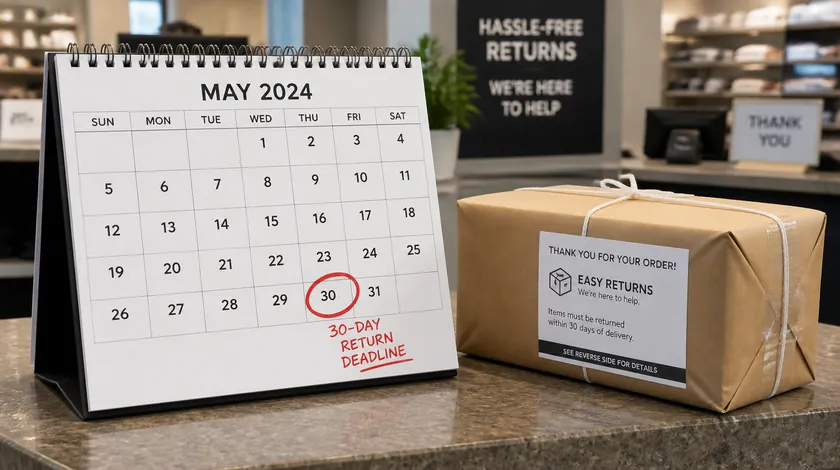
A standard return policy typically offers a 30-day return window, and many small businesses offer exactly that. Customers prefer a 30 to 60-day return period for refunds, but longer windows can complicate inventory management, markdown planning, and cash flow for a small business.
When the Countdown Starts and Seasonal Exceptions

Specify whether the time frame starts from the purchase date (for in-store) or the delivery date (for online purchases, using carrier tracking timestamps).
For seasonal adjustments, consider extending returns for purchases made between 1 November and 24 December until 31 January. This reduces pressure on your customer service team during the holiday season and builds goodwill.
Document exceptions explicitly. Clearance items might allow only 7 days, or none at all. Customers should never be surprised by a rule they did not see before paying.
Proof of Purchase and Documentation Requirements
Define proof of purchase clearly: printed receipt, digital invoice, order confirmation email, or bank card statement that matches your records. This requirement prevents return fraud, double refunds, and abuse of promotions.
Flexible and strict approaches both have trade-offs:
- Flexible: Exchanges allowed without a receipt but only at the last known sale price.
- Strict: No returns or refunds without a verifiable receipt or order number.
Modern POS and ecommerce platforms allow searching orders by email or card, which reduces friction for both the customer and the staff member processing returns.
Highlight this requirement prominently in the policy and on receipts so customers know to keep their confirmation if they might return an item.
Designing a Detailed but Simple Return Process
A clear return process should be detailed in the policy and easy to follow on any device. Create a simple and convenient return process to enhance customer experience.
Incorporate clear instructions for customers to follow to initiate returns, such as:
- Initiate the return—fill out a return form on your website, email your customer service address, or visit the physical store.
- Package the item—place it in original packaging with tags attached.
- Ship or drop off—use the provided return address or bring it to the store. Some businesses provide a prepaid shipping label but may deduct the cost – sometimes just a few dollars—from the refund.
- Inspection—after receipt, the business inspects within a set number of days.
- Resolution—the customer receives a refund, exchange, or store credit, with confirmation sent via email.
A 20% restocking fee can help recoup costs on certain returns, but it must be disclosed before purchase.
Clarify who pays return shipping costs: for defective or mis-shipped items, the business should cover return shipping. For change-of-mind returns, the customer typically pays unless you run a free return policy.
Use technology to streamline the returns process and automate refunds where possible. Many ecommerce business platforms offer built-in return portals that handle eligibility checks, label generation, and refund processing automatically.
Refund Options: Cash, Card, Store Credit, and Exchanges

Refund Option Types and Their Cash Flow Impact
The main refund options a small business can offer include:
- Refund to original payment method (card reversal, PayPal, etc.)
- Cash refund for in-store purchases (subject to local rules)
- Store credit
- Product exchange for a different size, color, or model
Cash and card refunds immediately reduce available funds. Store credit and exchanges keep value inside the business and often lead to higher basket sizes on future purchases.
Clarify if full refunds, store credit, or exchanges are offered so customers know before they buy.
Encouraging Store Credit While Respecting Legal Refund Rights
Offering store credit in a customer-friendly way can protect your margins. Consider giving a small bonus—for example, 5% extra credit – to customers who choose credit over a full refund. Make credit easy to redeem both online and in a brick-and-mortar shop.
However, some situations demand a full money-back option. When goods are faulty or misdescribed, many jurisdictions legally require you to offer refunds to the original payment method. Never let your store’s return policy override statutory rights.
State concrete processing times in the policy: “Refunds are processed within 5–7 business days after we approve your return.” Note that bank or card processor timelines may add additional days. Transparency here cuts down on customer complaints.
Balancing Customer Satisfaction with Profitability and Cash Flow
Generous returns drive customer loyalty and repeat purchases. Fashion’s repeat purchase rate sits around 45%, well above the ~28% average across e-commerce- partly because easy returns reduce purchase hesitation.
But returns carry real costs: shipping fees both ways, restocking labor, and margin erosion when goods cannot be resold at full price. McKinsey’s apparel-returns research shows many businesses underestimate the full unit economics.
Strategies to protect cash flow with careful consideration:
- Prioritize exchanges over refunds to retain customers and keep revenue inside the business.
- Limit “no questions asked” change-of-mind returns to a shorter window.
- Reserve free returns for higher-margin categories or VIP customers. Free returns can increase customer loyalty and brand affinity, but not every SKU can absorb the cost.
- Offering free returns can reduce customer complaints significantly, which frees up staff time.
Track return rates and reasons by product, geography, and season. If one product drives 50% of returns because of sizing issues, fix the size chart or product photos rather than tightening the policy.
Clear communication matters: satisfied customers accept stricter rules if they are upfront and applied consistently. In times of tight cash flow—a reality for many small business owners in 2024–2026—temporarily favoring store credit can be a survival tactic, but it must be legal and well signposted.
The goal is to improve customer satisfaction without bleeding margin. That balance comes from data, not guesswork.

Return Policy Templates and Generators
What a Return Policy Template Should Include
Many online businesses and brick-and-mortar retailers start from a free return policy template or refund policy template rather than drafting from scratch. A good template includes pre-written clauses covering:
- Refund, exchange, and store credit options
- Non-returnable item categories
- Condition requirements and return window
- Proof of purchase rules
- Shipping responsibilities and return fees
- Legally required statements for your jurisdiction
Templates use placeholders like “[X days]” so you can fill in numbers that match your own policy.
Generating and Customizing Your Policy on Termify.io
Termify.io offers a Return & Refund Policy generator among its document templates. Here is how to use it:
- Choose “Return & Refund Policy” from the template list.
- Enter your business name, address, and contact details.
- Specify jurisdictions where you sell (e.g., US + EU).
- Tick options for return windows, refund types, and exclusions.
- Generate and export as HTML or PDF.
Do not copy templates word-for-word. Customize for your product categories, profit margins, and local law. Having a lawyer review the final document is wise, especially if you sell across borders.
Link the generated policy from your website footer, checkout pages, and order confirmation emails. For in-store, print a summary at the register and attach it to receipts.
Special Scenarios: Holiday Seasons, Sales Events, and No-Refund Policies
Adjusting Return Windows for Holidays and Sales Events
Peak shopping events—Black Friday, Cyber Monday, Christmas, Eid, Diwali—often require extended or modified return windows for gifts. A common approach: allow returns on purchases made between early November and late December until 31 January.
Many businesses keep stricter rules for clearance or final sale items even during promotions. Label those clearly at checkout, on the product page, and on the receipt. Customers who see “final sale” before paying rarely dispute it afterward.
No-Refund Policies for Services and Digital Products
A no-refund policy is most common for services and downloadable digital products where customers cannot “give back” what they received—online courses, software licenses, event registrations.
However, local law may still require remedies if the product does not work as advertised. A strict no-refund stance, while sometimes legal, can lower customer satisfaction and deter potential customers.
Alternatives include a partial refund, credit toward future services, or a satisfaction guarantee. Add a short, separate section titled “Exceptions & Special Cases,” so these rules are easy to find. Businesses offering subscriptions should also clarify cancellation rights and prorated refunds.
Operational Side: Training Staff and Handling Returned Inventory
Training Staff on the Return Process
Even the best-written policy fails without staff training. Your customer service team needs a clear internal workflow for processing returns.
Key points every team member should know:
- How to verify eligibility—check the time frame, condition, and proof of purchase.
- Which returns need manager approval (for example, items damaged after sale or customer complaints beyond a simple return request).
- How to issue refunds or store credit in the POS system.
- How to log reason codes for returns (defective, wrong size, changed mind) for data analysis.
A one-page flowchart or checklist kept at each till or service desk ensures consistency. Role-play common scenarios with staff so they handle customer feedback calmly and follow the same steps every time.
Handling Returned Inventory
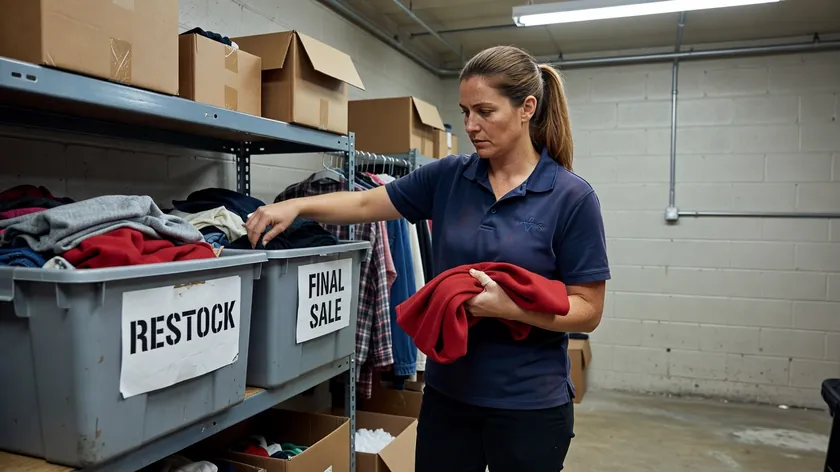
Upon receipt, inspect items within a set number of days. Determine whether each item is resellable as-is, needs repackaging, should be discounted, or must be written off.
Separate inventory into clear categories: items under inspection, items cleared for resale, and items for discard or donation. Tracking condition categories and losses helps you measure the real cost of customer returns over time.
Where and How to Display Your Return Policy (Online and Offline)
Displaying Your Policy Online
Ensure the return policy is easily accessible on product pages and during checkout. Return policies should be easy to find on websites. Concrete placements include:
- Website footer (permanent link)
- Checkout page near the “Place order” button
- Product pages (short summary + “see full policy” link)
- Account or Orders page
- Order confirmation and shipping emails
Optimize for mobile: use clear headings (H2, H3), short paragraphs, and bold key details. Walls of text on a small screen go unread.
Displaying Your Policy In-Store
For a physical store, display a concise summary in easy-to-find locations:
- At the cash register or sales counter
- Near fitting rooms (especially for apparel)
- On the back of till receipts, with a QR code linking to the full policy online
Repeat key promises like “30-day returns” or “Free returns on exchanges” in marketing banners to reassure potential customers. A clear return policy builds trust and customer loyalty, whether the shopper is scrolling on their phone or standing at your counter.

Sustainable and Cost-Effective Returns for Small Businesses
Free returns and endless shipping are costly and environmentally heavy. Many 2026 shoppers recognize this and respect businesses that offer thoughtful alternatives.
Sustainable practices include:
- Encouraging local in-store returns for an online store to avoid extra shipping.
- Consolidating return shipments rather than accepting one-off pickups.
- Offering a partial refund without requiring the return for low-value, hard-to-ship items where shipping costs exceed the product’s worth.
Adding a brief “Sustainability & Returns” paragraph to the policy signals that the business cares about waste and carbon footprint. It also gives you a legitimate reason to limit free returns to cases where they truly make sense.
Less unnecessary shipping, fewer damaged items, and smarter restocking all contribute to healthier margins—sustainability and profitability are not opposites.
Practical Example: A Simple Small Business Return Policy Outline
Here is a sample outline for a fictional local clothing boutique. It is not legal text—treat it as a starting point to customize via a template or generator.
| Element | Rule |
|---|---|
| Return window | 30 days from delivery date (online); 14 days from purchase date (in-store) |
| Condition | Unworn, unwashed, with tags and original packaging. Sale items marked “final sale” are non-returnable. |
| Proof of purchase | Receipt (paper or digital) or order confirmation number required. |
| Refund type | Store credit or exchange for change-of-mind returns. Full refund to original payment method only for faulty or misdescribed goods. |
| Shipping | Customer pays return shipping for change-of-mind. Business covers shipping for incorrect or defective orders. |
| Processing time | 5–7 business days after inspection to issue a refund or credit. |
This example balances customer satisfaction, fairness, and small-business realities like thin margins. By limiting full cash refunds to faulted items, requiring proof, and using shorter windows for risky return types, the boutique controls costs without alienating buyers.
The outline is for illustration only. Always customize through a template or generator and have a professional review your final document before publishing.
Important Takeaways for Small Business Owners
A modern small business return policy must be legally aware, easy to read, clearly displayed, and aligned with both customer expectations and the owner’s financial limits. A clear return policy builds customer trust and loyalty.
- Know what is legally required in your jurisdiction—some state laws and EU directives mandate specific return rights.
The most crucial elements to get right:
- Explicit time frames—state 14, 30, or 60 days, and clarify when the countdown begins.
- Clear conditions—items in new and unused condition, with tags, in original packaging.
- Proof of purchase—receipt or order number to prevent return fraud.
- Transparent options—clarify whether you offer refunds, exchanges, or store credit, and under what circumstances.
- Favor exchanges and store credit over cash refunds where possible to protect margins without hurting customer satisfaction.
- Display your policy in easy-to-find locations: product pages, checkout, receipts, and in-store signage.
Using a free return policy template or a generator on Termify.io is efficient, but only if followed by genuine customization and periodic reviews. Copying a template as-is can leave legal compliance gaps or cost leaks.
Track return data from late 2025 and 2026 onward. Review your policy at least once a year. Adjust windows, restrictions, and processes based on what actually costs you money, what customer feedback reveals, and how laws evolve.
Strong policy plus strong process equals lower costs and higher customer loyalty—and that means more repeat purchases and satisfied customers over time.
Skip the legal guesswork — build a policy that holds up in every jurisdiction you sell to. Try the Return and Refund Policy Generator →
FAQ: Small Business Return Policies
Can a small business refuse all returns?
In many US jurisdictions, you can legally refuse change-of-mind returns if your policy says so—but faulty or misdescribed items often must be repaired, replaced, or refunded regardless. A blanket no-return stance can also hurt your reputation and deter potential customers, so most small business owners accept returns within a reasonable period even when not strictly required.
Is offering store credit instead of refunds legal?
Generally yes, as long as the policy is clearly stated before purchase and does not override legal rights for defective products.
Some state laws require that a cash refund must be an option in certain situations. Always check local regulations before making store credit your only remedy.
How long should I take to process a refund?
Set and publish a realistic target. Most businesses process refunds within 5–10 business days of receiving and inspecting the item.
Note in your policy that bank or payment processor timelines may add a few additional days. Faster refunds build trust and reduce follow-up contacts to your customer service team.
Do I need a different policy for digital products or services?
Yes. Digital goods and services often use stricter or no-refund policies because the product cannot be “returned.” However, local law may still require remedies if the product does not work as advertised. Specify digital product terms in a separate section of your policy so there is no confusion.
How often should I update my return policy?
Review it at least once a year—for example, every January. Also update after major legal changes (such as new EU directives or state laws), significant shifts in your product mix, or when return data reveals patterns like one product generating half your return volume. An outdated policy creates risk; a current one protects both the customer and your bottom line.