Whether you run a personal hobby blog or a revenue-generating content site, you likely collect more personal information than you realize. Comments capture names and email addresses.
Analytics scripts log IP addresses and browsing behavior. Newsletter signups store contact details. Ad networks and affiliate links drop cookies that follow readers across the web.
Privacy laws—including the General Data Protection Regulation, the California Consumer Privacy Act, CalOPPA, and Canada’s Personal Information Protection and Electronic Documents Act—can apply based on where your readers live, not where you host the site.
A blog in Texas with visitors from the European Union or California may still need to disclose its data collection practices.
This article gives you a practical blog privacy policy template with copy-ready example clauses and placeholders you can customize.
It also includes a table mapping common blog types to the clauses they need, so you can build a policy that matches how your blog actually collects data.
Table of Contents
- What Is a Privacy Policy for a Blog?
- Do You Really Need a Privacy Policy for Your Blog?
- Privacy Laws That Affect Blog Privacy Policies
- How Blogs Actually Collect Personal Information
- Quick Matrix: Blog Type vs. Clauses You Need
- Core Sections Every Blog Privacy Policy Should Include
- Blog Privacy Policy Template: Clause-by-Clause Examples
- Clause 1: Who You Are and Scope of This Policy
- Clause 2: What Data You Collect
- Clause 3: How and Why You Use the Data
- Clause 4: Cookies, Analytics, and Tracking Technologies
- Clause 5: Email Marketing, Newsletters, and Lead Magnets
- Clause 6: Comments, Contact Forms, and User-Generated Content
- Clause 7: Advertising, Affiliates, and Sponsored Content
- Clause 8: Embedded Content and Third-Party Services
- Clause 9: Legal Bases, User Rights, and Data Requests
- Clause 10: Data Retention, Security, and International Transfers
- Clause 11: Children’s Privacy
- Clause 12: How to Contact You About Privacy
- Clause 13: Changes to This Blog Privacy Policy
- How to Create and Maintain Your Blog’s Privacy Policy
- Where to Display Your Blog Privacy Policy
- Key Takeaways
- FAQ
- Do I need a privacy policy if I use Google AdSense on my blog?
- Is a sample privacy policy for blog enough, or do I need a lawyer?
- Can I copy another blog’s privacy policy and just change the name?
- How often should I update my blog’s privacy policy?
- Is there a difference between a privacy policy for a WordPress blog and other platforms?
What Is a Privacy Policy for a Blog?
A privacy policy for a blog is a legal document on your site that explains how you collect personal data, what you do with it, who you share it with, and what rights visitors have over their information.
It is the page where you tell users how their personal details flow through your blog.
“Personal information” covers the obvious—name, email address, phone number—and the less obvious: IP addresses, device identifiers, cookie IDs, browser versions, and analytics identifiers. Under most applicable privacy laws, all of these can count as personal data.
A strong blog privacy policy is written in plain English, easy to find from any page (typically linked in the footer), and consistent with your actual data collection practices.
For a deeper look at universal clauses every privacy policy needs, see the data privacy policy guide.
Do You Really Need a Privacy Policy for Your Blog?
Most modern blogs, especially those with comments, analytics, or email marketing, need a blog privacy policy to comply with privacy laws and satisfy third-party service terms. Many jurisdictions require websites that collect user data to disclose their data practices.
Consider two scenarios:
- A private, invitation-only blog with no tracking, no comments, and no forms. This blog may avoid most obligations, but it is rare in practice.
- A public blog indexed by Google, using standard plugins, analytics, and possibly advertising. This blog almost certainly triggers legal obligations under multiple jurisdictions.
Even a small, non-monetized blog collects IP addresses for analytics and security through hosting and server logs. That alone can be enough to require a policy in many jurisdictions. Ad networks such as Google AdSense also expect publishers to maintain one.
Whether you must post a privacy policy depends on where your visitors are (EU, California, Canada), not only on where you live or host the site. A clear policy also sets expectations, reduces complaints, and signals professionalism to readers, sponsors, and affiliates.
Privacy Laws That Affect Blog Privacy Policies
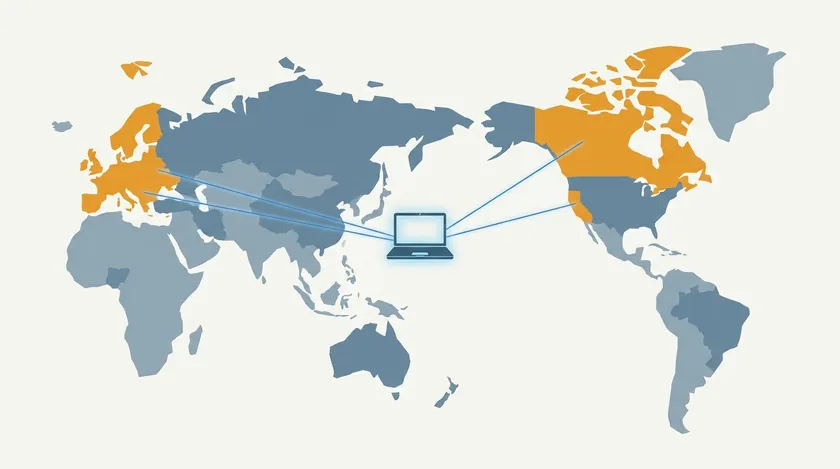
Blogs are touched by multiple privacy laws at once, especially with an international audience. This section gives a high-level map of the laws that matter most, not a full legal treatise.
GDPR
The General Data Protection Regulation applies when your blog has visitors in the European Union or EEA, and the UK GDPR covers visitors in the United Kingdom.
You need clear notices, a lawful basis for each processing activity, and strong user rights including access, correction, and deletion.
For full guidance on lawful bases, retention, and rights, see the GDPR-compliant privacy policy guide. US-based bloggers who attract EU readers should also review the guide on GDPR for US companies.
CalOPPA
CalOPPA applies to commercial websites and online services that collect personal information from California residents, wherever the operator is located.
The policy must be conspicuously posted and include an effective date, the categories of information collected, and how the site responds to Do Not Track signals.
California Consumer Privacy Act (CCPA/CPRA)
The CCPA gives California residents rights such as knowing what personal information is collected and opting out of its sale or sharing. It applies only to businesses that meet certain thresholds.
Those thresholds include annual gross revenue above $26,625,000 (adjusted effective January 1, 2025), handling the personal information of 100,000 or more California consumers or households, or earning 50% or more of annual revenue from selling or sharing it. For detailed disclosures and template language, see the California privacy policy template.
Canada’s PIPEDA
Canada’s Personal Information Protection and Electronic Documents Act applies to private-sector organizations that collect, use, or disclose personal information in the course of commercial activity. A monetized blog collecting data from Canadians should describe its purposes, obtain appropriate consent, and protect the information it holds.
Other US State Privacy Laws
Several US states beyond California, including Virginia, Colorado, Utah, and Connecticut, now have consumer privacy laws with similar rights and disclosure requirements. US bloggers with nationwide audiences should monitor these emerging state laws rather than assuming only California rules matter.
How Blogs Actually Collect Personal Information

Most data collection on blogs is indirect, through tools, plugins, and third-party services. That is why bloggers should first map all the data they collect before they write a privacy policy.
Comments, Forms, and Signups
Blogs collect personal data like names and email addresses through comment sections, contact forms, newsletter signups, giveaways, and account registrations. Comments often require a name, an email, and sometimes a website URL.
Embedded content such as YouTube videos, social feeds, and podcast players also triggers data collection by those third-party tools.
Analytics and Tracking Scripts
Google Analytics, Meta Pixel, heat-mapping tools, and similar scripts log IP addresses, device data, and browsing behavior. Many privacy laws treat this as personal data.
If you use these tools, your policy should disclose what usage data is captured and how long it is retained.
Advertising and Affiliate Tracking
Ad networks like Google AdSense, affiliate tracking links, and sponsored post pixels place cookies and gather behavioral information about readers. This sharing with advertising partners must be covered in your policy. Affiliate cookies may track clicks and conversions across other websites using unique identifiers.
Hosting, Security, and Backup Tools
Hosting providers, firewalls, anti-spam services, and backup tools log visitor IP addresses and activity behind the scenes. Even if you never see this data yourself, these “invisible” collections should appear in your policy’s data collection section.
Keep a simple spreadsheet listing each service your blog uses, what data it collects, and why. This becomes the foundation for filling out your blog privacy policy template.
Quick Matrix: Blog Type vs. Clauses You Need
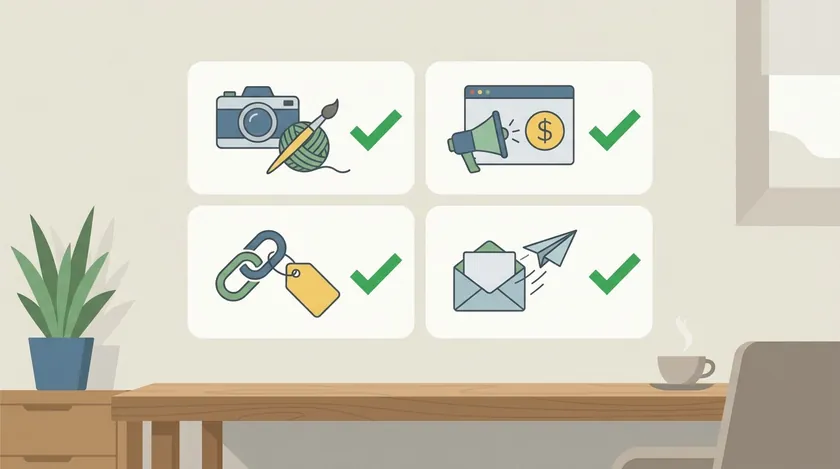
The table below maps four typical blog setups to the specific privacy clauses they usually require. Find the row closest to your blog and use it as a checklist.
| Blog Type | Core Data You Collect | Analytics & Cookies | Ads & Affiliate Tracking | Email Marketing | Extra Clauses to Add |
|---|---|---|---|---|---|
| Hobby Blog | Comment author name and email; IP addresses; form inputs | Basic analytics (page views, sessions); functional cookies | Rare or none | Optional; minimal tracking if present | Simple user rights; children’s notice if comments are open to minors |
| Ad-Supported Blog | Same as hobby, plus ad network cookies and click tracking | Analytics plus ad network tracking; possible retargeting cookies | Significant; personalized ads; cross-site tracking | If used, disclose marketing tracking | Detailed cookies section; opt-out mechanisms; “Do Not Sell or Share” link if the CCPA applies |
| Affiliate Blog | Core data plus affiliate cookie IDs and attribution data | Analytics plus tracking of affiliate link clicks and conversions | Affiliate tracking is primary revenue; third-party pixels | Likely a newsletter with open and click tracking | Clear affiliate disclosure (separate document); profiling notice; retention detail |
| Newsletter-Driven Blog | Signup data: name, email, IP, engagement metrics | Site analytics plus email open and click tracking | May include affiliate links or ad sponsorships in emails | Strong email marketing clause; unsubscribe methods; tracking behavior | Consider double opt-in for EU recipients; data transfer clauses if the email service is outside the visitor’s jurisdiction |
Pick the row that best matches your blog and use it as a starting checklist when customizing the clause-by-clause template below.
Core Sections Every Blog Privacy Policy Should Include
Most blogs, regardless of niche, share a common skeleton. Common sections include data collection, data usage, and user rights, along with cookies and analytics disclosures, email marketing details, third-party services, security measures, and contact information.
The universal sections at a high level are:
- Who you are and the scope of the policy
- What personal information you collect and how
- How and why you use that data
- Cookies, analytics, and other tracking technologies
- Email marketing and newsletters
- Comments, forms, and user-generated content
- Advertising, affiliates, and sponsored posts
- Embedded content and third-party services
- Legal bases and user rights
- Data retention, security, and international transfers
- Children’s privacy
- Contact details and policy changes
Deeper legal elements like lawful bases, international transfers, and retention schedules are covered in the data privacy policy guide and the GDPR-specific articles. This section is a roadmap; the copy-ready detail comes next.
Blog Privacy Policy Template: Clause-by-Clause Examples

Each clause below is copy-ready, with placeholders in [brackets] to replace and lines to delete if they do not apply to your blog. Together, the 13 clauses form a complete starting point for a blog privacy policy.
Clause 1: Who You Are and Scope of This Policy
This clause tells readers who operates the blog, where the legal entity is based, and what sites or services the policy covers. Keep the tone straightforward, because this is legal text and not a sales pitch.
Last updated: [Month Day, Year]
This privacy policy describes how [Blog Name], operated by [Your Name / Legal Entity Name] in [City, State, Country], collects and uses personal information when you visit [yourdomain.com], its subdomains, and any related email newsletters or podcast feeds we operate.
Include a last updated date in your privacy policy. CalOPPA expects an effective date, and readers will look for it.
Clause 2: What Data You Collect
This is one of the most-read sections. It must clearly list all the data you collect, grouped by source. Be specific, because a privacy policy explains how personal data is collected.
Data you provide directly:
- Contact details (name, email address) when you fill in a contact form or leave a comment
- Message content when you send us a question or inquiry
- Subscription details (name, email) when you sign up for our newsletter
Data collected automatically:
- IP addresses, browser type, operating system, and device identifiers
- Usage data such as pages visited, links clicked, and time spent on each page, collected via [Google Analytics / other provider]
- Cookies and similar tracking technologies placed by our site and by third-party services
Data from third-party sources:
- Demographic or interest data provided by advertising partners
- Referral information from social media platforms or search engines
Remove any bullet that does not apply to your blog so the finished policy remains accurate and does not overstate your data collection.
Clause 3: How and Why You Use the Data
This clause connects each category of collected data to a specific purpose, such as running the blog, improving content, or delivering ads. Keep explanations specific and avoid vague purposes like “any other use.”
- To provide and improve the blog (for example, analyzing which posts are most read using analytics data)
- To respond to your messages when you contact us by email or through a contact form
- To send newsletters and updates you have subscribed to, including email marketing communications
- To show ads and affiliate offers and measure their performance using cookies and other tracking technologies
- To protect the site from spam, fraud, and unauthorized access
If your blog has EU residents among its readers, you will also need to state your legal basis for each purpose, such as consent for marketing emails or legitimate interests for basic analytics.
Clause 4: Cookies, Analytics, and Tracking Technologies
Most blogs use cookies, web beacons, pixels, and similar tools for analytics and ads. Blogs use cookies to track visitor interactions, so this clause is essential even if you do not set many cookies directly.
- Functional cookies keep the site working (session management, language preferences).
- Analytics cookies (for example, via Google Analytics) measure traffic, page views, and session duration. We [do / do not] use IP anonymization. Analytics data is retained for [2 / 14] months.
- Advertising and affiliate cookies are set by our ad partners and affiliate networks to show personalized ads and track conversions across other websites.
We use [Google Analytics] to understand how readers interact with the blog. You can learn more about how Google handles data in its privacy policy.
If your blog serves EU or UK visitors, a cookie consent banner with accept and reject controls, plus a link to a standalone cookie policy, may be legally required.
A full cookie banner guide is beyond this article’s scope. If you use IP anonymization or limited data retention settings, mention them here.
Clause 5: Email Marketing, Newsletters, and Lead Magnets
Any blog that collects emails for newsletters, waitlists, or lead magnets needs a dedicated clause. Our [email service provider] stores the following when you subscribe:
- Email address and name
- IP address and time of signup
- Engagement data such as email opens and link clicks
We may use tracking pixels in emails to measure engagement. You can unsubscribe at any time via the link included in every email. Email addresses collected for newsletters are not sold, rented, or used for unrelated purposes.
For detailed newsletter clause language, see the email marketing privacy policy template. Name your email provider explicitly and link to its own policy so readers can review it.
Clause 6: Comments, Contact Forms, and User-Generated Content
Comment sections and contact forms are classic ways blogs collect personal information. Comments often require a name, an email, and sometimes a profile picture or website URL.
- Default commenting systems store name, email address, comment text, IP address, and browser user-agent string for spam detection.
- Third-party comment tools (such as Disqus or social media comment plugins) may process users’ data according to their own privacy policies. Name any third-party tool you use.
- Contact form messages are stored for [one year / as long as necessary to handle the inquiry].
We reserve the right to remove comments that contain personal information about other users, spam, or unlawful content to protect visitors and comply with applicable laws.
Clause 7: Advertising, Affiliates, and Sponsored Content
Many blogs monetize through advertising, affiliate programs, and sponsored posts, which involve additional data collection by third parties.
- Advertising partners such as [Google AdSense / ad network name] use cookies and electronic trackers to show personalized ads and measure performance.
- Affiliate links may track when readers click and purchase, often using unique identifiers or cookies managed by the affiliate network.
- Sponsored posts may include tracking pixels placed by the sponsoring brand.
We do not control all data collection performed by these third-party services. Readers should review the linked privacy policies for details: [Partner 1 Privacy Policy URL], [Partner 2 Privacy Policy URL].
Note that an affiliate disclosure about commissions and endorsements is a separate document from the privacy policy, and blogs should maintain both.
Clause 8: Embedded Content and Third-Party Services
Embedding videos, social posts, music players, maps, and other widgets may allow those third parties to collect personal information as if the visitor went to their own site. A privacy policy should outline third-party services that may collect user data.
Common embedded content sources include:
- YouTube and Vimeo (video)
- Spotify (audio and podcast players)
- Instagram, X, and TikTok (social posts)
- Google Maps (location widgets)
- Code-sharing tools (GitHub Gists, CodePen)
These providers may set cookies and track interactions even if the visitor does not click the embedded content. The blog is not responsible for the privacy practices of those external sites, and we advise visitors to review their policies at [URLs].
Some plugins and themes also send limited data back to their developers for diagnostics or usage stats. If your blog uses such plugins, mention them here. Audit your blog for embedded scripts and iframes and make sure every significant integration is at least generically covered.
Clause 9: Legal Bases, User Rights, and Data Requests
Blogs with visitors in Europe, the UK, or certain US states must acknowledge user rights. The GDPR grants users rights over their personal data, and the CCPA lets California residents opt out of the sale or sharing of their information.
Depending on where you are located, you may have the right to:
- Know what personal information we hold about you and request access to it
- Correct inaccurate data
- Request deletion of your personal data
- Object to or restrict certain types of processing
- Opt out of the sale or sharing of your personal information (for California residents under the CCPA)
- Request an exported file of your data in a portable format
To make a request, email [your privacy email address] with enough detail to identify your account or comment. We aim to respond within [30] days or as legally required.
For EU and UK visitors, the GDPR requires a lawful basis for each processing activity, such as consent, contract performance, or legitimate interests. See the GDPR-compliant privacy policy guide for detailed guidance. Blogs that reach CCPA thresholds should consult the California privacy policy template.
Clause 10: Data Retention, Security, and International Transfers
This clause explains how long the blog keeps personal information, what security practices it uses, and when data may be stored outside the visitor’s country. State your retention periods in the policy.
- Analytics data is retained for [2 / 14] months, then deleted or anonymized.
- Comment data is kept for as long as it remains published on the blog.
- Email subscriber data is stored until the user unsubscribes or the list is cleaned.
- Contact form messages are retained for [customizable period].
Blogs should use reasonable safeguards to protect personal data. We use HTTPS/TLS encryption, strong passwords, limited staff access, and reputable hosting providers. We do not promise perfect security, because no system is completely immune to risk.
Personal information may be stored on servers in another country (for example, the US) via hosting, email marketing, or cloud tools.
We take reasonable steps to protect it consistent with applicable privacy laws, including standard contractual clauses or equivalent safeguards where required. Customize retention periods based on your actual tools and needs instead of leaving generic, undefined timeframes.
Clause 11: Children’s Privacy
Many blogs are not aimed at children, but laws in the US (COPPA) and elsewhere impose extra duties when collecting personal information from minors, especially under age 13.
This blog is not directed to children under 13. We do not knowingly collect personal information from children under 13. If we discover that a child has provided personal details without parental consent, we will delete such data promptly.
If you believe your child has submitted personal information, contact us at [your privacy email address]. Blogs intentionally targeting teenagers or children should obtain specific legal advice and use a more detailed children’s privacy notice beyond this general template.
Clause 12: How to Contact You About Privacy
This section gives readers a simple way to ask questions, exercise their rights, or raise concerns about how the blog handles their personal information.
At minimum, include:
- A dedicated privacy email address: [your privacy email address]
- Optionally, a postal address: [Your Address]
- Optionally, a contact form URL: [yourdomain.com/contact]
You can send requests for data access, correction, deletion, or questions about cookies to that address. We generally respond within [30] days.
Larger blogs or those subject to the GDPR may need to name a data protection contact or officer, even if it is just the site owner wearing that hat.
Clause 13: Changes to This Blog Privacy Policy
Privacy practices evolve when the blog adds new tools, starts email marketing, or changes hosting. Websites should tell users when their privacy policy changes.
We may update this privacy policy from time to time. When we do, we will revise the “Last updated” date at the top of this page. For material changes, we may provide additional notice via a banner on the site or an email to subscribers.
Do not promise advance notice for every minor wording change; keep commitments realistic. Review the policy periodically so you stay informed about how the blog handles personal information.
How to Create and Maintain Your Blog’s Privacy Policy
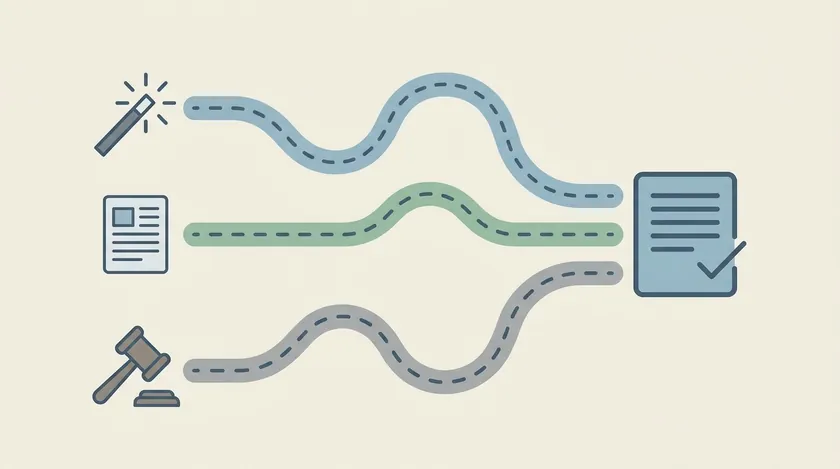
There are three practical routes to write a privacy policy for your blog:
- Generators answer a few simple questions about your blog and produce a customized policy covering multiple laws. They are the fastest route for most bloggers.
- Templates like the one above give you hands-on control, which is ideal if you want to customize every sentence.
- DIY drafting with legal help is best if your blog handles sensitive data or operates under multiple strict regulations.
Review your privacy policy at least once a year or whenever you add new tracking tools, ad networks, or email marketing setups. A tool like the Privacy Policy Generator can save hours.
Whichever route you choose, the final policy must match your real-world data collection. Copying another blog’s legal text without changes is risky and discouraged, because their tools, cookies, and email marketing stack are unlikely to match yours.
Where to Display Your Blog Privacy Policy
Having a compliant privacy policy is not enough. Visitors and regulators expect it to be easy to find from any page of the blog.
Footer, Menu, and Data Collection Points
Place a privacy policy link in your global footer, the standard location, so it appears on every page.
Also link to it wherever you collect personal information: signup forms, comment boxes, and contact form pages. Make sure the link is visible on both desktop and mobile views.
Cookie Banners and Consent Notices
If you use a cookie consent banner, it should contain a direct link to your privacy policy page and to any separate page with cookie details. Do not bury these links in small text styled to blend into the background.
WordPress Blogs
In WordPress, you can create a privacy policy page from the dashboard under Settings → Privacy and designate it as your site’s official privacy policy page. The platform even offers a starter template. Detailed setup steps are beyond this article’s scope.
Blogger, Squarespace, and Other Platforms
Blogger site owners and those using Squarespace or other platforms should follow similar principles: permanent footer links plus contextual links wherever data is collected. The legal content of the policy does not change based on your platform. What matters is the actual data you collect.
Key Takeaways
- Any blog collecting personal information, whether through comments, analytics services, ads, or email marketing, needs a clear, accurate, and regularly updated privacy policy.
- The template sections above (who you are, data you collect, cookies and analytics, email marketing, comments, user rights, security, and contact details) give bloggers a strong starting point.
- International readers bring in laws like the General Data Protection Regulation, the California Consumer Privacy Act, and Canada’s PIPEDA, so bloggers should not assume small size equals no obligations.
- Mapping actual tools and data flows is essential before filling in any blog privacy policy template, to avoid gaps and contradictions.
- Using a reputable generator can simplify keeping the policy aligned with evolving services and regulations.
Ready to get your blog’s privacy policy in place? Answer a few simple questions in the Privacy Policy Generator to produce a policy tailored to your analytics, email marketing, ads, and international readers.
FAQ
Do I need a privacy policy if I use Google AdSense on my blog?
Yes. Google’s publisher policies require publishers to have and follow a privacy policy that clearly discloses any data collection, sharing, and usage that happens through Google products on their properties.
That applies even to small blogs. Use the advertising clause in the template above as a starting point, and add the ad partners you actually use.
Is a sample privacy policy for blog enough, or do I need a lawyer?
Using a high-quality blog privacy policy template or generator is usually enough for typical personal or small business blogs, as long as you customize it honestly to match your real data collection and the privacy policies of every third-party tool you use.
Bloggers handling sensitive data, running large ad-tech setups, or operating under multiple strict privacy regulations should consider having a lawyer review their policy for requirements specific to their situation.
Can I copy another blog’s privacy policy and just change the name?
Copying another policy is risky because their tools, cookies, and email marketing stack are unlikely to match yours. This can leave undisclosed practices or false statements in your own policy, and both create legal and regulatory risk.
Instead, use another blog’s policy only as inspiration and build your own using a structured blog privacy policy template alongside a clear inventory of all the data your site actually handles.
How often should I update my blog’s privacy policy?
Review your policy at least once a year and whenever you add or remove major services such as analytics tools, ad networks, newsletter providers, or membership plugins.
Any time the way you collect personal information changes, for example when you launch a new email marketing campaign or affiliate program, update the relevant sections and the “Last updated” date so readers see a current, accurate document.
Is there a difference between a privacy policy for a WordPress blog and other platforms?
The legal content is similar regardless of platform. What matters is the actual data collection and services you use, not whether the blog runs on WordPress, Blogger, or a custom CMS.
WordPress includes some helper tools, such as a built-in privacy policy page template, but bloggers on any platform still need to make sure their policy accurately reflects cookies, plugins, and all third-party integrations in use.