
The General Data Protection Regulation is an EU law, but its reach extends far beyond European borders. If your US business handles personal data of people located in the European Union—even without an office, server, or employee in Europe—GDPR may apply to you.
Whether it applies depends on two practical questions: does your business offer goods or services to people in the EU, or does it monitor their behavior online?
This guide gives you a practical decision test, US-specific examples (online store, SaaS, blog, mobile app, US-only business), a concrete GDPR compliance checklist, and what to put in a GDPR-ready privacy policy.
Table of Contents
- Quick Answer: Does GDPR Apply to US Companies?
- How GDPR Reaches Businesses Outside the EU
- Does GDPR Apply to Your US Business?
- Examples: How GDPR Applies to Common US Setups
- Common Myths About GDPR in the US
- What US Companies Must Do to Comply
- What to Change in Your Privacy Policy
- GDPR vs US Data Privacy Laws
- Penalties and Real Risk for US Businesses
- Key Takeaways
- FAQ
Quick Answer: Does GDPR Apply to US Companies?
GDPR applies to US businesses if they either offer goods or services to people in the European Union or monitor their behavior online—even if every employee and server is in the United States. The regulation has extraterritorial reach, applying to companies outside the EU whenever these criteria are met.
A key distinction: GDPR protects individuals located in the EU or EEA at the time of data collection, not “EU citizens.” A US passport holder living in Berlin is covered. A German tourist browsing your site from a hotel in Miami is not.
This differs from most US privacy laws, which typically hinge on residency (like the California Consumer Privacy Act, which covers California residents).
If your US business has only US customers and no intentional EU targeting or monitoring, you are usually outside GDPR’s scope—but you should still watch evolving US data privacy laws.
This article focuses on practical steps for founders and operations managers: when GDPR applies, what to prioritize, and how to update a privacy policy to maintain GDPR compliance.
How GDPR Reaches Businesses Outside the EU

The European Commission’s guidance on the application of the GDPR and Article 3 define three connection points that can pull a non-EU business into GDPR’s scope.
Understanding these is critical for any US company that operates online, because the regulation does not care where your servers sit or where your company was incorporated—it cares about whose data you process and how.
This extraterritorial reach is what makes GDPR so important for online-only US businesses, especially SaaS tools, ecommerce stores, and mobile apps that are accessible worldwide by default.
Establishment in the EU
If your US company has a subsidiary, branch, or office in an EU member state, GDPR applies to all processing carried out in the context of that establishment’s activities.
This is the most straightforward trigger. Even a small sales office in Dublin or a support team in Berlin counts. The processing itself does not need to happen in the EU—what matters is the connection to the EU establishment’s operations.
Offering Goods or Services to People in the EU
This applies with or without payment. Practical signals include listing prices in euros, offering shipping to EU countries, displaying EU-specific languages on your website, running ads targeted to EU audiences on Meta or Google, or mentioning EU countries in marketing materials.
Even free services, like a freemium SaaS or a free mobile app, can trigger this criterion if EU residents are clearly part of the intended audience.
Monitoring the Behavior of People in the EU
“Monitoring behavior” typically means systematic tracking over time—cookies, pixels, device identifiers, adtech networks—used to analyze or predict preferences. It is not merely counting anonymous pageviews.
According to EDPB guidance, combining tracking with profiling and behavioral advertising networks often triggers this criterion. If your site drops third-party cookies on EU visitors and feeds that data into retargeting campaigns, you are likely monitoring their behavior under GDPR.
Does GDPR Apply to Your US Business?
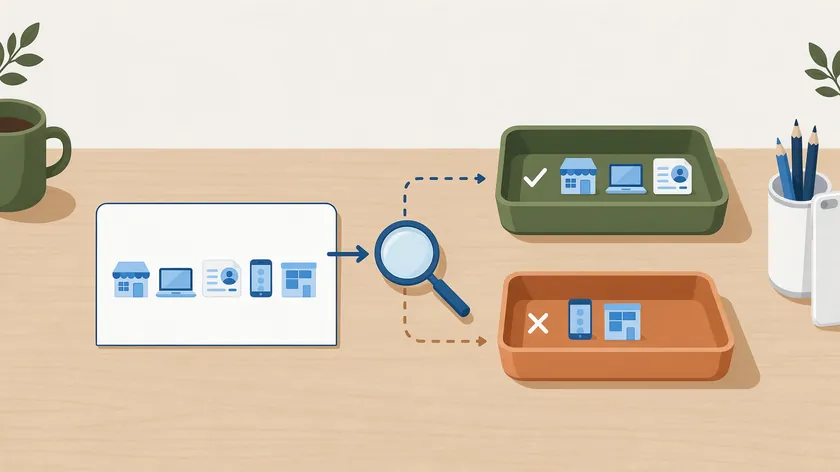
Treat the table below as a quick-reference decision guide. It maps common US business types against the two main GDPR triggers. The reasoning for each case is explored in the examples section that follows.
| Business Type | Typical EU Contact | Likely GDPR Status | Notes |
|---|---|---|---|
| US-only local business (geoblocked) | None intentional | Usually not in scope | May still need US state law compliance |
| Online store shipping to the EU | EU customers, EUR pricing, EU ads | Almost certainly in scope | Checkout data, cookies, email marketing all covered |
| SaaS with self-serve signups | EU users sign up freely | Likely in scope | Controller for accounts; possibly processor for customer data |
| Blog/website with analytics and ads | EU visitors tracked via cookies | Possibly in scope | Depends on tracking depth and intent |
| Mobile app in EU app stores | EU downloads, in-app tracking | Likely in scope | Device IDs, location data, behavioral profiles |
Key signals that push toward “in scope” include EU languages, euro pricing, EU shipping options, EU-targeted ads, and tracking technologies that profile EU visitors.
Even a small shop or startup can fall under GDPR if it intentionally targets EU users, while a US-only service with strict geoblocking and no EU outreach typically will not. Different US privacy laws have specific applicability thresholds, but GDPR applies whenever your business targets or monitors people in the EU.
If you still cannot decide, the safest approach is to assume GDPR may apply whenever you systematically collect data from people you know are in the EU, and design your data privacy processes accordingly.
Examples: How GDPR Applies to Common US Setups

Each example below illustrates how the Article 3 rules work in practice. The goal is not case-by-case legal opinions but a practical mental model for when GDPR in the US context is relevant.
Online Store Shipping to the EU
A Denver-based Shopify store sells handmade leather goods. It lists prices in both USD and EUR, enables shipping to Germany and France, and runs Google Ads targeting Berlin. This is clearly “offering goods or services” to EU residents.
GDPR almost certainly applies to personal data collected from those EU customers—names, email addresses, shipping addresses, payment details, and tracking cookies set during checkout. The store must align its order flows, email marketing, and support tools with EU data protection laws. For ecommerce-specific policy language, Termify’s guidance on building an online store privacy policy covers the key disclosures.
SaaS Platform With EU Self-Serve Users
A B2B project-management SaaS founded in Austin allows signups from any country and advertises “global teams welcome.” Several EU companies onboard and pay in USD. This still counts as serving EU residents for GDPR purposes.
The SaaS is likely both a data controller (for billing, account creation, and support interactions) and a data processor (for customer end-user data stored on the platform), which affects its data processing agreements and obligations under Article 28. For SaaS-specific privacy notice content, Termify’s SaaS privacy policy guide goes deeper without duplicating what is covered here.
Blog or Content Site With EU Traffic and Analytics
A US-based marketing blog publishes only in English and sells nothing directly. It uses Google Analytics, runs display ads through an ad network, and collects newsletter signups. About 15% of its traffic comes from EU IP addresses.
Incidental EU visits alone may not trigger GDPR, but using cookies and trackers to profile or retarget EU-located users can qualify as “monitoring behavior”—especially when combined with email marketing that collects names and email addresses.
Such publishers should consider GDPR-style cookie consent and a clear data privacy policy. Termify’s email marketing privacy policy template can help with subscriber disclosures. For blog-specific clauses on comments, analytics, and ads, see our guide to a privacy policy for blog owners.
Mobile App Available in EU App Stores
A US fitness-tracking startup publishes its iOS and Android app globally through Apple’s and Google’s default distribution with no geo-filtering. The app collects device identifiers, location data, and behavioral profiles across countries.
Listing the app in EU app stores and processing such data from EU users will usually trigger GDPR obligations, even if the team has never set foot in Europe.
The app’s in-store privacy label and in-app privacy notice must align with GDPR requirements and accurately describe cross-border data transfers back to US servers.
US-Only Business With No EU Customers
A regional home-services marketplace operating in three US states geoblocks the EU, serves only US ZIP codes, and uses US-only payment providers. In this tightly US-scoped setup, GDPR usually will not apply.
However, state laws—for example, the California Consumer Privacy Act for California residents—and sectoral rules may still require a robust privacy policy. Termify’s privacy policy for small business resource covers US obligations efficiently.
Common Myths About GDPR in the US
US founders repeat certain misconceptions about GDPR so often that they have become industry folklore. Here are four myths and the reality behind each.
Myth: GDPR Only Protects EU Citizens
Reality: GDPR protects anyone located in the EU or EEA when their data is collected, regardless of citizenship or passport. A Brazilian tourist in Paris, an American expat in Amsterdam, and a French national in Lyon are all data subjects under GDPR. US citizenship does not exempt a business from GDPR obligations when it processes EU personal data.
Myth: Small US Startups Don’t Need to Care
Reality: GDPR applies irrespective of business size when its scope criteria are met. There is no revenue threshold or employee count that automatically exempts a company. Even micro-businesses and solo developers can be data controllers or data processors if they collect data from EU residents.
A one-person SaaS with 500 EU signups is just as much in scope as a Fortune 500 company.
Myth: Having a Privacy Policy Equals GDPR Compliance
Reality: A generic privacy policy that vaguely mentions “we collect your data” will not satisfy GDPR. The regulation demands specific disclosures: legal bases for each processing purpose, data subject rights and how to exercise them, details about cross-border data transfers, retention periods, and controller contact information. Without these, a policy is a placeholder, not a compliance document.
Myth: US Privacy Laws Like CCPA Replace GDPR
Reality: CCPA/CPRA and other US state laws do not replace GDPR for EU personal data. Both can apply simultaneously to the same business.
GDPR also imposes stricter consent standards and gives individuals rights that US laws do not uniformly match, such as the right to restrict or object to processing. Understanding scope correctly helps US teams spend time and budget where GDPR really applies instead of over- or under-complying.
What US Companies Must Do to Comply

This section is a high-level GDPR compliance checklist tailored to US businesses. It focuses on concrete operational steps. For the full drafting guide—lawful bases explained in depth, sample clauses, and retention tables—see Termify’s GDPR compliant privacy policy article.
Map Your Personal Data Flows
Start by cataloging what personal data you collect (names, emails, IP addresses, device IDs, biometric data, sensitive data), from whom (EU customers, website visitors, app users), where it is stored (US servers, cloud providers, third-party tools), and which vendors touch it. Identify your role—controller, processor, or both—for each data flow.
GDPR outlines six legal bases for data processing: consent, contract performance, legal obligation, vital interests, public task, and legitimate interests. Every processing activity needs one, and you should document it. Contract performance is a common legal basis for processing customer data in ecommerce and SaaS contexts.
Design Consent Flows
Where consent is your legal basis—marketing emails, non-essential cookies, newsletter signups—it must be freely given, specific, informed, and unambiguous. That means no pre-ticked boxes, no bundled consent buried in terms of service, and no dark patterns.
Users must be able to withdraw consent as easily as they gave it, and you must be able to demonstrate that consent was given, so keep a record of consent choices.
Note that US state laws such as CCPA mostly rely on notice and opt-out for the sale or sharing of data, while GDPR requires opt-in consent whenever consent is the legal basis.
Handle Data Subject Requests and Breaches
Companies must honor data subject rights including access, rectification, erasure, restriction, objection, and data portability. As a rule, you must respond to a request without undue delay and within one month of receiving it. Build internal workflows so requests reach the right person and get processed on time.
For data breaches, you must notify the relevant supervisory authority within 72 hours of becoming aware of a breach that poses a risk to individuals.
If the risk is high, you must also notify affected data subjects directly. Have a basic breach response plan documented before you need it.
Sign Data Processing Agreements With Vendors
Every vendor that handles EU personal data on your behalf—cloud hosting, email tools, CRMs, payment processors, analytics platforms—needs a GDPR-compliant data processing agreement under Article 28.
These agreements should specify the purpose and duration of processing, types of personal data involved, security measures, sub-processor controls, and obligations on data deletion or return.
Appoint an EU Representative
US businesses without an EU establishment that are subject to GDPR generally need to designate an EU representative under Article 27. The representative acts as a contact point for data protection authorities and data subjects in the EU.
Exceptions exist for occasional processing that does not include large-scale sensitive data and is unlikely to risk the rights of individuals. Most US businesses with steady EU user bases will not qualify for those exceptions.
Separately, GDPR requires a data protection officer in some cases. One must be appointed if your core activities involve regular and systematic monitoring of individuals on a large scale or large-scale processing of sensitive data.
GDPR does not define a strict numeric threshold for “large scale,” so assess your situation based on volume, regularity, and data sensitivity.
Check Cross-Border Data Transfers
Any transfer of EU personal data to US servers is a cross-border data transfer that requires a valid safeguard. The EU-US Data Privacy Framework became effective on July 10, 2023, giving US companies that self-certify under it a valid transfer mechanism for covered data flows.
Eligibility requires the company to be under the investigatory jurisdiction of the Federal Trade Commission or Department of Transportation. The framework has been challenged in court. The EU General Court upheld it in September 2025, and an appeal is pending before the Court of Justice, so keep a fallback in place.
If your company is not DPF-certified, standard contractual clauses remain a viable alternative, though they may require supplementary measures following the Schrems II ruling. Binding corporate rules are another option for multinational groups.
What to Change in Your Privacy Policy

GDPR changes what your privacy policy (or privacy notice) must say about EU users. This is where Termify’s tools are particularly useful for US businesses. Here are the GDPR-specific elements to add or update:
- EU data subjects scope statement: Explicitly state that your policy covers individuals in the EU/EEA and describe how GDPR applies to your data processing activities.
- Legal bases for processing: List the legal basis for each main purpose (consent, contract, legitimate interest, legal obligation). Do not simply say “we have a legal basis.”
- Data subject rights and how to exercise them: Include access, rectification, erasure, restriction, portability, and objection, along with a clear method to submit requests.
- Controller identity and contact details: Name the entity responsible, its address, and email. If you have a data protection officer or EU representative, list their contact information.
- Cross-border transfer disclosures: State the mechanism (DPF certification, standard contractual clauses, or other safeguards) used for EU-to-US data transfers.
- Retention periods: Indicate how long you keep each category of personal data or the criteria used to determine retention.
- Cookie and tracking disclosures: Describe non-essential cookies and how users can control them.
For the full breakdown and sample language, see Termify’s GDPR compliant privacy policy guide. For universal clauses every policy needs regardless of jurisdiction, the data privacy policy guide covers the foundation.
One practical note: the same privacy notice can cover GDPR, CCPA/CPRA, and other state laws if you structure it with jurisdiction-specific sections and keep it up to date. Termify’s California privacy policy template shows how to handle the California layer.
Write in plain US English, make the policy easy to find in the website footer or app settings, and make sure it reflects actual practices rather than aspirational statements.
GDPR vs US Data Privacy Laws
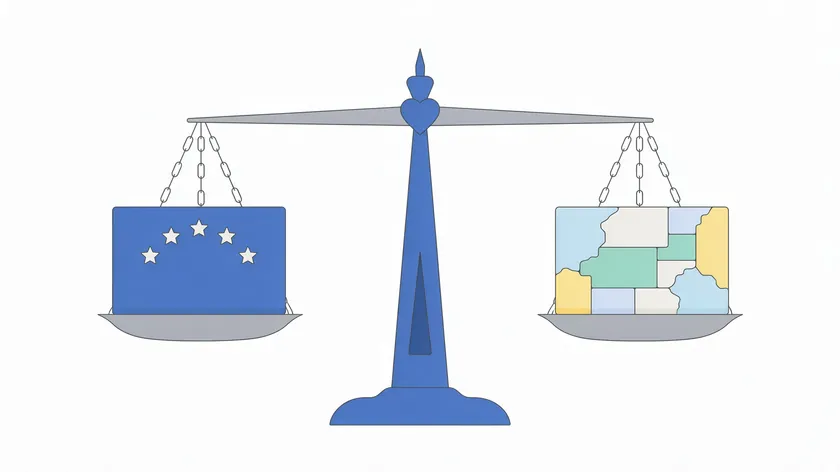
There is no single comprehensive data privacy law in the US that fully matches GDPR. Instead, US rules are a patchwork of federal and state regulations, each with its own scope, rights, and enforcement mechanisms.
| Dimension | GDPR | CCPA / CPRA | Other State Laws (VA, CO, etc.) | HIPAA |
|---|---|---|---|---|
| Scope | All sectors; anyone in the EU | California residents; businesses meeting revenue/data thresholds | State residents; varying thresholds | Healthcare providers, plans, business associates |
| Consent model | Opt-in when consent is the legal basis; other legal bases also exist | Opt-out (consumers opt out of sale/sharing) | Mostly opt-out; some opt-in for sensitive data | Authorization for use/disclosure of protected health information |
| Key individual rights | Access, rectification, erasure, portability, objection | Access, deletion, opt-out of sale, non-discrimination | Similar to CCPA with variations | Access, amendment, accounting of disclosures |
| Penalties | Up to €20 million or 4% of global revenue | $2,663 per violation; $7,988 per intentional violation or violation involving minors | Varies by state | Tiered civil penalties, adjusted annually for inflation |
| Enforcement | Data protection authorities in EU member states | California Attorney General, California Privacy Protection Agency | State attorneys general | HHS Office for Civil Rights; state AGs |
GDPR is a comprehensive data privacy law covering almost all sectors, whereas US laws like HIPAA or GLBA protect specific types of data, such as protected health information or financial data.
CCPA only applies to California residents, limiting its scope compared to GDPR’s coverage of anyone in the EU. CCPA fines are currently $2,663 per violation and $7,988 per intentional violation (or violation involving minors), while GDPR fines can reach €20 million or 4% of global annual turnover.
Many US businesses choose GDPR as their “north star” standard and then layer in state-specific notices, rather than treating each law as a separate, conflicting project. This approach to regulatory compliance tends to reduce duplication and keeps data collection practices consistent across jurisdictions.
Penalties and Real Risk for US Businesses

GDPR Article 83 sets maximum penalties for the most serious violations at €20 million or 4% of annual global turnover, whichever is higher. For US companies with significant global revenue, the percentage-based cap can dwarf the fixed amount.
Enforcement is risk-based and contextual, but the scale of real fines is not theoretical. The Irish Data Protection Commission fined Meta €1.2 billion in 2023 for failing to provide adequate safeguards for EU-to-US data transfers under Article 46.
In a separate action, the Dutch Data Protection Authority fined Clearview AI, a US company with no EU branch, €30.5 million in 2024 for building a facial recognition database from scraped images of people without a legal basis.
EU supervisory authorities can investigate foreign companies, especially those with EU customers or assets. However, actually collecting fines from US-based companies can be difficult when the company has no EU assets and no treaty compels US courts to enforce foreign regulatory penalties.
That said, non-compliance can lead to restrictions on data transfers and market access, and violations can result in reputational damage and loss of customer trust—consequences that hit business operations even without a wire transfer to Brussels.
Realistic risk factors for US businesses include ignoring clear EU users, failing to respond to access or deletion requests, or suffering a data breach without notifying regulators. Taking proportionate steps to maintain GDPR compliance—clear policies, basic security measures, and honoring rights—is often enough to drastically reduce enforcement exposure.
Key Takeaways
- Under GDPR, what matters is where the user is, not their citizenship.
- GDPR can apply to US companies that offer goods or services to people in the EU or monitor their behavior.
- US privacy laws do not replace EU obligations—both frameworks can apply at once.
- Basic steps like data mapping, consent, vendor contracts, and an up-to-date privacy policy go a long way toward compliance.
- Fines for non-compliance can reach €20 million or 4% of global annual turnover under Article 83.
- This article is general information, not legal advice; complex or high-risk processing (for example, health data, children’s data, or large-scale profiling) warrants professional legal counsel.
Now that you know whether GDPR applies to your US business, the next step is making your privacy policy match your actual data processing activities.
Termify’s Privacy Policy Generator asks practical questions about your data collection, cookies, transfers, and user rights, then builds a policy that can address GDPR, CCPA/CPRA, and other privacy laws in one place.
FAQ
Does the USA have a GDPR equivalent?
The US does not have a single nationwide comprehensive data privacy law comparable to GDPR. Instead, it relies on sectoral federal laws, like HIPAA for protected health information and GLBA for financial institutions, and state privacy laws such as California’s CCPA and the California Privacy Rights Act.
Federal agencies like the Federal Trade Commission enforce against unfair or deceptive practices, but no overarching federal law grants the same breadth of data subject rights across all industries.
CCPA/CPRA for California residents is the closest analogue in scope and individual rights, but it still differs on consent model (opt-out vs. GDPR’s opt-in), applicability thresholds, and enforcement structure. For companies handling EU personal data, GDPR remains a separate legal obligation that no US statute replaces.
Does GDPR apply to non-EU companies?
Yes. GDPR explicitly applies to controllers and data processors outside the EU under Article 3 when they offer goods or services to, or monitor the behavior of, individuals in the EU, regardless of where those companies are incorporated.
This covers US-based ecommerce, SaaS, adtech, and mobile apps that intentionally serve EU residents or track them with cookies and similar technologies.
A non-EU company with no EU customers, no EU-targeted marketing, and no systematic monitoring of EU visitors is generally outside GDPR’s reach, though it may still be covered by US state privacy laws.
Is GDPR more strict than HIPAA?
GDPR and HIPAA regulate different things. GDPR is a broad data protection regulation covering personal data across nearly all sectors, while HIPAA focuses on protected health information handled by healthcare providers, health plans, and their business associates in the US.
GDPR is “stricter” in the sense that it applies to more industries and requires a legal basis for all personal data processing, but HIPAA can be stricter within its narrower domain, particularly around health data security controls.
US healthcare or health-tech companies serving EU residents may need to comply with both frameworks at once, aligning security measures and privacy notices accordingly. There is no single answer about which is “more strict” without specifying the context.
What are the 7 GDPR principles?
GDPR Article 5 sets out seven core principles that guide all processing activities:
- Lawfulness, fairness, and transparency—process data legally and be upfront about what you do with it.
- Purpose limitation—collect data for specific, stated purposes and do not repurpose it without a valid basis.
- Data minimization—only collect what you actually need.
- Accuracy—keep personal data correct and up to date.
- Storage limitation—do not keep data longer than necessary for its stated purpose.
- Integrity and confidentiality—protect personal data with appropriate security measures against unauthorized access and data breaches.
- Accountability—be able to demonstrate compliance and document your data processing activities and decisions as a data controller or processor.
These principles guide how US businesses should design processes, documents, and systems whenever GDPR applies to their handling of EU personal data.
Does GDPR apply if all my customers are in the US?
If your business truly serves only US customers, has no EU offices, does not ship to the EU, does not market to EU audiences, and takes reasonable steps to avoid EU traffic, GDPR usually will not apply.
However, if your website or app quietly gathers analytics or runs ads that profile EU visitors through cookies, pixels, or ad-network SDKs, the business may drift into “monitoring behavior” territory even without formal EU customers.
Document your targeting decisions and consider at least basic cookie controls and privacy disclosures to manage both EU and growing US privacy expectations.
Do I need an EU representative as a US company?
Article 27 generally requires businesses outside the EU that are subject to GDPR to designate a representative in an EU member state where their data subjects are located.
The representative serves as a contact point for supervisory authorities and data subjects, and your privacy policy should identify them. There are limited exceptions. If your processing is occasional, does not involve large-scale sensitive data, and is unlikely to risk individuals’ rights, you may not need one.
In practice, most US businesses with a steady flow of EU users or customers will need to appoint a representative. Appointing one does not make your company “established” in the EU for Article 3(1) purposes, but skipping it when required is a compliance gap.