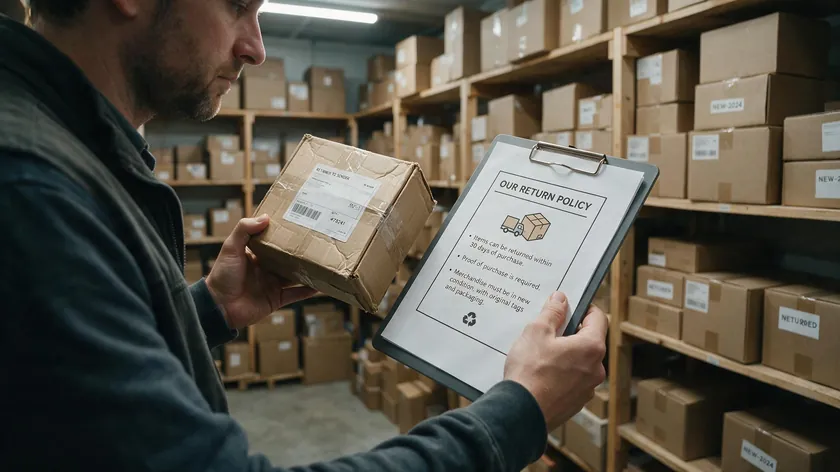
A restocking fee is one of the most debated elements of any return policy, and for good reason. If you run an online store or small business, you need to decide whether to charge a restocking fee, how much to set it at, and exactly how to write it into your policy.
This guide covers typical fee ranges by industry, legal disclosure requirements across US states, and ready-to-adapt clause language you can drop into your own returns page.
Table of Contents
- What Is a Restocking Fee (for Merchants, Not Customers)?
- Why Stores Charge Restocking Fees (and When You Probably Shouldn’t)
- Typical Restocking Fee Ranges by Industry and Product Type
- Legal Considerations: Where Can You Charge Restocking Fees in the US?
- When and How to Charge a Restocking Fee in Your Return Policy
- How and Where to Disclose Restocking Fees Online
- Sample Restocking Fee Clauses You Can Adapt
- Pros and Cons of Charging Restocking Fees (with Practical Scenarios)
- Alternatives and Complements to Restocking Fees
- Building Your Full Return & Refund Policy Around Restocking Fees
- Key Takeaways
- FAQs
What Is a Restocking Fee (for Merchants, Not Customers)?
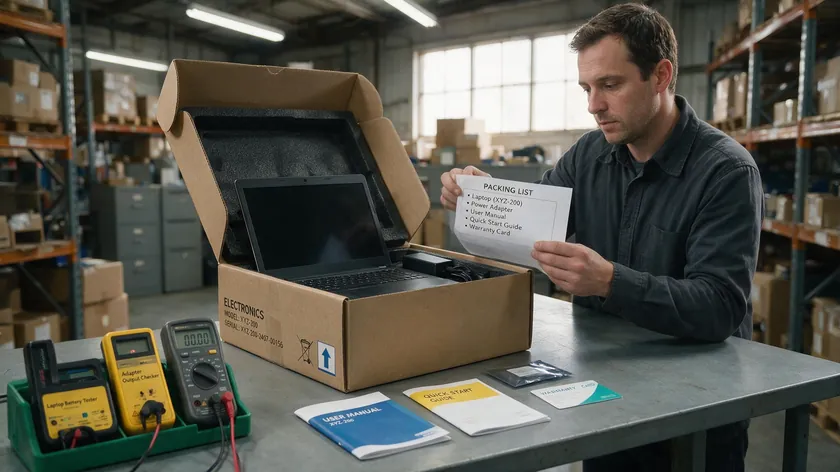
A restocking fee is a charge deducted from refunds, either as a flat amount or as a percentage of the item price. You apply it to offset the real costs of processing returns: inspecting returned items, repackaging, re-shelving, and absorbing any loss in value when you resell at a discount.
Restocking fees apply in specific circumstances where the return is voluntary. Common scenarios include:
- Buyer’s remorse or change-of-mind returns where nothing is wrong with the product.
- Opened packaging on electronics that must be tested, wiped, and verified before resale.
- Furniture or large items returned with scuffed boxes or cosmetic damage from two-way freight.
- Apparel returned after heavy try-on, with tags removed or showing signs of wear.
- Specialty equipment needing technician inspection before it can go back on the shelf.
Note that restocking fees cover costs different from return shipping. Return shipping is about getting the product back to your warehouse; restocking covers what happens once it arrives—labor, materials for repackaging, quality checks, and any hit to resale value.
Many stores now mix restocking fees with modern practices like free returns on low-risk categories and returnless refunds on inexpensive items. Your restocking fee policy should reflect these nuances rather than applying a single blanket rule.
Why Stores Charge Restocking Fees (and When You Probably Shouldn’t)
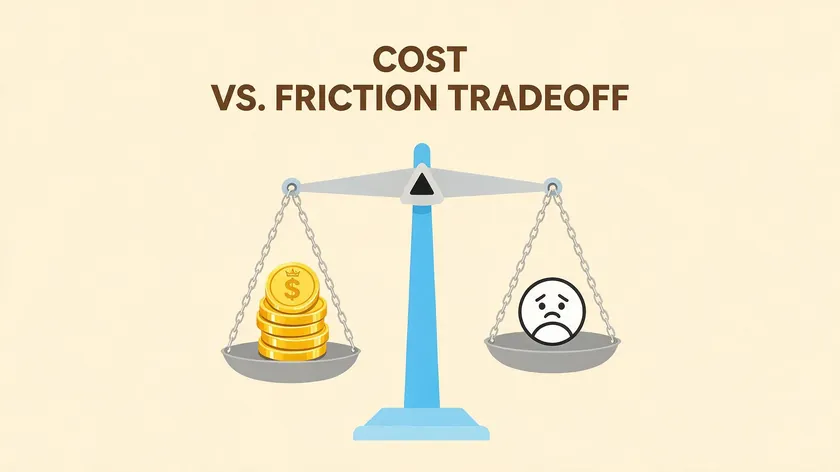
Charging restocking fees is both a financial and behavioral tool. Fees protect your margins on costly returns and discourage frivolous returns, but they can also increase cart abandonment and customer complaints if misapplied.
Here is what fees help you cover:
- Direct costs: warehouse labor for processing returns, quality control, cleaning or refurbishment, reboxing, relabeling, and platform or payment processor fees on partial refunds.
- Indirect costs include inventory sitting idle during inspection, items returned in “used-like-new” condition that you must discount to resell, and return fraud such as wardrobing or serial returners.
- The numbers matter: 74% of businesses charge restocking fees on some returned items, and a 10–15% fee on a $1,000 gadget can recover $100–$150 toward depreciation, testing, and repackaging.
Restocking fees are common for high return-rate categories. But there are situations where you should avoid restocking fees entirely: defective or damaged-on-arrival products, a wrong item shipped by your warehouse, or categories where competitors clearly advertise free returns and your conversion will suffer.
Before implementing a fee, ask yourself one question: will the money recovered exceed the revenue lost from lower sales, higher customer service workload, and potential negative reviews? If you are unsure, start with a limited test on one or two product categories and measure the impact before rolling it out store-wide.
Typical Restocking Fee Ranges by Industry and Product Type

Restocking fees typically range from 10% to 25% of the item’s price, but the right percentage depends heavily on your product category. High-value items often incur restocking fees due to resale value loss, while low-cost items may not warrant a restocking fee at all.
| Product Category | Suggested Restocking Fee | Why |
|---|---|---|
| Electronics & Tech | 10–15% open-box resalable; 15–20% if data wiping or bench testing required | Covers testing labor and resale discounts on opened electronics like laptops, cameras, smartphones, and networking gear. Restocking fees apply to opened electronics and appliances. |
| Furniture & Bulky Home Goods | 15–25% | Reflects high two-way shipping costs, frequent cosmetic damage, and limited ability to resell large items as “new.” |
| Apparel, Footwear & Accessories | 0–10% | Most brands charge return shipping instead; buyers expect free returns here. Fees are usually reserved for obviously worn or late returns. |
| Custom, Made-to-Order & Personalized Items | 20–50% or non-refundable | Merchants recoup design time, special materials, and non-resellable personalization. |
B2B orders typically incur restocking fees of 15% to 25%, reflecting larger order sizes and higher handling complexity. Items requiring inspection or testing justify restocking fees at the upper end of these ranges.
Rather than picking an arbitrary percentage, calculate your real per-return cost—labor, materials, lost resale value, and shipping—and choose a restocking fee percentage that closely reflects actual loss. This keeps the charge applied reasonable and defensible if a buyer questions it.
Legal Considerations: Where Can You Charge Restocking Fees in the US?
This section is practical guidance, not formal legal advice. Laws vary by state and change over time, so confirm details with counsel for your specific jurisdiction.
Restocking fees are legal in most jurisdictions. In the United States, there is no blanket federal ban. What matters is fairness, non-deception, and advance disclosure under FTC consumer-protection rules. Restocking fees can vary based on store policy and local laws regarding consumer protection.
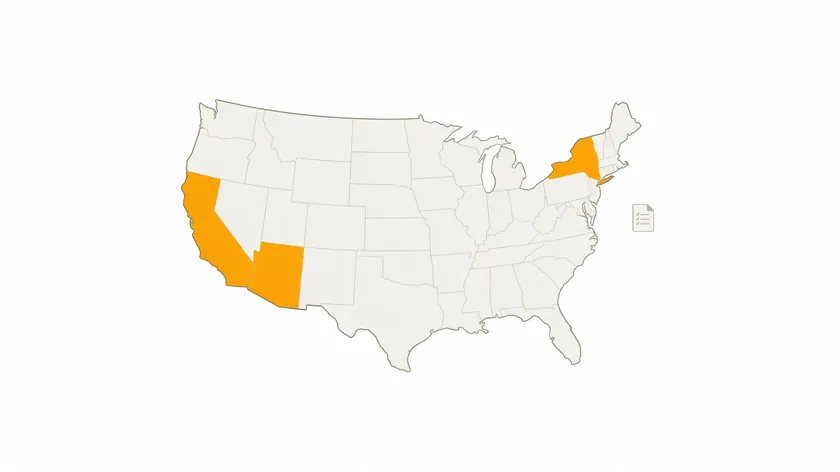
Key state-level requirements to know:
| State | Statute | Requirement |
| California | Civil Code §1723 | Any restocking fee or restricted return period must be conspicuously posted where the sale is made. If not disclosed, consumers may be entitled to a full refund within 30 days. |
| New York | General Business Law §218-a | Refund policies, including any fee percentage, must be visibly posted at registers or entrances or via hyperlinks before payment. |
| Arizona | ARS §44-1377 | A restocking fee disclosure is required in advertising, at the point of purchase, and on the receipt. |
In the US, restocking fees must be disclosed before purchase. Retailers are often required to disclose restocking fees clearly at the point of sale—otherwise, the fee may be unenforceable.
You generally cannot charge a restocking fee if you made the error that caused the return, such as sending the wrong item or providing a misleading description. Restocking fees should not be charged for defective items.
If you sell cross-border, be aware that EU law allows restocking fees only for diminished value, UK law permits restocking fees if product value is reduced, and Australia requires refunds for defective products without restocking fees. Sellers subject to these rules must follow local cooling-off requirements for distance sales.
When and How to Charge a Restocking Fee in Your Return Policy

A restocking fee should be rules-based, tied to clear conditions: the return reason, the item’s condition, and timing. Blanket fees frustrate customers; category-specific, condition-specific rules feel reasonable.
By return reason
No fee for defective, damaged, or wrong item returns. The charge applies only for change of mind, buyer’s remorse, or when a customer refuses delivery for non-damage reasons. In specific situations where an error on your part caused the return, we can waive the fee entirely.
By condition
Restocking fees apply only to items returned in non-original condition. If the product is unopened with plastic wrap intact, charge 0%. For opened but unused items that include all accessories and the original box, a standard fee of 10–15% applies.
For items showing wear, missing parts, or requiring refurbishment, 20–25% is defensible. Customers can often avoid restocking fees by keeping items in original packaging.
By timing
Offer a full refund if returned within your standard return window (14–30 days). Thereafter, a stepped fee works well—10% after 30 days, 20% after 60 days—while still complying with any state law or marketplace rules. Consider exchanging items instead of returning them when the buyer just wants a different size or color.
By category
Set different rules per product type. No fee for T-shirts, 15% for electronics, and 20% for assembled furniture. Clearly communicate these rules so customers know what to expect before making a purchase.
Document these rules internally so your customer support and warehouse staff apply them consistently. If a buyer challenges a fee, you need to show that you applied the same standard to every return in that category.
How and Where to Disclose Restocking Fees Online
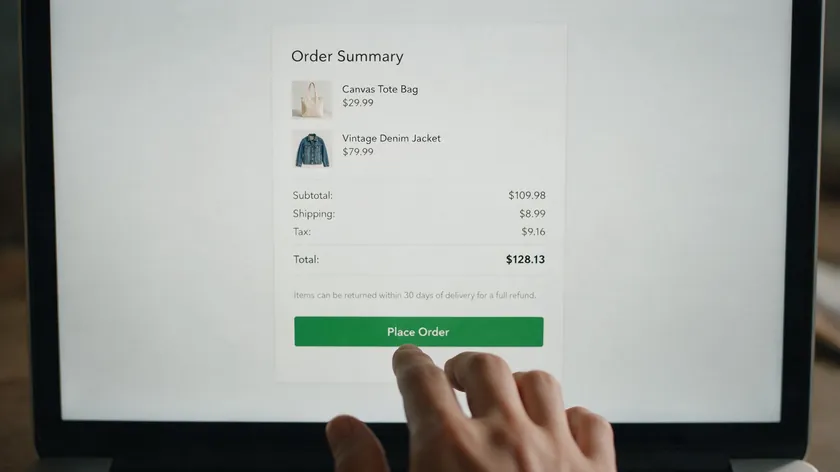
Transparent disclosure is what separates a legitimate restocking fee from a hidden penalty. Restocking fees should be disclosed before purchase, and over-communicating is better than burying details in the fine print.
Product pages
State restocking fees on the product page near the price or under the Add to Cart button. A short line like “A restocking fee may apply for opened items—see the return policy” with a link to your full terms works well.
Checkout flow
Include a visible summary near the order total that mentions the return window, whether restocking fees apply, and who pays for return shipping. A checkbox confirming the buyer has read return terms adds a layer of protection.
Order confirmation emails
Include restocking fee information in order confirmation emails. A “Returns at a glance” snippet with conditions ensures the customer sees terms again after purchase.
Return portal and RMA forms
Show estimated refund amounts during the return process. When a shopper selects a return reason and describes the item’s condition, display the refund amount minus any restocking and shipping deductions before they confirm. For the fields and structure this intake step should include, see our full guide to building an RMA form.
Brick-and-mortar
For hybrid retailers, in-store signage near POS and details on the printed receipt should mirror your online policy, especially if you accept in-store returns of online orders. Consumers can often avoid restocking fees by returning items in-store instead of by mail. Make sure your staff knows this.
Clearly explain the reason for restocking fees to help reduce pushback. A single sentence like “This fee covers our inspection and repackaging costs” goes a long way toward customer acceptance. Disclosure repeated across stages—before, during, and after the sale—reduces disputes and keeps you legally protected.
Sample Restocking Fee Clauses You Can Adapt
These are starting-point templates. Have a legal professional review any clause before you file it into your live return policy.
General clause:
“For most change-of-mind returns, we deduct a 15% restocking fee from your refund to cover inspection, repackaging, and handling. No restocking fee applies if the item is defective, damaged on delivery, or is the wrong item. Refunds are issued to your original payment method.”
Category-based clause:
“Electronics may incur a 15% fee if original packaging is opened; furniture, a 20% fee if assembled or removed from the original box; apparel carries no restocking fee when returned in original condition within 30 days.”
Timing-based clause:
“Returns submitted within 30 days of delivery receive a full refund. Returns between 31–60 days may be accepted with a 10% restocking fee. Items returned after 60 days are not eligible for a refund unless required by law.”
Distinguishing restocking from shipping:
“Your customer’s refund may be reduced by both a restocking fee and a return shipping deduction. The restocking fee covers inspection and repackaging; the return fee covers the prepaid label cost. Your refund will show each deduction as a separate line item, minus both charges where applicable.”
Keep the language short and readable. Use the same wording across your website, order confirmation emails, marketplace listings, and customer service templates. Consistency protects your business and builds trust with new customers and returning buyers alike.
Pros and Cons of Charging Restocking Fees (with Practical Scenarios)
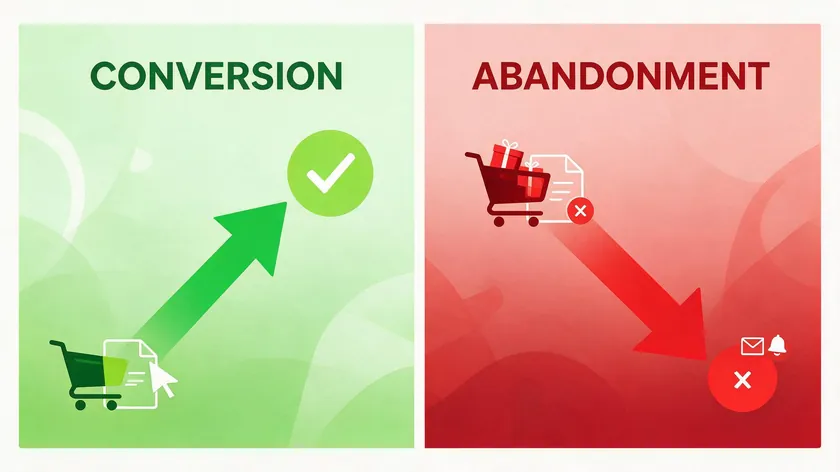
Whether to charge a restocking fee is a business decision you should test, not assume. What works for electronics might hurt fashion; what reduces returns might also reduce sales.
Pros:
- Margin protection on high-cost returns and the ability to offer more generous trial periods without losing money on every return.
- Restocking fees discourage frivolous returns in high return-rate categories and filter out wardrobing behavior.
- Concrete example: a $600 camera returned opened requires testing and repackaging and will likely be resold at a discount. A 15% restocking fee ($90) recovers much of that loss. Without it, your store absorbs the shrinkage entirely.
Cons:
- Risk of lower conversion rate if competitors advertise free returns. Shoppers may abandon their cart when they see the fee.
- Higher customer service workload from disputes and negative reviews, especially if fees feel “hidden” despite disclosure.
- Specific pain point: shoppers surprised by a charge for buyer’s remorse or pushback when restocking fees apply to gifts returned just after the holidays. Checking return policies before making a purchase is advice consumers follow—and they will compare your store to competitors.
Consider running an A/B test: one period with no restocking fee but paid return shipping, another with a modest restocking fee and free return shipping. Measure which combination of restocking fees and return shipping options optimizes both profit and repeat purchase rate.
Restocking fees are a powerful lever, but you need data to decide whether the risk of lost sales outweighs the money recovered per return.
Alternatives and Complements to Restocking Fees
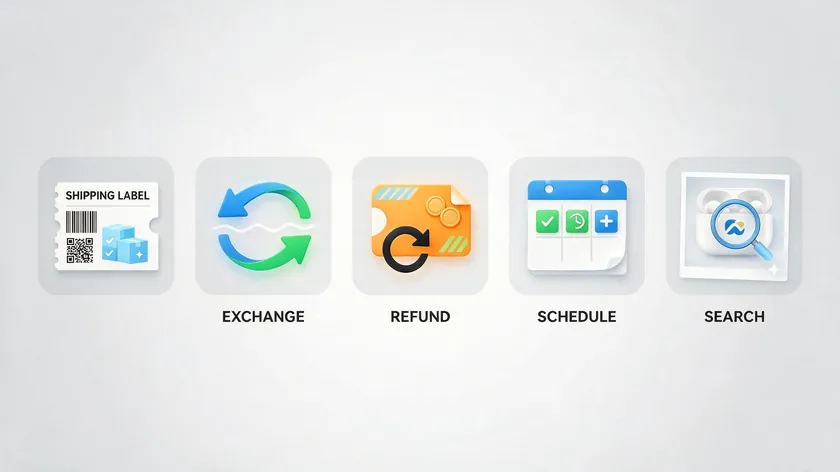
Restocking fees are not your only option. You can mix or substitute other tactics to manage returns and save margin with less customer friction.
Charge for return shipping
Charge for return shipping instead of a return fee percentage. A flat $6.99 label for most parcels feels tangible and fairer to many buyers than a vague percentage deducted from their refund.
Offer an exchange over a refund
Offer an exchange over a refund, especially in apparel and footwear where fit issues are the top return reason. Store credit is another option that keeps revenue in your account.
Use returnless refunds for low-value items.
Use returnless refunds for low-value items. When shipping costs exceed the item price, it is cheaper to issue a refund without requiring the product back. Set a threshold (e.g., under $20) and restrict the policy to low-risk customers.
Tighten return windows or use tiered policies.
Tighten return windows or use tiered policies. Full refund in 14 days, partial refund after 30 with a built-in discount rather than an explicit restocking fee—this approach softens the perception.
Improve product information.
Improve product information. Better photos, size guides, detailed specs, and unboxing videos reduce buyer’s remorse so you rely less on fees in the first place. Buyers are often advised to ask about restocking fees before purchasing high-value items—better product information means they won’t need to ask in the first place.
Combining several of these approaches can reduce your dependency on any single tactic. Sometimes the best restocking fee policy is one that avoids triggering fees at all by preventing unnecessary returns from happening.
Building Your Full Return & Refund Policy Around Restocking Fees
A restocking fee is just one piece of a complete return and refund policy. It needs to align with your return windows, eligibility rules, packaging requirements, and the process for handling RMAs and return requests across common scenarios like wrong size, damaged on arrival, and opened packaging.
- Map your full return flow—from customer request to approval to items returned and inspected—so you know exactly when and how the charge is applied in your system or platform.
- Draft a complete, customer-facing policy that includes sections on restocking, return shipping, exclusions (custom goods, final sale), and timelines for refunds to the original payment method.
- Start now: audit your existing policy, choose fee ranges by category based on your actual cost data, add disclosure at checkout and on product pages, and review everything with legal counsel before going live.
- Once your policy is live, track metrics: return rate by return reason, condition of returned items, customer complaints about fees, and conversion rate before and after introducing the fee. Use this data plus the order id on each return to refine your approach over time.
Your restocking fee should never feel like a penalty to honest customers. When it is transparent, reasonable, and tied to real costs, it becomes a natural part of doing business—one that protects your margins while keeping the buying experience fair.
Key Takeaways
- A restocking fee is a percentage or flat amount deducted from a customer’s refund to cover the cost of inspecting, repackaging, and processing returned items.
- Typical e-commerce restocking fees are 10–15% for electronics, 15–25% for furniture and bulky items, 0–10% for apparel, and up to 25–50% for custom or made-to-order goods.
- Fees are generally legal in the US if clearly disclosed before purchase, but states like California, New York, and Arizona require visible notices at checkout, on receipts, or at the point of sale.
- Restocking fees reduce frivolous and buyer’s remorse returns but can hurt conversion if competitors offer free returns—merchants should test by category, segment by product type, and consider alternatives like return shipping fees or returnless refunds.
Your RMA process handles the request—but it doesn’t cover the legal terms behind it. Try the Return and Refund Policy Generator →
FAQs
These questions cover edge cases and practical details that go beyond the main sections above. Each answer is focused on implementation and policy choices for sellers running their store or selling on marketplaces.
Should I Ever Waive a Restocking Fee for Certain Customers?
Yes. Many merchants keep the fee in their policy but selectively waive it for VIP customers, wholesale accounts, or new customers making their first purchase who have a reasonable issue. Treat it as a retention and goodwill tool, not an ironclad rule.
Create internal guidelines—for example, “Support can waive once per customer per year up to $50 in fees”—so staff have flexibility without undermining the policy.
Track every waiver in your CRM or helpdesk to spot patterns. If you are waiving more often than enforcing, it may be time to adjust the written policy rather than making constant exceptions.
How Do Marketplace Rules Affect My Ability to Charge Restocking Fees?
Platforms like Amazon, eBay, and Walmart Marketplace often cap restocking fees, restrict them to specific return reasons, or prohibit them entirely for certain categories. On Amazon, for instance, you can review allowed fee rates and conditions through Seller Central documentation for your product category.
Read each marketplace’s returns policy carefully and mirror their allowed percentages in your listings to avoid policy violations, A-to-Z claims, or account suspensions.
Your website can usually have more flexible terms, but maintain clear, separate policies and communicate differences so customers understand which rules apply to their purchase.
How Can I Prove an Item Was Returned Used or Damaged to Justify a Higher Fee?
Implement a simple intake checklist at your warehouse: photograph the shipping box and contents upon arrival, record serial numbers, and note any missing parts, missing accessories, or signs of wear in a shared system. File these records by order id for easy retrieval.
When applying a higher restocking fee due to condition, send the customer a brief explanation along with photos showing the damage or wear. This defuses disputes before they escalate and serves as evidence if the buyer files a chargeback or marketplace claim.
Consistent documentation helps you treat similar cases the same way, protecting both your business and honest customers.
How Should I Handle Restocking Fees During Holiday and Peak Seasons?
Many merchants extend their return window for orders placed in November and December but keep restocking rules similar or temporarily relax fees to encourage gift purchases.
Publishing seasonal exceptions clearly—for example, “No restocking fees on gifts returned by January 15, 2027, in original condition”—ensures customers are not surprised and staff know which rules to pay attention to.
After the season, review your data: return rate, reason codes, and loss per return. Use those numbers to decide whether to keep, modify, or tighten holiday restocking policies for the next year.
Seasonal flexibility can drive more sales during peak periods without permanently giving up the margin protection that restocking fees provide the rest of the year.