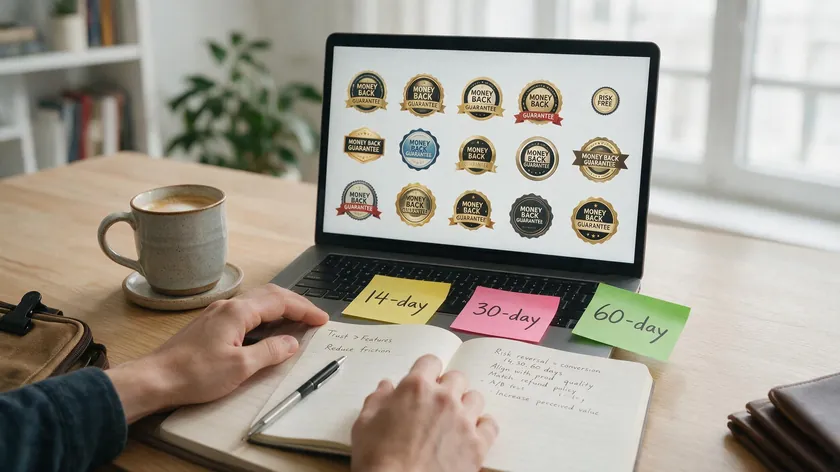
The fastest way to write a strong money-back guarantee policy is to borrow from real-world examples instead of starting from scratch. Money-back guarantees are marketing tools designed to build trust and reduce customer risk, and research shows that they can improve purchase intentions.
Higher conversion rates result when guarantees alleviate purchasing fears, particularly for first-time customers who are still deciding whether to trust a new brand. This article focuses on customer-facing wording—the copy that appears on product pages, checkout pages, and landing pages—not legal fine print or the refund process itself.
Use these plug-and-play sample statements on product pages, checkout pages, and guarantee policy sections to boost customer trust and reduce perceived risk for potential customers.
Table of Contents
- Why A Money-Back Guarantee?
- 14-Day Money Back Guarantee Examples (EU-Friendly & Short Windows)
- 30-Day Money Back Guarantee Examples for SaaS Subscriptions
- 30-Day Money Back Guarantee Examples for Physical E‑Commerce Brands
- 60-Day Money Back Guarantee Examples (Supplements & Health)
- 90-Day Money Back Guarantee Examples for High-Ticket Purchases
- Lifetime & “Forever” Money Back and Repair Guarantees
- Best Price Guarantee & Lowest Price Money-Back Examples
- “Happiness,” “No Questions Asked,” & Branded Guarantee Examples
- Checkout Page & On-Site Placement Examples (How Guarantees Are Shown)
- Key Takeaways
- FAQs: About Money-Back Guarantees
- Can I copy these money-back guarantee examples word-for-word?
- How do I adapt these examples for customers in the European Union?
- Does “no questions asked” mean I can’t set any conditions?
- Can I offer both a lifetime guarantee and a best price guarantee?
- How do I avoid false claims when promoting my guarantee?
Why A Money-Back Guarantee?
A well-crafted money-back guarantee reduces the perceived risk of buying and promises a full refund if dissatisfied, which directly helps increase sales.
Most money-back guarantees have a specific validity period, such as 30, 60, or 90 days. In the US, the cooling-off rule allows 3 days to cancel certain orders, while refund laws vary by state. An effective guarantee removes perceived risk, making customers feel they have little to lose.
Sections below are grouped by industry and guarantee length so you can quickly scan for the best examples that fit your business. All wording is current as of 2024–2025, but always double-check a company’s live guarantee policy before adapting.
14-Day Money Back Guarantee Examples (EU-Friendly & Short Windows)
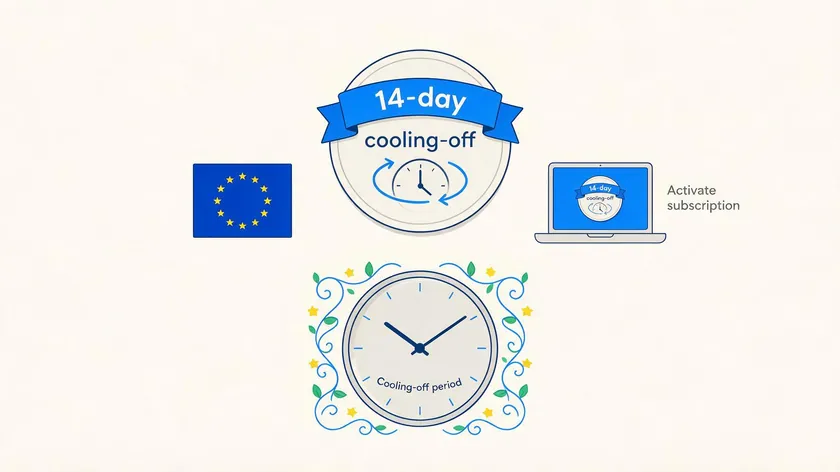
Fourteen-day guarantees are common in the European Union because EU regulations require a “cooling off” period of 14 days for online purchases. The EU mandates a 14-day return period for online purchases, and UK law requires refunds within 14 days of return.
Many businesses align their voluntary satisfaction guarantee with this legally required window to simplify operations.
These short-window statements work well for subscription trials, digital products, and low-risk items where buyer’s remorse peaks early.
PrivacyPilot’s 14-Day Money Back Promise
“Try PrivacyPilot for 14 days, risk-free. If you’re not 100% satisfied, email [email protected] within 14 days of purchase for a full refund, no questions asked. No forms, no phone calls—just a quick email.”
This SaaS-style clause keeps things simple. A free trial guarantee like this allows customers to try products risk-free before committing.
NordNest’s 14-Day Money Back Guarantee
“In addition to your 14-day EU right of withdrawal, NordNest offers a 14-day money back guarantee on all unused homeware in its original packaging. If the product doesn’t meet expectations, we’ll refund the full purchase price to your original payment method.”
This approach explicitly separates consumer laws from the brand’s voluntary promise, which builds trust with European Union customers who already know their statutory rights.
CodeSprint Academy’s 14-Day Satisfaction Guarantee
“Enroll in any CodeSprint Academy course and complete up to 25% of the digital content. If it doesn’t meet your expectations within 14 days, request a full refund—we’ll process it within 5 business days. Your satisfaction matters more than a sale.”
A first-time guarantee like this ensures satisfaction on initial purchases of digital courses, where potential customers need confidence that the material is worth their time.
Typically, customers have 14 days to request a refund in the EU, so these examples give site visitors clear, scannable terms that match the window most consumers already expect.
30-Day Money Back Guarantee Examples for SaaS Subscriptions
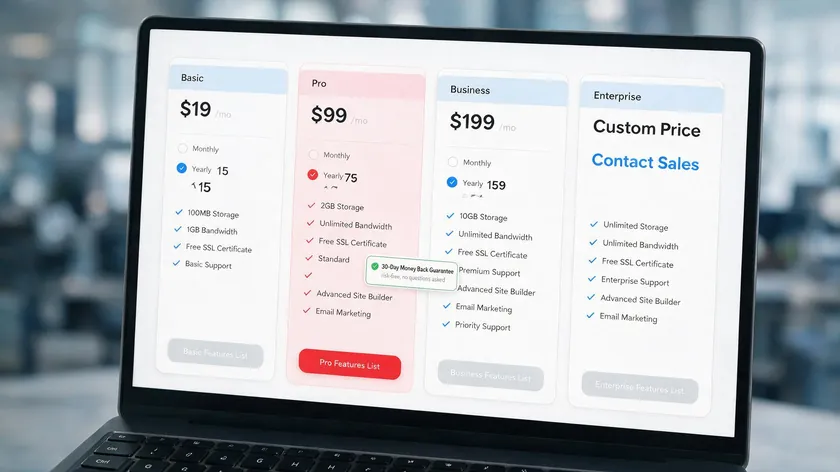
The 30-day money-back guarantee is the SaaS industry default. Effective money-back guarantees act as a form of insurance that removes purchasing risk, and most businesses in the software space treat them as a replacement for extended free trials.
LedgerLoop’s 30-Day Money Back Guarantee
“If LedgerLoop doesn’t simplify your bookkeeping in the first 30 days, we’ll give you 100% of your money back. Just contact us within 30 days of signup—no forms, no friction. Your refund hits your original payment method within 3 business days.”
This guarantee works on a homepage hero section or pricing page, right next to the call-to-action button.
TaskHarbor’s 30-Day Guarantee
“No free trial needed. TaskHarbor’s 30-Day Guarantee means every paid plan comes with a full refund window. If our project management tools don’t save your team at least 5 hours a week, email us and we’ll return your money. Zero risk.”
A money-back guarantee can boost sales by alleviating customer purchase anxiety, and TaskHarbor uses the guarantee as a direct replacement for a free trial, which simplifies their onboarding.
SendSparkle’s 30-Day Money Back Guarantee
“✓ Cancel anytime ✓ No hidden fees ✓ Full refund within 30 days if not satisfied with deliverability.”
This bullet-style copy is designed for a checkout page sidebar. Money-back guarantees serve as a form of insurance promising a refund if expectations are not met.
Place these guarantee statements visually near pricing and call-to-action buttons, using badges, icons, or shaded boxes. For full refund process details, link to a separate guarantee policy page rather than restating them at checkout.
30-Day Money Back Guarantee Examples for Physical E‑Commerce Brands
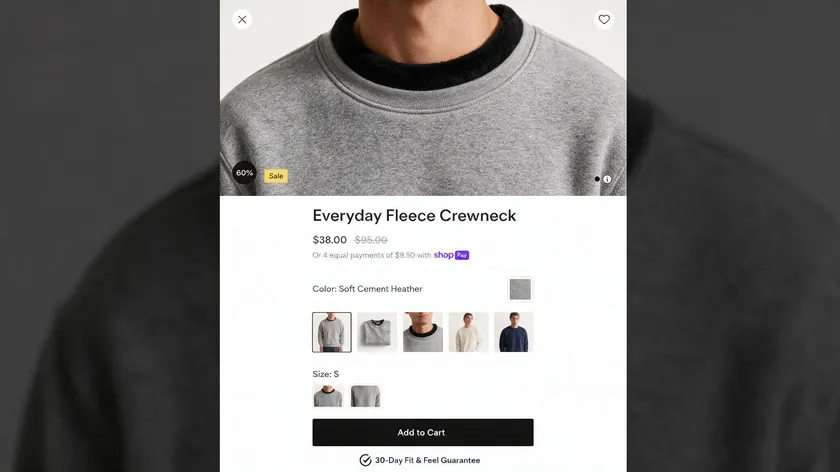
Thirty-day guarantees are standard for consumer goods across e-commerce stores. Dell has a 30-day limited money-back guarantee for specific items, and most customers expect a similar window when shopping at an online store. Combining a money-back guarantee policy with a best-price guarantee can further reduce cart abandonment rates.
UrbanThread Co.’s 30-Day Fit & Feel Guarantee
“Love your UrbanThread order or send it back within 30 days for a full refund. Items must be unworn with tags attached. No restocking fees, ever. Customized items are final sale.“
Warby Parker allows customers to try glasses at home for free—a similar “try before you commit” philosophy works for apparel when the return window is generous.
VoltEdge’s 30-Day Money Back Guarantee
“If VoltEdge gear doesn’t impress you within 30 days, send it back in like-new condition with original packaging for a full refund of the purchase price. We’ll even provide a prepaid return label.”
eBay offers a money-back guarantee for certain purchases, and e-commerce brands like VoltEdge can differentiate by covering return shipping—a detail most customers notice.
CoreForge’s 30-Day Guarantee
“Try CoreForge equipment for 30 days. If it doesn’t transform your home workouts, return it for a refund of the full price. Note: shipping costs are non-refundable.”
This copy sits right under the Add to Cart button. Avoid promising “no questions asked” if conditions like the same product being returned in working order actually apply. Honest wording prevents false claims and protects customer trust long-term. Some brands may offer store credit as an alternative to a cash refund, which is worth clarifying upfront.
60-Day Money Back Guarantee Examples (Supplements & Health)
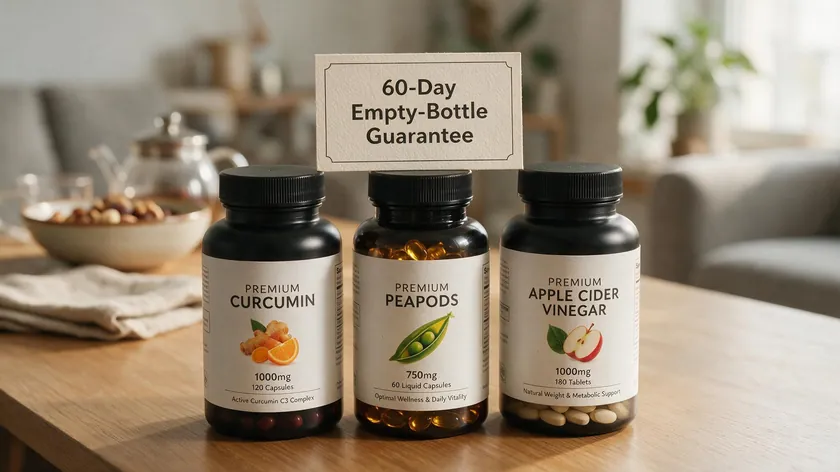
Supplements and wellness products often use 60-day windows because results take time. A money-back guarantee increases willingness to pay and strengthens trust in the seller, especially when the brand makes a clear promise about expected timelines.
Money-back guarantees also encourage unsatisfied customers to provide feedback, which helps companies improve formulations.
VitaPulse Labs’ 60-Day Empty-Bottle Guarantee
“Try VitaPulse for a full 60 days. If you don’t feel a difference, send us back the empty bottles and we’ll refund your purchase price, minus shipping. No fine print, no hassle.”
This mirrors real brands like Suppla, which states, “If you don’t feel the difference, we refund every penny. You don’t even have to send the bottle back.”
GlowNest’s 60-Day Guarantee
“Give GlowNest 4–6 weeks. If you don’t see visible improvements in skin texture and glow, contact us before day 60 for a money back refund. We stand behind our product quality because we test every batch in third-party labs.”
Results-oriented copy like this works on product pages where consumers are comparing options.
MoveMentor’s 60-Day Progress Guarantee
“Follow your MoveMentor plan for 60 days. If you put in the work and don’t see measurable progress, email us for a full refund. We believe in this program—and we believe in you.”
Any health-related promises must avoid unverifiable, absolute claims. Add a short disclaimer noting that individual results vary and that the guarantee applies within stated terms.
90-Day Money Back Guarantee Examples for High-Ticket Purchases
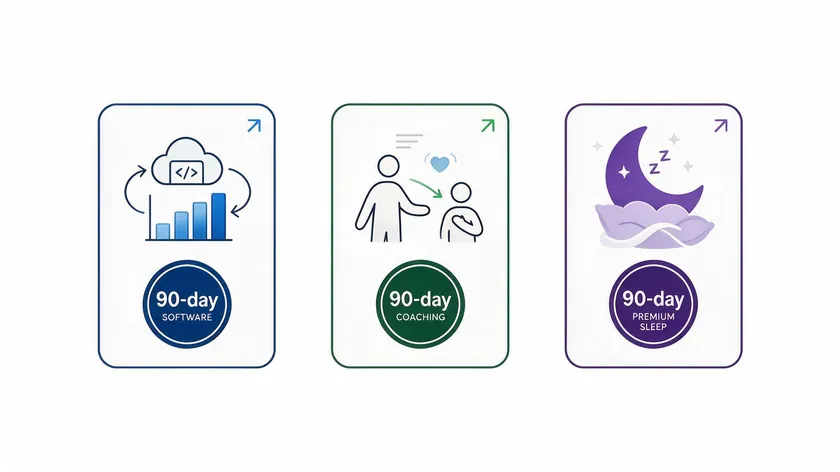
Ninety-day guarantees suit higher-ticket or slower-to-evaluate offers where most customers need weeks to judge value. Companies with clear refund policies can build long-term customer loyalty, and a 90-day window signals serious confidence.
InsightOrbit’s 90-Day Guarantee
“Deploy InsightOrbit across your analytics stack for 90 days. If our platform doesn’t deliver actionable insights your team actually uses, we’ll refund your subscription in full. This guarantee applies to annual plans purchased directly through our sales team.”
This copy works on a dedicated “Guarantee” section of a B2B sales page, where procurement teams need explicit risk reversal.
ScaleLab Pro’s 90-Day Guarantee
“Join ScaleLab Pro for 90 days. If you do the work and don’t see measurable progress in revenue or leads, we’ll refund your tuition—no hard feelings, no hoops.”
Real brands like Reversa use a similar model: requiring 60 days of use before a refund request, with a window extending to day 90.
Cloudrest Sleep Systems’ 90-Night Comfort Guarantee
“Sleep on your Cloudrest mattress for up to 90 nights. If you’re not sleeping deeper and waking fresher, we’ll arrange a free pickup and refund every cent. The guarantee applies to mattresses only—pillows and accessories are excluded.”
Mack Weldon offers a “try on guarantee” for first-time underwear purchases, proving that comfort-based guarantees work across very different product categories.
| Brand | Guarantee Length | Type | Industry |
|---|---|---|---|
| InsightOrbit | 90 days | Results-based | B2B Analytics SaaS |
| ScaleLab Pro | 90 days | Effort + results | Online Education |
| Cloudrest Sleep Systems | 90 nights | Comfort / satisfaction | Sleep / Home Goods |
These examples focus on real-world wording, not advice on which duration to choose. Generally, only a small fraction of customers invoke a money-back guarantee, so a generous window rarely backfires.
Lifetime & “Forever” Money Back and Repair Guarantees

A lifetime guarantee shows ultimate confidence in product quality, but it’s important to understand the difference between “lifetime money back,” “lifetime repair,” and “lifetime access.”
Brooklinen provides a lifetime guarantee on all their products, and Costco refunds membership fees if customers are dissatisfied—both models work, but they promise different things.
TrailForge Outfitters’ Forever Field Guarantee
“Every TrailForge product is backed by our Forever Field Guarantee. If it breaks, wears out, or fails to perform—at any point, for any reason—we’ll repair or replace it free of charge. No receipt needed.”
This mirrors Osprey’s “All Mighty Guarantee,” which offers repair or replacement for any reason, at any time.
IronLeaf Cookware’s Lifetime Guarantee
“IronLeaf cast iron is guaranteed for life against defects in materials and craftsmanship. If your piece ever fails under normal use, we’ll replace it. This guarantee policy covers the original purchaser and is non-transferable.”
FocusFlow’s Lifetime Plan Guarantee
“FocusFlow’s Lifetime Plan includes lifetime updates and access. If you’re not satisfied, request a full refund within the first 60 days of purchase. After 60 days, the plan is non-refundable but remains yours forever.”
| Guarantee Type | What It Covers | Money Back? |
|---|---|---|
| Lifetime repair/replacement | Defects, wear, breakage | No—repair or replacement |
| Lifetime money back | Full dissatisfaction | Yes—within stated window |
| Lifetime access + 60-day refund | Product access forever, refund window limited | Yes—first 60 days only |
Lifetime promises should be realistic and geographically clear. Vague “lifetime” language without defined terms can cause disputes, especially for customers outside North America.
Best Price Guarantee & Lowest Price Money-Back Examples
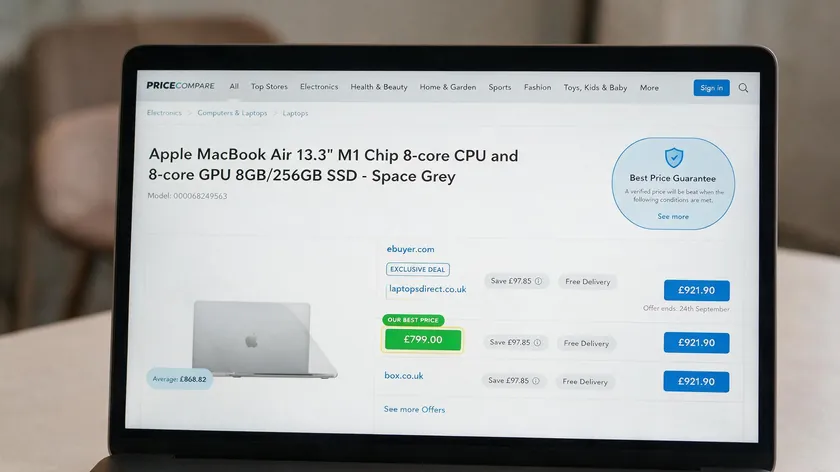
A best price guarantee is a specific type of guarantee policy that focuses on refunding price differences or beating competitors’ prices. A lowest-price guarantee promises to match or beat competitors’ prices, boosting customer trust in prices for online purchases where comparison shopping is easy.
PixelPort’s Best Price Guarantee
“Found a better price? If you find a lower advertised price on the same product within 7 days of purchase, we’ll refund 110% of the difference. Conditions apply—see our Best Price Guarantee page.”
This badge works well pinned near the price on a product page, right where shoppers are comparing offers.
SkyBridge Flights’ Price Match Guarantee
“Book with SkyBridge, then spot a lower fare on the same itinerary within 24 hours? We’ll refund the difference to your original payment method. Same flight, same dates, same cabin—guaranteed lowest price or we pay you back.”
Travel and booking sites often place this wording right after checkout confirmation, when price anxiety is highest.
LoftLane Living’s 30-Day & Lowest Price Guarantee
“LoftLane Living: 30-Day Money Back Guarantee + Price Guarantee. Love it or return it within 30 days for a full refund. Find a lower price within 14 days? We’ll match it and refund the difference.”
Exaggerated “lowest price anywhere” claims can be considered false if they are not provably true and consistently honored. Always link to a separate page with full exclusions and the complete guarantee policy to keep the promise credible.
“Happiness,” “No Questions Asked,” & Branded Guarantee Examples
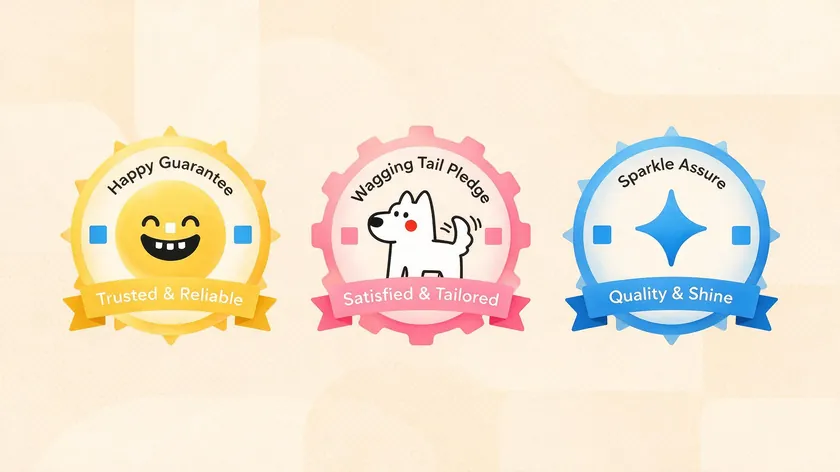
Naming your guarantee—”Happiness Guarantee,” “Tail-Wag Guarantee,” or “Sparkle Standard”—helps it stand out beyond generic “30-day refunds.” A happiness guarantee focuses on customer satisfaction without questions, and a branded name makes the promise memorable on product pages and in email marketing.
HappyStep’s Happiness Guarantee
“Walk in HappyStep socks for 30 days. If your feet aren’t happier, we’ll refund every penny—no questions asked. That’s our Happiness Guarantee.”
A money-back guarantee can boost customer trust and sales. This warm, simple copy works because it matches the brand voice and keeps the core promise crystal clear.
Pawsome Pantry’s Tail-Wag Guarantee
“If your pet doesn’t love Pawsome Pantry within 45 days, we’ll give you a full refund. No hoops, no sad faces. That’s our Tail-Wag Guarantee—because if tails aren’t wagging, we haven’t done our job.”
WhiteGlove Cleaners’ Sparkle Standard Guarantee
“Not thrilled with your clean? We’ll re-clean for free within 48 hours—or give you your money back. Our Sparkle Standard Guarantee covers all home services, every visit.”
Even lighthearted, branded guarantees must link back to a clear underlying refund policy to avoid confusion and protect the business. Keep paragraphs short and scannable so first-time visitors can absorb the promise in seconds.
Checkout Page & On-Site Placement Examples (How Guarantees Are Shown)
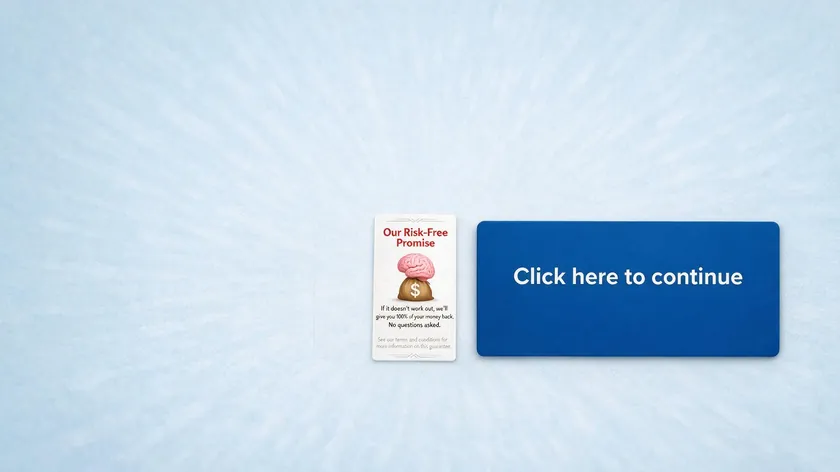
Even the best wording fails if customers never see it. Display your guarantee on product and checkout pages—that’s where perceived risk is highest and where a money-back guarantee can boost customer trust.
Money-back guarantees can eliminate purchase risk leading to increased trust and conversions, but only if site visitors actually encounter them.
SaaS Checkout Sidebar
Your 30-Day Money Back Guarantee
- Cancel anytime
- No hidden fees
- Full refund to your payment method if not satisfied
This right-hand box reduces cart abandonment rates by reassuring potential customers at the moment of decision. Include a clear returns process in your guarantee policy by linking out from this sidebar.
E-commerce Cart Page Banner
“✓ Secure checkout ✓ 30-Day Money Back Guarantee ✓ Best Price Guarantee”
A slim banner at the top of the cart, with a one-line supporting sentence beneath: “Shop with confidence—if the product doesn’t meet expectations, you pay nothing.”
Digital Course Checkout Trust Panel
“Remember: CodeSprint Academy’s 14-Day Satisfaction Guarantee means you can enroll today and request a full refund if the course doesn’t deliver. No risk.”
This microcopy sits beneath the pay button. It’s a single sentence that reiterates the guarantee without restating the full refund process.
| Placement | Example Snippet | Purpose |
|---|---|---|
| Product page | “60-Day Empty-Bottle Guarantee” badge | Build trust during browsing |
| Checkout page | Sidebar bullets or banner | Reduce abandonment at the point of sale |
| Dedicated policy page | Full terms, conditions, process | Legal clarity and reference |
| FAQ section | “How does the guarantee work?” | Answer questions proactively |
A money-back guarantee is not legally required in the US, but placing one prominently is one of the simplest ways many businesses use to increase sales and reduce abandoned carts.
Key Takeaways
- Examples span SaaS, e-commerce, supplements, home services, and digital products, covering 14-day, 30-day, 60-day, 90-day, and lifetime guarantee windows.
- Several examples include lowest price and best price guarantee wording, along with notes on avoiding false claims—including European Union 14-day rules.
- A money-back guarantee signals high product confidence, often leading to better conversion rates. Money-back guarantees are not legally required in the US, but they are one of the strongest trust signals a brand makes to consumers.
- For detailed legal mechanics, the step-by-step refund process, and strategic duration comparisons, refer to a dedicated 30-day money-back guarantee guide.
Skip the legal guesswork—build a guarantee wording that holds up next to a complete refund policy. Try the Return and Refund Policy Generator →
FAQs: About Money-Back Guarantees
Below are practical questions the example gallery doesn’t cover directly. These answers focus on implementation, not legal advice.
Can I copy these money-back guarantee examples word-for-word?
You can use these examples as a starting template, but adapt them to match your actual products, timeframes, and guarantee policy details. Copying brand names or unique phrasing from real companies is not recommended—use your own brand voice and conditions.
Before publishing any guarantee statement, run it through a quick internal review. Larger businesses should consider a legal review to ensure the promise matches operational reality, especially for customized items or services with complex fulfillment.
How do I adapt these examples for customers in the European Union?
EU online shoppers already have a 14-day right of withdrawal under consumer laws, separate from any voluntary money-back guarantee a brand offers. In the EU, customers have 14 days to return products, and this is legally required regardless of what your marketing says.
When adapting examples, clearly distinguish between statutory rights and any extra days you voluntarily add. A simple line like “This guarantee is in addition to your statutory rights” prevents confusion and keeps your business compliant.
Does “no questions asked” mean I can’t set any conditions?
Only use “no questions asked” when you genuinely intend to refund without requiring explanations beyond basic order details. If material conditions exist—product unused, time limits, proof of effort for a course—describe the guarantee as “hassle-free” or “simple” instead.
Overstating a promise in marketing can be treated as a false claim and damage the customer trust you’re trying to build. Most customers appreciate honest, straightforward terms over flashy language that doesn’t hold up.
Can I offer both a lifetime guarantee and a best price guarantee?
It’s possible to combine a long product guarantee with a price guarantee if your business can realistically support both. Keep each guarantee clearly separated in wording—one about durability or repair and one about price differences—to avoid confusion.
Start with straightforward terms, monitor refund and price-match behavior, and adjust if the guarantees prove too generous or complex in practice. Costco refunds membership fees if customers are dissatisfied while also competing aggressively on price, showing both can coexist.
How do I avoid false claims when promoting my guarantee?
All phrases such as “best price guarantee,” “lowest price,” “lifetime guarantee,” or “no questions asked” must accurately match the real guarantee policy and operational behavior. If your service doesn’t actually honor returns without questions, don’t say it does.
Regularly review marketing copy, product pages, and the underlying refund policy to ensure they match and stay up to date. Err on the side of slightly under-promising and over-delivering, which protects against accusations of misleading or false advertising and makes most customers feel confident buying from you.