
A privacy policy is essential for digital marketing agencies because they sit at the intersection of multiple data streams. Your agency handles sensitive customer and business information—not just your own leads and website visitors, but also your clients’ customer records, ad platform audiences, and analytics accounts.
That dual exposure creates obligations most standard privacy policy templates do not address.
This guide focuses on two tracks: first, the privacy policy your agency needs for its own website, lead forms, and cookies data; second, how your policy should document the agency’s role when it accesses and processes client data as a service provider or data processor.
Both tracks must be covered in a single, coherent document, so clients, prospects, and regulators can see exactly how your agency collects, uses, and protects data in each role.
Regulators and ad platforms increasingly expect written explanations of how collected personal data is used, shared, and protected—especially when campaigns involve advanced tracking pixels, remarketing, or similar tracking technologies.
A comprehensive privacy policy fosters operational integrity and transparency, and it positions your agency as a credible partner. For the full clause list that applies to any business, see our data privacy policy guide.
Termify.io automates the drafting of these policies, but agencies should still understand the structure and main clauses described in this article. What follows is a practical breakdown of every section your digital marketing agency privacy policy should contain.
Table of Contents
- What Data Does a Digital Marketing Agency Handle?
- Key Data Protection Laws Affecting US Digital Marketing Agencies
- Agency Roles: Data Controller vs Data Processor / Service Provider
- Your Own Agency Website: Data Collected From Visitors and Leads
- Client and End-User Data: How Agencies Act as Processors or Service Providers
- Tracking Pixels, Cookies, and Ad Platforms
- Data Processing Agreements With Clients and Subprocessors
- Handling Data Subject Requests and California Privacy Rights
- Security, Retention, and International Data Transfers
- Clause-by-Clause Sample Structure for a Digital Marketing Agency Privacy Policy
- How to Implement and Maintain Your Agency Privacy Policy in Practice
- Using Termify.io to Generate a Digital Marketing Agency Privacy Policy
- Key Takeaways
- FAQ: Digital Marketing Agency Privacy Policy
- Do I need a separate privacy policy for my agency website and for each client?
- How detailed should I be about specific tools like Google Analytics or Meta Pixel?
- What if my agency only handles B2B data—do these laws still apply?
- How often should I update my digital marketing agency privacy policy?
- Can Termify.io replace legal advice for complex or highly regulated clients?
What Data Does a Digital Marketing Agency Handle?

Agencies manage multiple data streams simultaneously: their own leads, several categories of client-related data, and behavioral information from tracking technologies deployed across websites and landing pages. Your privacy policy must reflect all of these.
Marketing agencies collect personal data like names and emails through forms, while usage data includes IP addresses and browser types gathered automatically. Cookies track user activity on marketing agency websites and client sites alike.
Data is used for analytics, marketing, and customer support across the board.
Privacy policies should detail the types of data collected and their purposes, and they should explain data collection and usage clearly. The table below maps common agency data sources to specific data types and the agency’s typical role.
| Data Source | Typical Data Collected | Agency Role |
|---|---|---|
| Agency website visitors and leads | Name, company, job title, email, phone, computer’s internet protocol address, browser and device info, referring URL, on-site behavior, form submission details (budget, services needed) | Data controller |
| Client CRM customer records | Customer name, contact details, purchase or lead history, engagement data, segmentation labels, identifiers used in ad platforms | Data processor / service provider |
| Ad platform audiences and campaign data | Ad platform user IDs, audience definitions, conversion events, click-through and impression metrics, campaign metadata from Google Ads, Meta, LinkedIn | Data processor (or joint controller, depending on targeting decisions) |
| Web analytics and behavior data | Page views, session duration, drop-off points, device and OS, coarse location, unique device identifiers, cookies and tracking identifiers via a web analytics service like Google Analytics | Data controller (own site) or data processor (client sites) |
| Data from data business transactions (lists, imports, migrations) | Lists of leads or customers from external sources, contact information, demographic enrichments, historical behavior data | Data processor if used for client campaigns; controller if agency owns the list |
This table can be adapted directly into the “Data Collected” section of your privacy policy. Replace the examples with the tools and data sources your agency actually uses, so the section reflects real practice.
Key Data Protection Laws Affecting US Digital Marketing Agencies

Agencies may be subject to several data privacy laws depending on where website visitors and client customers are located, not just where the agency is incorporated.
If your campaigns or tracking touch people in California, the EU, or any state with a modern privacy statute, the corresponding data protection laws apply to you.
Digital marketing agencies are exposed to legal penalties for non-compliance, and violators of data privacy laws can face significant fines.
GDPR
The General Data Protection Regulation took effect in May 2018 and applies when campaigns or tracking involve people in the EEA or UK—even if your agency is based in Texas or New York.
The data protection regulation GDPR requires a lawful basis for processing personal data (such as explicit consent or legitimate interest), transparency through clear notices, and mechanisms for data subject rights including access, correction, deletion, and data portability.
Companies can face fines up to 20 million euros (or 4% of annual global turnover, whichever is higher) for violations. Where consent is the lawful basis, it must be freely given, specific, informed, and unambiguous.
For a full walkthrough of what a GDPR notice must contain, see our GDPR compliant privacy policy guide.
CCPA and CPRA
The California Consumer Privacy Act took effect in January 2020, and the California Privacy Rights Act expanded it further.
These laws apply to agencies and clients that meet California thresholds and introduce concepts critical for digital marketing strategies: “sell” and “share” are broadened to cover targeted advertising and cross-context behavioral advertising.
The CCPA allows consumers to opt out of the sale or sharing of their personal information, and the California Privacy Protection Agency adjusted administrative fines in January 2025 to $2,663 per violation and $7,988 per intentional violation or violation involving minors.
If your agency builds or manages audience data, does retargeting, or runs campaigns using personally identifiable information from California residents, these rules apply.
For clause-by-clause wording of the disclosures California requires, use our California privacy policy template.
Other US State Laws
Virginia, Colorado, Connecticut, Texas, Oregon, Montana, and several other states have enacted privacy statutes with similar patterns: consumer rights (access, deletion, opt-out of targeted advertising), duties for controllers and processors, and requirements for processor contracts.
A good agency privacy policy should be drafted broadly enough to account for evolving requirements. Note also that COPPA requires privacy policies for sites targeting children under 13, and California’s CalOPPA requires privacy policies on websites collecting personal information.
Agencies should address the GDPR and CCPA first, but these other laws should not be ignored.
Agency Roles: Data Controller vs Data Processor / Service Provider

Privacy policies must clarify whether the agency acts as a data controller or data processor. Getting this distinction right determines which obligations apply, what disclosures your policy needs, and what must appear in contracts with clients.
It also shapes how you handle such requests from individuals exercising their rights.
Data Controller
Your agency is a data controller when it decides why and how personal data is processed. In practice, this means your own website forms, your own lead-nurturing workflows, your own advertising network campaigns to attract new clients, and any internal analysis purposes you pursue with collected data.
As controller, you bear full responsibility for lawful basis, notices, retention, and responding to rights requests for that data.
Data Processor or Service Provider
When your agency logs into a client’s CRM, ad accounts, analytics dashboards, or email platforms to execute campaigns under client instructions, you act as a data processor or service provider.
You do not independently decide what data to collect or how to use it for purposes beyond the client’s direction.
Your policy should explicitly state: “We act as a data controller for our own website and marketing, and as a data processor or service provider for client customer data, as defined under applicable data privacy regulations.”
If your agency also sells software, review our SaaS privacy policy guide for controller and processor wording.
Your Own Agency Website: Data Collected From Visitors and Leads
This section of your policy covers data collected directly by the agency—via contact and quote forms, chat widgets, scheduling tools embedded on landing pages, and any newsletter sign-ups hosted on the site.
It is the “controller” part of the privacy policy, distinct from how the agency processes data on behalf of its clients.
If you run newsletters or campaigns, use our email marketing privacy policy template to cover tracking, consent, and unsubscribes.
Concrete data types to describe include:
- Identity data: name, company, job title
- Contact data: email, phone number
- Inquiry details: budget, services requested, project timeline
- Technical data: computer’s internet protocol address, device type, browser, referring URL, on-site actions, other diagnostic data
- Data collected automatically: logs, cookies data, analytics identifiers from a web analytics service offered by providers like Google Analytics, diagnostic data from the computer or mobile device
The policy should distinguish between personal data directly provided by the user (form submissions, uploaded briefs) and data collected automatically (logs, cookies, anonymous unique identifiers). State the purposes clearly—responding to inquiries, qualifying leads, improving site content, and providing our services.
Marketing agencies may retain usage data for internal analysis purposes. Specify how long lead data is kept in CRM or marketing automation systems, and explain how users can request deletion or correction.
A simple statement like “email us at [your privacy email address] to request access, correction, or deletion of your data” is sufficient.
Client and End-User Data: How Agencies Act as Processors or Service Providers

When an agency logs into a client’s tools—HubSpot, Salesforce, Shopify, Google Ads, Meta Ads Manager, or a customer data platform—it becomes a data processor or service provider for that client.
The agency accesses and manipulates data that belongs to the client’s customers, not its own.
Your policy should describe, in general but concrete terms, the types of client-supplied data processed: customer contact details, purchase or lead history, engagement data, segmentation fields, and online identifiers tied to campaigns.
Agencies may use third party service providers to perform tasks like reporting, analytics, or campaign optimization on this data.
Key points the policy must make:
- The agency processes client data only for agreed marketing purposes (campaign setup, optimization, analytics reporting) and not for its own unrelated use
- The agency does not create combined profiles across clients or use client data to build its own advertising network
- Written contracts and data processing agreements define instructions, security, confidentiality, and deletion or return of data after the engagement ends
Agencies should maintain a separate privacy policy for client operations where necessary, and agencies must also be prepared to help create privacy policies for their clients’ websites when managing those sites directly.
Clear wording in this section reassures clients that the agency respects boundaries under data privacy regulations and platform terms.
Tracking Pixels, Cookies, and Ad Platforms
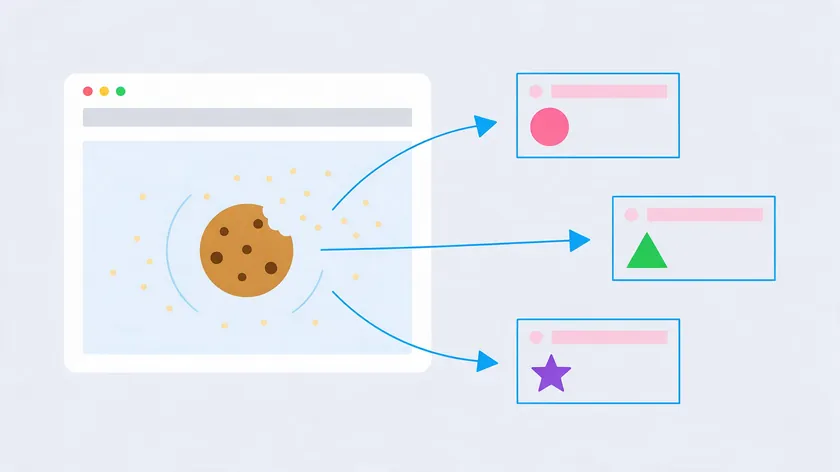
Most agencies deploy or configure tracking technologies—Meta Pixel, Google Ads tags, LinkedIn Insight Tag, Google Analytics JavaScript code, and various service providers’ scripts—on client sites and landing pages. This section of the policy must address what these tools do and what data they capture.
Categories to describe:
- Strictly necessary cookies (session management, security)
- Analytics cookies (page views, session duration, bounce rates via a web analytics service)
- Advertising cookies and pixels (conversion tracking, remarketing, audience creation for Google Display Network ads or the client’s own advertising network)
- Similar tracking technologies like device identifiers, electronic storage mechanisms, and pixel events
The policy should explain what cookies data and pixel events are captured (page views, form submissions, purchases, custom events) and for what purposes—measurement, attribution, audience creation, A/B testing, and analysis of campaign performance.
When pixel data is shared with platforms like Meta or Google services, explain whether such information is pseudonymized or identifiable.
Consent management tools help manage user preferences for tracking and cookies. Consent management platforms help operationalize consent gates by presenting banners and preference centers before tracking fires. Consent records also help demonstrate compliance when a client or regulator asks.
While clients usually control on-site consent, agencies must ensure their implementation matches what the privacy policy and cookie notices actually say. If your policy promises no tracking before consent, but pixels fire on page load, the policy creates liability rather than protection.
Data Processing Agreements With Clients and Subprocessors

A Data Processing Agreement (DPA) or service provider addendum is the contract layer that supports what the privacy policy promises about processor behavior. Agencies conduct audits to identify data collection practices before drafting policies, and the DPA formalizes the boundaries discovered during that audit.
Key items a DPA for a digital marketing agency should cover:
- Scope of processing and categories of data collected
- Types of data subjects (client customers, website visitors, ad platform audiences)
- Security measures (access controls, encryption, confidentiality)
- Rules on subcontractors and subprocessors (e.g., analytics vendors, reporting tools, third party companies handling data on the agency’s behalf)
- Assistance with data subject rights requests
- Data return or deletion on contract termination
- Breach notification timelines
Modern US state privacy laws generally require a written contract between controllers and processors with similar content. The privacy policy should include a concise paragraph referencing the existence of such DPAs and explaining that client instructions under these agreements govern how the agency handles client customer data.
The policy should also state that the agency requires subprocessors to sign protective terms and lists categories of those subcontracted tools without turning this into a full legal annex.
Agencies should have counsel review their DPAs for large or heavily regulated clients.
Handling Data Subject Requests and California Privacy Rights
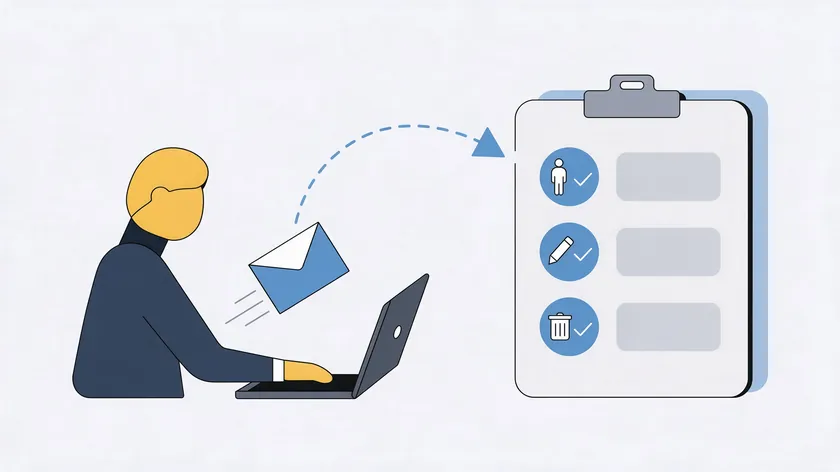
A data subject is any natural or legal person whose data the agency touches—whether they are a website visitor, a lead, or a client’s customer appearing in a campaign audience.
Even if you only hold a hashed email or an anonymous unique identifier, that person may still have rights under applicable laws. Privacy policies should include user rights under applicable laws, and user rights under data protection laws include access, correction, and deletion.
The policy should anticipate these request types:
- Access to collected data
- Correction of inaccurate personal information
- Deletion of data stored by the agency
- Restriction of processing
- Opt-outs from targeted advertising or “selling”/”sharing” data under California privacy rights frameworks
- Data portability where applicable
Privacy policies should include clear instructions for consumer privacy requests. Explain how California residents can submit CCPA/CPRA-style requests—via a dedicated email address, a web form, or a toll-free number if required. Summarize how the agency verifies identity at a high level without publishing step-by-step internal procedures.
The CCPA lets consumers opt out of the sale or sharing of their personal information, and the policy must describe how to exercise that right.
When the agency is only a data processor, it should redirect or support data subject requests through the relevant data controller (the client) rather than acting unilaterally.
A statement like “for data we process on behalf of our clients, we will forward your request to the appropriate controller or assist them in fulfilling it” handles this clearly.
Clear instructions in this section reduce confusion and show regulators that the agency has a documented process. Respecting data privacy builds stronger customer relationships—for both your agency and your clients.
Security, Retention, and International Data Transfers

Three parts of your policy explain how data is protected, how long it is kept, and where it travels. The subsections below cover what to disclose about security measures, retention periods, and international data transfers without promising more than your agency can deliver.
Security
Your policy should reference concrete security measures: role-based access controls and least-privilege permissions, encryption in transit (TLS) and at rest, secure cloud infrastructure for analytics and reports, employee confidentiality training, and regular vendor evaluations.
Agencies should address technical issues proactively through penetration testing or third-party security assessments.
Avoid vague promises. Phrases like “military grade encryption” mean nothing unless validated. Instead, list realistic, auditable practices and clarify that no method of electronic storage or transmission can guarantee absolute security.
Data Retention
The policy must state how long different categories of data are kept. Lead data might be retained while there is an active relationship or legitimate interest. Campaign data and logs might be retained for a defined number of months based on reporting needs.
The agency should retain usage data only as long as necessary for internal analysis purposes, and client data should be deleted or returned as specified in the DPA.
Retention limits are a core component of compliance with data privacy regulations.
International Data Transfers
Many marketing tools—Google Analytics, Meta Ads, HubSpot, and other third-party service providers—host or process data in the United States or other countries.
If the agency handles data about individuals in the EEA or UK, the policy should mention that data may be transferred internationally and describe safeguards such as Standard Contractual Clauses or vendor commitments under applicable frameworks.
Users may visit Facebook’s data policy or Google’s privacy documentation to understand how those platforms handle international transfers. The agency should direct concerned users to the local data protection authority if they wish to file a complaint about cross-border transfers.
Clause-by-Clause Sample Structure for a Digital Marketing Agency Privacy Policy

This outline gives agencies a practical framework to follow when building a policy. Each clause should reflect real tools and workflows—not generic boilerplate. Use 2–4 sentence paragraphs, plain language, concrete examples of data collected and tools used, and no legalese where avoidable.
- Introduction and scope: State what the policy covers: agency website visitors, leads, and client data processed under contract.
- Who we are and contact details: Agency name, address, privacy contact.
- Definitions: Define personal data, data subject, data controller, data processor, cookies, and targeted advertising in plain terms.
- Data we collect as a controller: Website and lead data, distinguished by “provided by you” vs “collected automatically.”
- Data we process as a processor/service provider: Client customer data, restricted to agreed purposes.
- How and why we use data: Purposes for each category; legal bases where required; non-marketing uses like providing customer support, security, fraud prevention.
- Cookies and tracking technologies: Categories, lifespans, consent procedures. Cross-reference a standalone cookie policy if one exists.
- Data sharing and subprocessors: Categories of service providers and third-party companies receiving data; link to data processing agreements.
- Data retention: Periods by data type; criteria for deletion.
- Security: Technical and organizational measures.
- International transfers: Where data may go; safeguards.
- Data subject and California rights: Rights list, submission methods, processor-to-controller redirect language.
- Changes to this policy: How updates are communicated; “Last Updated” date.
- Contact information and complaints: Email, mailing address, data protection authority references.
Include cross-references where helpful—from the cookies section to a standalone cookie policy, or from controller/processor explanations to data processing agreements. Tell visitors about any third-party links or websites the policy does not cover, and note that third-party sites are governed by their own privacy practices.
Not sure whether you need a policy or a notice? Read our privacy policy vs privacy notice comparison.
For the core privacy policy clauses that apply to every business, see our data privacy policy guide.
How to Implement and Maintain Your Agency Privacy Policy in Practice
A well-written policy is only effective if the agency’s internal processes and tools match what the document promises. Privacy policies should be written in clear, plain language without legal jargon, and they must reflect actual operations—not aspirational ones.
Operational steps every agency should take:
- Inventory all marketing tools and platforms in your service infrastructure (CRMs, ad platforms, analytics, reporting dashboards)
- Confirm what data each tool collects and whether it sends promotional materials or collects information beyond what’s disclosed
- Align cookie banners and consent preferences with actual tracking—do not fire pixels before the banner loads
- Ensure team members know basic rules before installing new tracking pixels or accessing client data
- Document where the privacy policy is linked: website footer, lead gen landing pages, intake forms
Agencies must regularly review and update their privacy policies. Set a specific review cadence—at least annually, or whenever you add a major new analytics or advertising platform. Privacy policies must be updated regularly to remain compliant with evolving data privacy laws.
Note in the policy itself that the “Last Updated” date will change when significant updates are made.
Test that consent notices and privacy links appear before or at the point of data collection. If a landing page collects certain personally identifiable information through a form, the privacy policy link must be visible at the point of submission.
Using Termify.io to Generate a Digital Marketing Agency Privacy Policy
Termify.io is an automated privacy policy generator that covers the website side of an agency’s document: the data it collects, its tracking tools, and the laws it must follow.
Major platforms require compliant privacy policies for advertising and analytics access—Google Ads, Meta, LinkedIn, and others may restrict features or reject ad accounts that lack proper disclosure.
The workflow is a short set of questions: platform and business details, the personal data you collect, newsletters, analytics, ads, Facebook Pixel, retargeting, tracking technologies, online payments, and whether the site is offered to users under 13. Termify.io then generates a draft policy tailored to those answers.
Agencies can also choose to adapt the policy to CalOPPA, the General Data Protection Regulation, and the California Consumer Privacy Act, so the key rights and disclosures are included without writing them manually.
The generated policy can be edited manually and updated as the agency adds new tools or enters new markets.
The generator does not ask about your role as a processor for client data, so add that clause yourself by editing the text. Use the “Data we process as a processor/service provider” wording from the clause-by-clause structure above.
Treat the generated policy as a living document. For high-risk or heavily regulated client work—healthcare, financial services, education—have counsel review the generated documents as part of a broader data privacy compliance program.
Key Takeaways
- Every digital marketing agency operates as both a data controller (for its own website, leads, and digital marketing strategies) and a data processor (for client CRMs, ad accounts, and analytics). Your privacy policy must reflect both roles explicitly.
- US agencies are subject to data privacy regulations beyond their home state. Processing personal data from California residents, EEA individuals, or citizens of states with privacy laws triggers specific legal obligations you cannot ignore.
- A compliant policy must describe concrete data types (collected personal data from forms, data collected automatically via cookies, ad platform data, analytics identifiers), name categories of third party service providers, and explain how rights requests are handled.
- Translate real workflows into policy language. If your agency manages Google Display Network ads, accesses client Salesforce records, or deploys Meta Pixel on landing pages, each of those activities must be addressed in the policy—not hidden behind vague terms.
- A privacy policy is a trust signal. Prospects evaluating whether to grant you access to their CRMs, analytics accounts, and advertising platforms will review your privacy practices before signing. A transparent privacy policy builds client trust and credibility.
Map your current data flows—website forms, client systems, ad tech—against the clauses outlined in this guide to identify any missing disclosures or outdated statements. That audit is the fastest path to a policy that protects your agency and strengthens every client relationship.
Want to skip the manual work? Termify.io’s privacy policy generator builds a tailored digital marketing agency privacy policy from your actual tools and data practices, ready to publish.
FAQ: Digital Marketing Agency Privacy Policy
Do I need a separate privacy policy for my agency website and for each client?
Each organization—your agency and each client—needs its own privacy policy. Your agency does not typically publish policies on behalf of clients. Instead, it relies on data processing agreements and its own policy to describe its processor role.
If your agency manages a client’s website directly, you should help the client draft and publish their own policy covering their end users and customers.
How detailed should I be about specific tools like Google Analytics or Meta Pixel?
You usually do not need to list every tool brand by name, but you should clearly describe categories (analytics, advertising, remarketing) and the types of collected personal data and cookies data involved.
For example, mentioning that you use a web analytics service offered by Google—and that it uses Google Analytics JavaScript to collect browsing data—adds helpful specificity without requiring a full vendor inventory.
What if my agency only handles B2B data—do these laws still apply?
Many data privacy regulations—including the General Data Protection Regulation and some US state laws—apply to personal data regardless of whether it relates to a consumer or a business contact.
A work email address tied to a named individual is still personal information under most frameworks. Agencies should not assume B2B data is automatically exempt from data protection laws.
How often should I update my digital marketing agency privacy policy?
Update at least annually and whenever major changes occur—adopting new tracking technologies, entering new markets, or significantly changing how collected personal data is used. Adding a new advertising platform, switching CRMs, or starting to process sensitive data categories all warrant a policy revision.
Note the “Last Updated” date prominently so visitors and regulators can confirm the policy is current.
Can Termify.io replace legal advice for complex or highly regulated clients?
Termify.io is designed to streamline policy creation and keep language aligned with major data protection laws.
Agencies working with sensitive industries—healthcare, finance, education—or handling high-risk data should have counsel review the generated documents as part of their broader compliance program.
The generator gives you a strong foundation; legal review adds the final layer of assurance for complex engagements.