
A 60-day money back guarantee gives customers up to 60 days after purchase to request a full refund—common for supplements, wellness products, mattresses, and coaching programs, where results take time to show. Below, we cover how it works, the legal basics, and real-brand examples you can learn from.
Table of Contents
- What a 60-Day Money Back Guarantee Actually Means
- Why 60 Days Works for Products That Take Time to Evaluate
- Legal & Regulatory Basics for 60-Day Money Back Guarantees
- FTC Substantiation Rules & “Empty-Bottle” Proof-of-Use Guarantees
- Case Study: Metagenics and Practitioner-Guided 60-Day Guarantees
- Case Study: Perfect Supplements’ Trust-Building Policy
- Case Study: Lori Beds and 60-Day Sleep Trials
- Designing a 60-Day Money Back Guarantee Policy That Won’t Be Abused
- Key Takeaways
- FAQs
- Is a 60-day money back guarantee too long for most businesses?
- How can I prevent abuse of a 60-day money back guarantee?
- Does a 60-day guarantee apply to subscription renewals?
- How is a 60-day money-back guarantee different from a 90-day one?
- Are money-back guarantees the same as legally required return rights in the EU or UK?
What a 60-Day Money Back Guarantee Actually Means
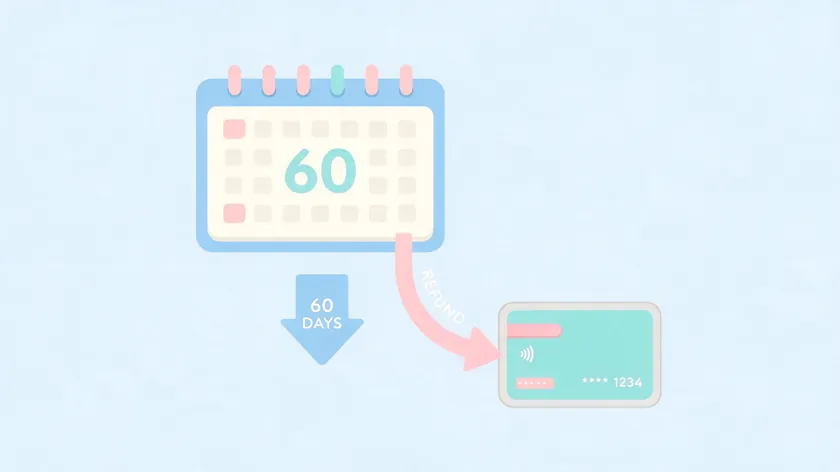
A 60-day money-back guarantee is a seller’s promise for a full refund within sixty days if a buyer is unhappy. It signals that a company stands behind its product and is confident enough to let customers evaluate it on their timeline.
The “60 days” can be counted from the order date, the shipping date, or the delivery date. Businesses must state the timeline explicitly in their money-back guarantee policy. For example, Lori Beds counts 60 days from the order date to initiate a return, while other brands use delivery confirmation as the starting line.
Refund forms vary. Some companies offer a 100% money-back guarantee refunded to the original payment method. Others issue store credit or gift cards. The fine print should spell out exactly what customers receive. Consumers have a defined period to seek a refund under a money-back guarantee, and that period should be clearly stated.
Costs covered usually include the product price but exclude shipping costs, taxes, and handling fees. An honest example reads, “full refund of product price, excluding original shipping.” A money-back guarantee should specify the return process and timeframe so there are no surprises.
An important note: a 60-day money-back guarantee is a voluntary commercial promise. It sits on top of mandatory consumer rights, like the 14-day cooling-off period in the European Union. For a side-by-side look at how different guarantee durations compare, see our separate 30-Day Money Back Guarantee guide.
Why 60 Days Works for Products That Take Time to Evaluate
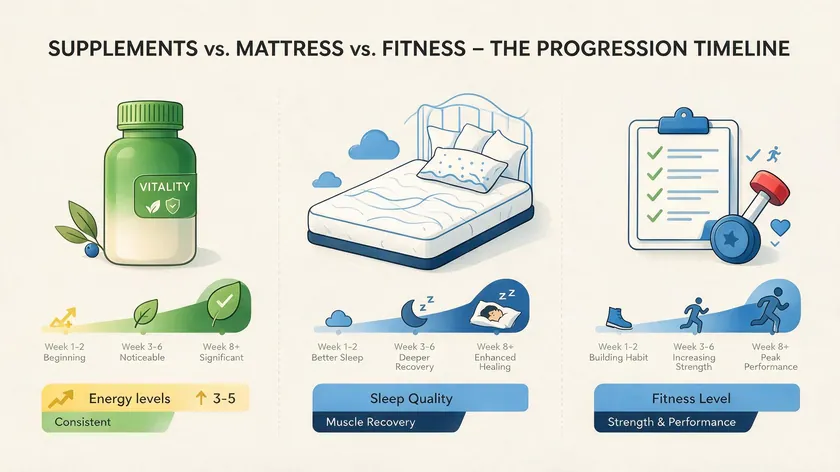
Many “results take time” categories choose a 60-day window because customers need real usage time to judge value. Supplements and wellness products, sleep and comfort items like mattresses, and coaching or fitness programs all fit this description.
The typical customer journey across these categories follows a pattern. Roughly 30 days go toward receiving the product, starting use, and building a routine—taking a supplement daily, sleeping on a new mattress, or following a training program. Another 30 days are needed to evaluate real results.
A 60 day money back guarantee covers both phases, while a standard 30-day window often cuts evaluation short.
This timeframe reduces “false negatives”—customers who judge too early and return before benefits emerge. Sleep experts recommend 4–8 weeks of mattress usage before judging comfort. Practitioners prescribing probiotics, adaptogens, or multivitamins typically advise 6–8 weeks of consistent use.
Multi-week coaching programs often show measurable progress only around week five or six, once clients have had enough sessions to build consistency and see real behavioral change reflected in their results.
A 60-day money-back guarantee helps reduce purchase anxiety for consumers, especially on high-ticket, multi-cycle purchases like multi-bottle supplement bundles, subscription starters, or mattress purchases.
When many customers know they can return purchases risk-free, they buy with confidence. Research shows 82% of shoppers value easy returns in buying decisions. The promise of a money-back guarantee can lead to higher conversion rates for businesses across these categories.
For physical, non-instant products like mattresses, 60 days also allows the body to physically adjust. Joint acclimation, thermal comfort shifts, and support impressions all emerge over weeks, making feedback more accurate and returns fairer for both sides.
Legal & Regulatory Basics for 60-Day Money Back Guarantees

This section is informational, not legal advice. Businesses should consult counsel before finalizing a money-back guarantee policy.
In most jurisdictions, a 60-day money-back guarantee is not legally required. The U.S. has no federal requirement for money-back guarantees. However, once advertised, it becomes a binding contractual term and must be honored as stated under applicable consumer laws.
European Union
In the European Union, consumer law already provides a 14-day “cooling-off” right for distance or off-premises purchases. In the EU, customers have 14 days to return items for a refund regardless of any guarantee.
UK consumers similarly have 14 days to cancel online purchases for a refund under UK law. EU regulations exempt personalized items from the 14-day return rule.
A 60-day money-back guarantee is an additional commercial promise that must not undercut these statutory rights. Policies must clearly state how the commercial guarantee interacts with mandatory rights and never remove protections granted by law.
United States
Under US rules, the Federal Trade Commission’s advertising guides require that any advertised guarantee be honored as stated, with all limitations clearly disclosed. The FTC’s Cooling-Off Rule gives U.S. consumers 3 days to cancel certain purchases. California requires a 30-day refund policy for purchases with no posted return policy.
For wellness and supplements, guarantee language must not imply unsubstantiated health outcomes like “cure” or “reverse disease.” Clearly state any exceptions to the money-back guarantee policy—eligibility dates, evidence of purchase, geographic scope, and interaction with chargeback timeframes of each payment method.
FTC Substantiation Rules & “Empty-Bottle” Proof-of-Use Guarantees
Health and wellness brands using a 60 day money back guarantee face extra scrutiny from the Federal Trade Commission when making performance promises. If your guarantee implies specific results within 60 days, those claims must be backed by competent and reliable scientific evidence—typically human clinical trials of sufficient size and duration.
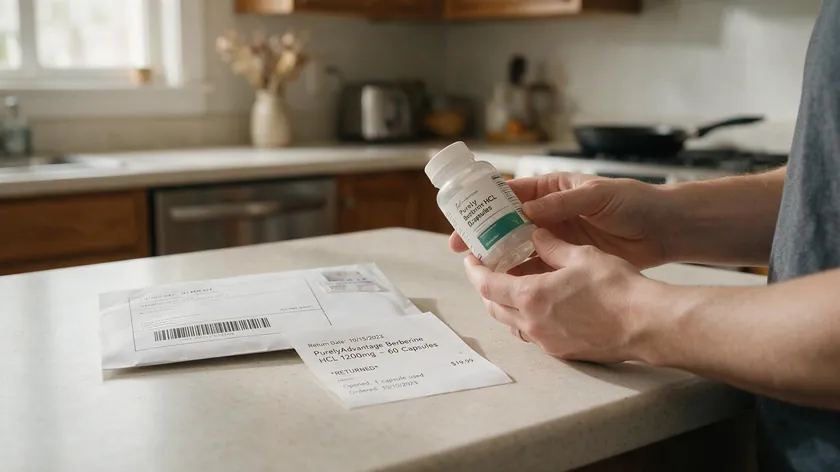
“Empty-bottle” guarantees work like this: customers can finish a 30–60 day supply, send back the empty bottle or packaging, and still receive their money back. This proves they gave the product a fair try before deciding.
Some brands require photos of empty containers; others need the physical bottle returned with an RMA number.
Pros and cons of empty-bottle policies:
| Advantage | Disadvantage |
|---|---|
| Builds trust and encourages full use | Increases logistics and handling costs |
| Discourages returns without trying | Higher risk of fraudulent empty returns |
| Signals the brand is confident in quality | May discourage honest customers if too complex |
Many businesses limit these offers to first-time purchases or one refund per product. Keep documentation requirements simple—order numbers, return tracking, and a basic form—so the refund process doesn’t undermine the “no risk” promise.
Guarantee wording should avoid misleading health guarantees. Instead of “guaranteed to fix your thyroid,” use satisfaction-focused language: “If you’re not completely satisfied within 60 days, request a refund—no questions asked.”
Case Study: Metagenics and Practitioner-Guided 60-Day Guarantees

Metagenics is a practitioner-grade supplement brand frequently used by healthcare professionals. Their protocols often run 8 weeks, making a 60-day money-back guarantee a natural fit. The company promises that customers who purchase from their site or authorized sellers may request a refund or replacement within 60 days.
The guarantee covers the product price. Shipping both ways is excluded. Only purchases from authorized retailers are eligible—a safeguard that protects quality control and prevents refund requests on gray-market bottles. Proof of purchase is required, and the remaining product must be returned.
This structure gives both the practitioner and patient confidence to follow through with a protocol rather than quitting after two weeks when nothing has changed yet. A money-back guarantee can encourage consumers to make informed decisions about purchases rather than abandoning early.
The policy supports Metagenics’ positioning as science-based and patient-centric while staying compliant with FTC substantiation rules.
Case Study: Perfect Supplements’ Trust-Building Policy
Perfect Supplements is a niche wellness brand selling superfoods, organ meats, collagen, and adaptogens. They rely heavily on customer satisfaction and repeat orders rather than one-off sales, so their guarantee is designed to attract customers who are trying unfamiliar products for the first time.
Their policy clearly explains how the empty-bottle return mechanics work. Customers can use an entire one-month supply, return the empty bottle plus any unopened ones from a multi-bottle purchase, and receive a full refund for all bottles.
Shipping is non-refundable, and only products purchased from their website are eligible. For third-party brands they resell, only unopened bottles qualify.
This balance of generosity and safeguards—one opened bottle per order, direct-purchase-only eligibility, and clear timelines—prevents abuse while keeping the “risk-free” feeling intact. The brand uses simple language on product pages: “If you don’t love it, we’ll refund your money.
“Display money-back guarantees on product pages for visibility and include money-back guarantees on checkout pages to boost confidence. A 60-day money-back guarantee can distinguish a business from competitors offering shorter policies, and Perfect Supplements leans into this advantage heavily.
Case Study: Lori Beds and 60-Day Sleep Trials

Lori Beds sells murphy beds, adjustable beds, and mattresses—higher-ticket sleep furniture that customers cannot judge for comfort and long-term usability in a single night. Their 60 day money back guarantee lets customers set up the bed, sleep on it for several weeks, and return it within 60 days for any reason.
The terms are straightforward but firm. For mattresses, they request customers try the product at least 30 days before returning to allow body adaptation. Items must be in original condition, unmodified and undamaged. The refund covers the full purchase price minus return shipping costs of approximately $125 per box. Original delivery fees are non-refundable.
This structure works because 60 days reveals real-world issues—squeaks, support changes, and thermal comfort—that a quick store visit never would. It fits within common credit card dispute windows while remaining generous compared to basic retail return policies.
Lori Beds uses a clear, visual money-back guarantee policy page and post-purchase emails to remind customers of the window and how to initiate a return. For a new business selling comfort or furniture products, this model shows that a back guarantee can successfully apply to higher-ticket non-consumables when combined with clear logistics and strong support.
Designing a 60-Day Money Back Guarantee Policy That Won’t Be Abused

Longer money-back guarantees increase both conversions and refund risk. Fellow entrepreneurs need simple, fair safeguards without scaring honest new customers away. 76% of consumers prefer return options with instant refunds, so keeping the return process smooth matters.
Typical guardrails include the following:
- Limit the 60 day money back guarantee to first-time purchases or one refund per household
- Cap total refundable quantity (e.g., up to a two-month supply)
- Require proof of purchase and define acceptable product condition
- State whether subscriptions beyond the first billing cycle are covered
- Track refund requests per customer and flag repeated claims
Internally, empower support staff to override rules in certain circumstances where strict enforcement would feel unfair and generate negative reviews or negative feedback. Money-back guarantees enhance brand reputation and customer trust when the process is genuinely painless.
On the communication side, keep the guarantee language customer-friendly and concise on the sales page. Link to detailed terms in a full refund policy for transparency. Display your money-back guarantee on product pages and checkout.
Add money-back guarantees to promotional materials for marketing, and place money-back guarantees in terms and conditions for legal clarity. Use visually appealing icons to highlight money-back guarantees online so customers can easily find them.
Many businesses use a return and refund policy generator to create a robust written policy that embeds their 60-day money-back guarantee and aligns with legal requirements.
Key Takeaways
- A 60-day money back guarantee is especially well-suited to supplements, wellness products, sleep or comfort items, and coaching or fitness programs where results emerge over weeks, not hours.
- It typically means 60 days from the purchase date or delivery to request a refund, often via the original payment method, and it can enhance customer trust and loyalty while offering a clear benefit to both seller and buyer.
- Money back guarantees are not legally required in the US, UK, or European Union, but once advertised, they become binding and must comply with FTC rules, local consumer protection laws, and truthful advertising standards.
- Offering a money-back guarantee can differentiate your brand and increase customer loyalty and retention across every product category, while also boosting sales conversions and improving your brand’s reputation.
- Thoughtful design—coverage rules, empty-bottle mechanics, subscription handling, and anti-abuse safeguards—makes the difference between a guarantee that drives sales and one that drains your account, turning a 60-day money guarantee into a growth asset instead of a liability.
For ready-to-copy wording across every duration, including 60-day money back language, visit our Money Back Guarantee Examples article.
Your 60-day guarantee wording builds trust—but it doesn’t cover the legal terms behind it. Try the Return and Refund Policy Generator →
FAQs
These questions cover practical issues not fully answered above, focused on length, abuse prevention, subscriptions, and comparisons to longer guarantees. A money-back guarantee typically allows refunds within 14 days for many companies, but the questions below address the 60-day window specifically.
Is a 60-day money back guarantee too long for most businesses?
Sixty days is ideal for supplements, wellness products, mattresses, and services where results are gradual. For fast-consumption or low-cost impulse items, it may be unnecessarily long and could invite more return items than the margins can absorb.
The “right” refund period depends on product usage cycles, margins, and operational capacity.Our separate 30-Day Money Back Guarantee guide discusses duration selection more broadly and can help you pay attention to the tradeoffs before you cancel a shorter window in favor of a longer one.
How can I prevent abuse of a 60-day money back guarantee?
Limit eligibility to first-time orders, cap the quantity eligible for a refund under the 60-day money- back guarantee, and require proof of purchase. Track repeat refunders and flag accounts that request a refund on every order.
Combine these safeguards with clear, friendly communication so honest customers still feel completely free to try your digital products or physical goods without risk. A money-back guarantee promises a full refund if you’re unsatisfied—make that promise easy to keep by designing smart limitations.
Does a 60-day guarantee apply to subscription renewals?
Most brands apply the 60-day money back guarantee only to the first order or first billing cycle. Subsequent renewals typically fall under a shorter or stricter refund policy. State renewal rules explicitly in your money-back guarantee policy and subscription terms so consumers know exactly when they can cancel and when the refund window closes.
This prevents disputes and chargebacks that eat into your store’s revenue. Money-back guarantees typically have a specific timeframe for refunds, and subscription renewals should have their own clearly promised terms.
How is a 60-day money-back guarantee different from a 90-day one?
Both are extended guarantees, but 90 days increases refund exposure and operational complexity. A 60-day window usually covers at least two full usage cycles for most wellness products and digital content programs, which is enough for confident evaluation.
Many payment processors and card networks have practical dispute windows that align more comfortably with 60-day guarantees, giving companies and the seller a cleaner line on chargeback risk. The quality of your guarantee design matters more than adding extra days.
Are money-back guarantees the same as legally required return rights in the EU or UK?
No. Statutory rights like the EU’s 14-day cooling-off period and the UK’s 14-day cancellation right exist regardless of any guarantee. In the EU, consumers have a 14-day return period by law. A 60-day money back guarantee is a voluntary promise the business adds on top to build consumer confidence. Policies must clearly state how the commercial guarantee interacts with these mandatory rights and must never remove or reduce protections granted by law. This distinction is relevant for any website selling to international consumers.